 Short Span Steel Bridges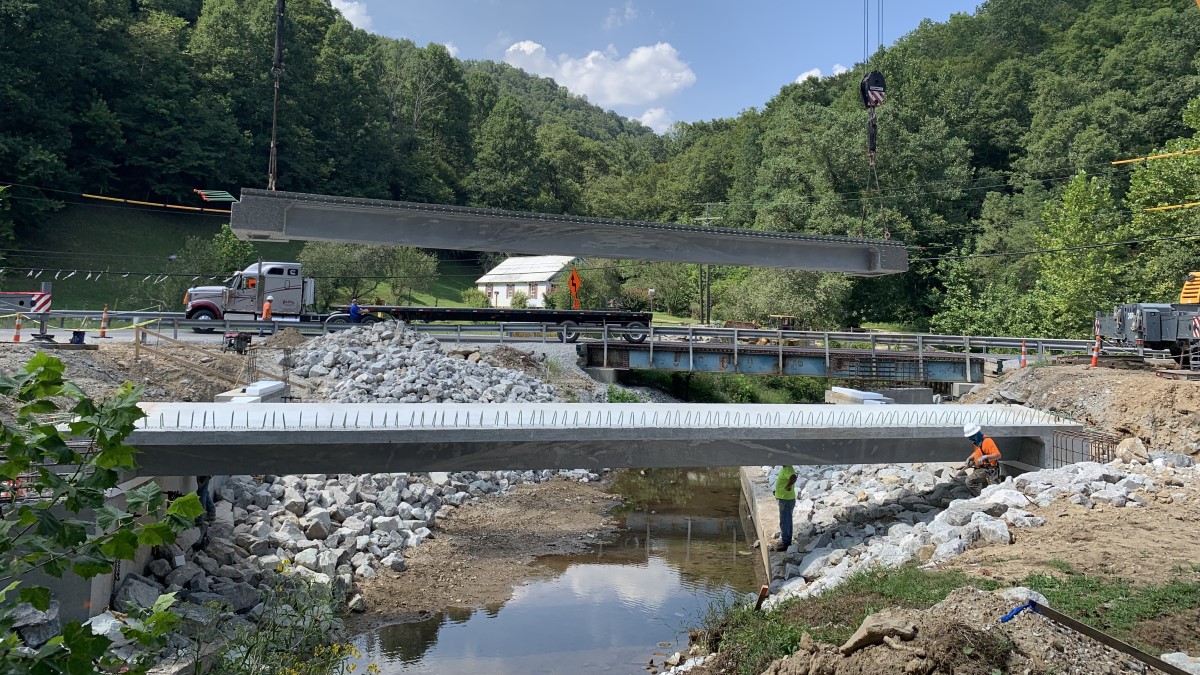
Steel Story – FF Journal
Excerpt from FF Journal
– Written by Lynn Stanley, Senior Editor
Poised for an infusion of cash, America’s infrastructure looks to new steel materials, products and technologies for low maintenance, lightweight solutions that are quick to install
It took 7.6 million lbs. of steel, 2,000 men and 2,200 days of on-site labor to complete the Golden Gate Bridge in 1937. A $25 million grant from President Franklin Roosevelt’s New Deal program made construction possible for what is still considered an engineering marvel. Annual tolls and fees averaging $145 million help offset the Golden Gate’s yearly $85 million maintenance bill.
For state and local bridge owners across the nation, the weight of maintenance demands has grown increasingly burdensome. It’s a story The American Society of Civil Engineers (ASCE) has been telling since 1988 when it issued its first quadrennial Infrastructure Report Card. The nation’s latest marks, posted in 2021, tallied a C-. The bridge category scored a C. The U.S. has a total of 617,000 bridges. According to ASCE, 42 percent of those bridges are at least 50 years old, with 46,154 flagged as structurally deficient.
“We need these structures to transport billions of tons in freight from coast to coast,” says Dan Snyder, senior director, business development for the American Iron and Steel Institute (AISI) and director of the Short Span Steel Bridge Alliance (SSSBA). “Commuters, school buses and truckers make 178 million trips across structurally deficient bridges every day.”
Does steel provide an economical solution for bridge construction?
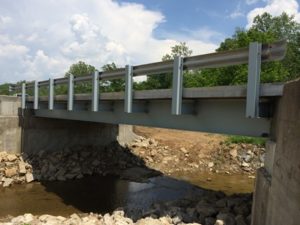
- Due to the light weight of steel, cost savings can be significant
- Studies show that weathering, A1010 (A709-50CR), and galvanized steel reduces both initial and life cycle costs.
- Steel can compete and even save costs when compared with nearly identical concrete structures. re.
- Steel bridges also have long lives, decreasing the need for replacement.
- Steel’s high strength permits longer spans, minimizing disruption to underlying habitats.
- Steel is highly resistant to extreme natural disasters such as earthquakes.
- Steel is the world’s most recycled material and is infinitely recyclable.
- Short span steel bridges can be designed with prefabricated elements which provide a simpler installation and cost savings.
 News
News
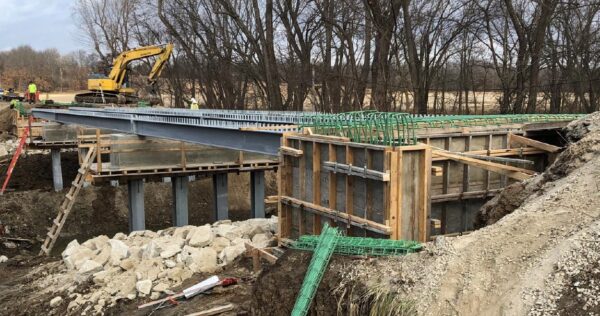
Missouri Steel Bridge Bundle Project Wins Prize Bridge Award
The National Steel Bridge Alliance (NSBA) named Missouri’s FARM Bridges Design/Build Bundle the 2026 Prize Bridge Award winner in the Short Span category. Fabricated by SSSBA member DeLong’s, the project delivered 31 rural bridges across 15 counties using galvanized steel and SDCL design for a 100-year service life.
 Economics
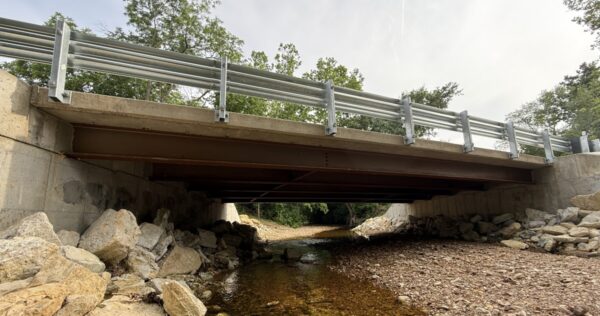
Steel vs. Concrete: A Deep Dive into Bridge Life Cycle Economics
A comprehensive study by Dr. Michael Barker of the University of Wyoming analyzes 1,186 steel and concrete girder bridges in Pennsylvania to compare life cycle costs, offering data-driven insights into long-term economic performance and service life.
 Education
Steel Bridges for Smarter, Faster Construction – On-Demand Steel Bridge Video Series
This three-part on-demand video series covers integral abutments, simple for dead continuous for live designs and prefabricated bridge options.