 Short Span Steel Bridges
American Manufacturers Are Among the Cleanest in the World. Let’s prove it.
The following is an excerpt from RealClear Energy (read the full article).
American Manufacturers Are Among the Cleanest in the World. Let’s prove it.
By Kevin Dempsey, President and CEO of the American Iron and Steel Institute
January 17, 2024

Kevin Dempsey is the President and CEO of the American Iron and Steel Institute.
U.S. manufacturers have a compelling environmental story. American companies produce goods that emit 40% less carbon dioxide (CO2) than the global average for the same products.
The American steel industry, for example, has the lowest CO₂ emissions per ton of steel produced of any of the major steel-producing countries and accounts for just 1-2% of U.S. greenhouse gas (GHG) emissions. Globally, the steel industry emits around 8% of total world GHG emissions.
The American steel industry, and the manufacturing sector as a whole, have made significant investments in cleaner and more sustainable production processes. With these innovative technologies, we are committed to further reducing our environmental impact.
But unless companies overseas do the same, American manufacturing’s commitment to sustainability will put us at a disadvantage.
This is because the U.S.’ higher environmental performance comes with costs that many of our competitors are exploiting to capture global market share.
Read the full article from RealClear Energy, including information about a policy initiative the Senate Environment and Public Works Committee is considering called “Providing Reliable, Objective, Verifiable Emissions Intensity and Transparency” (PROVE IT) Act, to create an official source to verify the superior carbon efficiency of vital American industries, like steel.
Sustainability Tools and Resources
The Short Span Steel Bridge Alliance (SSSBA) and its partner organizations have developed tools and educational resources to provide information on the use of steel to create a more durable and sustainable infrastructure. These resources include:
Videos
- Durability Strategies for Steel Bridges
- Life Cycle Costs Matter When Comparing Steel and Concrete Girder Bridges
- Building a Sustainable Infrastructure Three-Part Video Series
- Sustainability and the Life Cycle of Steel
Tools
- Zinc Coating Life Predictor (American Galvanizers Association)
- Time to First Maintenance Chart for Hot-Dip Galvanized Coatings (American Galvanizers Association)
- Sustainable Infrastructure Rating Systems
- Life Cycle Cost Calculator (National Corrugated Steel Pipe Association)
Resources
- Environmental Product Declarations (EPDs)
- Steel Bridge Construction: Myths & Realities
- Sustainability of the American Steel Industry
- North American Steel Industry Leading: Innovation and Environmental Sustainability
Webinars/Educational Events
Does steel provide a sustainable option for bridges?
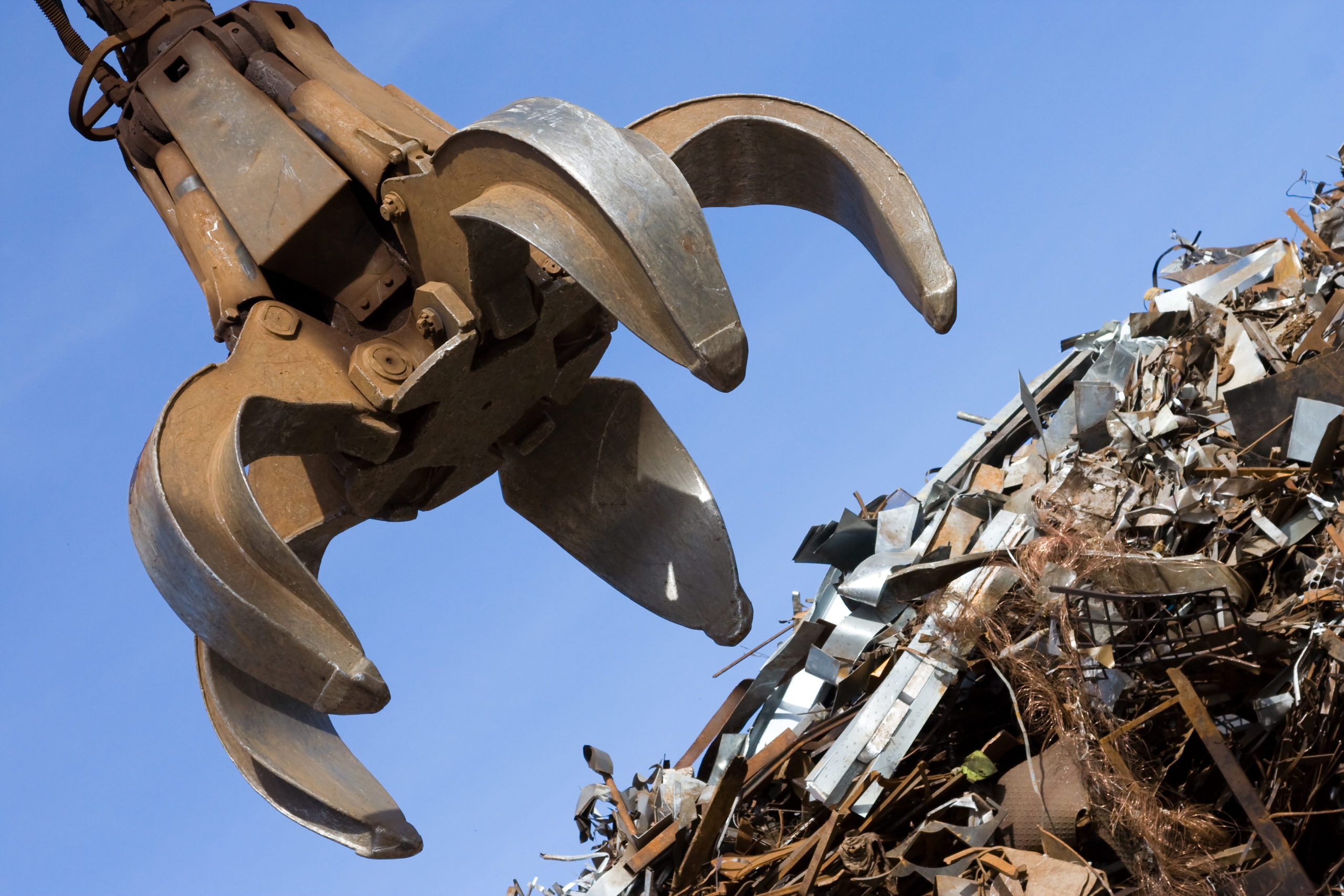
Steel is the most recycled material on the planet. Some of the sustainable advantages of steel include:
- Steel from a disassembled bridge can be used again for another project.
- Steel bridges can last 100 years or more, with minimal maintenance over their long service lives.
- The high strength of steel permits longer spans, which minimizes disruption to underlying habitats.
- Steel is highly resistant to extreme natural disasters such as earthquakes.
- The American steel industry has achieved a 31 percent reduction in energy intensity and a 36 percent reduction in greenhouse gas intensity since 1990.
 News
News
Missouri Steel Bridge Bundle Project Wins Prize Bridge Award
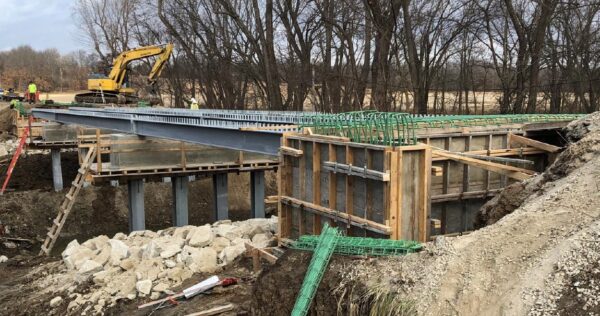
The National Steel Bridge Alliance (NSBA) named Missouri’s FARM Bridges Design/Build Bundle the 2026 Prize Bridge Award winner in the Short Span category. Fabricated by SSSBA member DeLong’s, the project delivered 31 rural bridges across 15 counties using galvanized steel and SDCL design for a 100-year service life.
 Design
NSBA Releases Updated Bolted Splice Spreadsheet 4.01
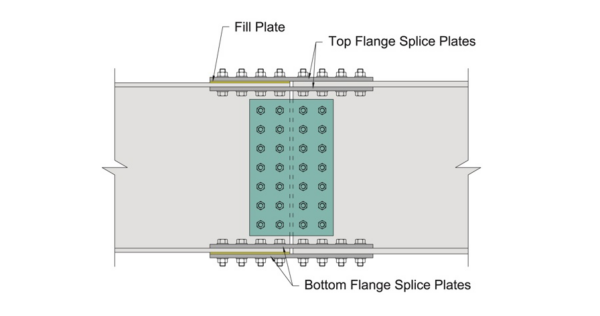
NSBA’s Bolted Splice Spreadsheet 4.01 streamlines connection design with expanded options and updated AASHTO LRFD provisions for faster, more economical solutions.
 News
News
ARTBA Reports $15 Billion Committed Through Bridge Formula Program as Needs Remain
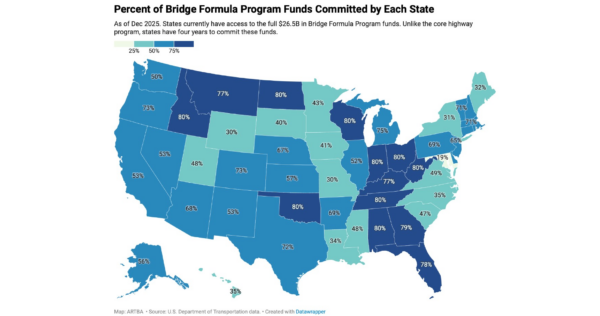
According to an ARTBA analysis, states have committed $15 billion through the bridge formula program, yet one in three bridges still needs work.