 Short Span Steel Bridges
Bridge Construction Advancing Across the U.S: Further Work Ahead
In November 2021, Congress passed the Infrastructure Investment and Jobs Act, which is now the Bipartisan Infrastructure Law. This legislation addressed the need to upgrade infrastructure that was way past time for improvement. The deal was intended to rebuild America’s roads, bridges and rails; expand access to clean drinking water and much more. Now after two and a half years, what has been accomplished?
Current Update
After two and a half years, progress is being made and thousands of infrastructure-related projects have been funded. This claim is supported by fund allocation data tracking information on administered funds for completed jobs, in addition to projects that are currently in progress.
Some important information to take away from this data:
- The U.S. is investing $478.4 billion in public infrastructure and clean energy investments.
- So far, $301.1 billion has been announced for transportation investments in roads, bridges, public transit, ports and airports.
- In 2023 alone, the U.S. Department of Transportation (USDOT) awarded nine “Mega” transportation projects with funding of nearly $1.2 billion.
Condition of U.S. Bridge Infrastructure by the Numbers:
While progress has certainly been made, there is still much work left to be done. The U.S. is still in need of an estimated $319 billion of needed bridge repairs nationwide, according to the American Road & Transportation Builders Association.
“The bottom line is that America’s bridges need a lot of work,” Transportation Secretary Pete Buttigieg told the AP after visiting a closed Rhode Island bridge. He added: “The sooner we can address those significant bridges, the less likely they will be abruptly taken out of service, or worse, experience the risk of a collapse.”
Secretary Buttigieg said that the law is currently funding over 7,800 bridge projects.
According to a recent analysis by the Associated Press:
- About 42,400 U.S. bridges are in poor condition, carrying about 167 million vehicles each day, according to the federal government.
- Of those poor bridges, four-fifths have problems with their substructures (the legs holding them up) or their superstructures (the arms supporting their load).
- More than 15,800 of the poor bridges also were listed in poor shape a decade ago, according to AP’s analysis.
- Iowa has the greatest number of poor bridges, followed by Pennsylvania, Illinois and Missouri.
As We Continue to Make Progress…Why Not Steel?
As bridge owners and designers consider the numerous infrastructure-related projects that will be funded through the Bipartisan Infrastructure Law, they should ask themselves if steel is the right material for them. Bridge officials who take a holistic approach to design that includes economy, sustainability, resiliency, and durability know that steel is the solution for these projects.
Steel solutions provide:
- Cost savings that can be significant: smaller abutments, use of local crews, fast installation, lighter equipment – when added up, steel provides significant cost savings.
- A durable and nonporous material, steel provides value and a significant return on investment with bridges that last more than 100 years with minimal maintenance requirements during their service lives.
- Steel’s high strength permits longer spans, minimizing disruption to underlying habitats. In some cases, this can eliminate the need to undertake costly environmental impact studies.
- Steel from a disassembled bridge can be used again for another project. Steel is the most recycled material on the planet and can be recycled continuously without losing its strength.
SSSBA is Here to Help!
The American steel industry is able to meet the demand challenges and opportunities generated through the Bipartisan Infrastructure Law.
The Short Span Steel Bridge Alliance (SSSBA) provides tools, expertise and educational resources to convert plans into projects.
For more information, please explore the SSSBA website or contact Dan Snyder at dsnyder@steel.org.
 Design
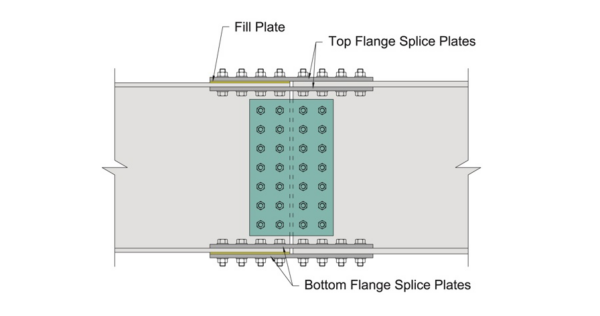
NSBA Releases Updated Bolted Splice Spreadsheet 4.01
NSBA’s Bolted Splice Spreadsheet 4.01 streamlines connection design with expanded options and updated AASHTO LRFD provisions for faster, more economical solutions.
 News
News
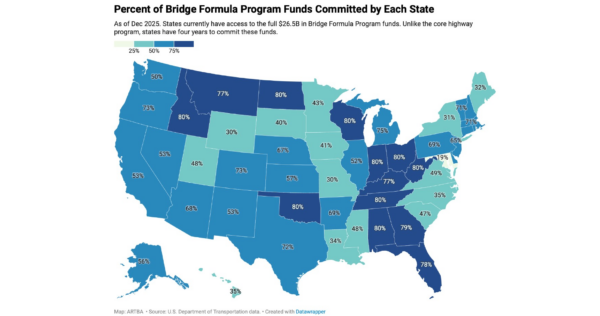
ARTBA Reports $15 Billion Committed Through Bridge Formula Program as Needs Remain
According to an ARTBA analysis, states have committed $15 billion through the bridge formula program, yet one in three bridges still needs work.
 News
News
State DOT CEOs Discuss Key Reauthorization Funding Issues, Investment in Local Programs
AASHTO recently held its 2026 Washington Briefing in D.C., featuring a panel of state DOT leaders discussing critical surface transportation funding and reauthorization issues.