 Short Span Steel Bridges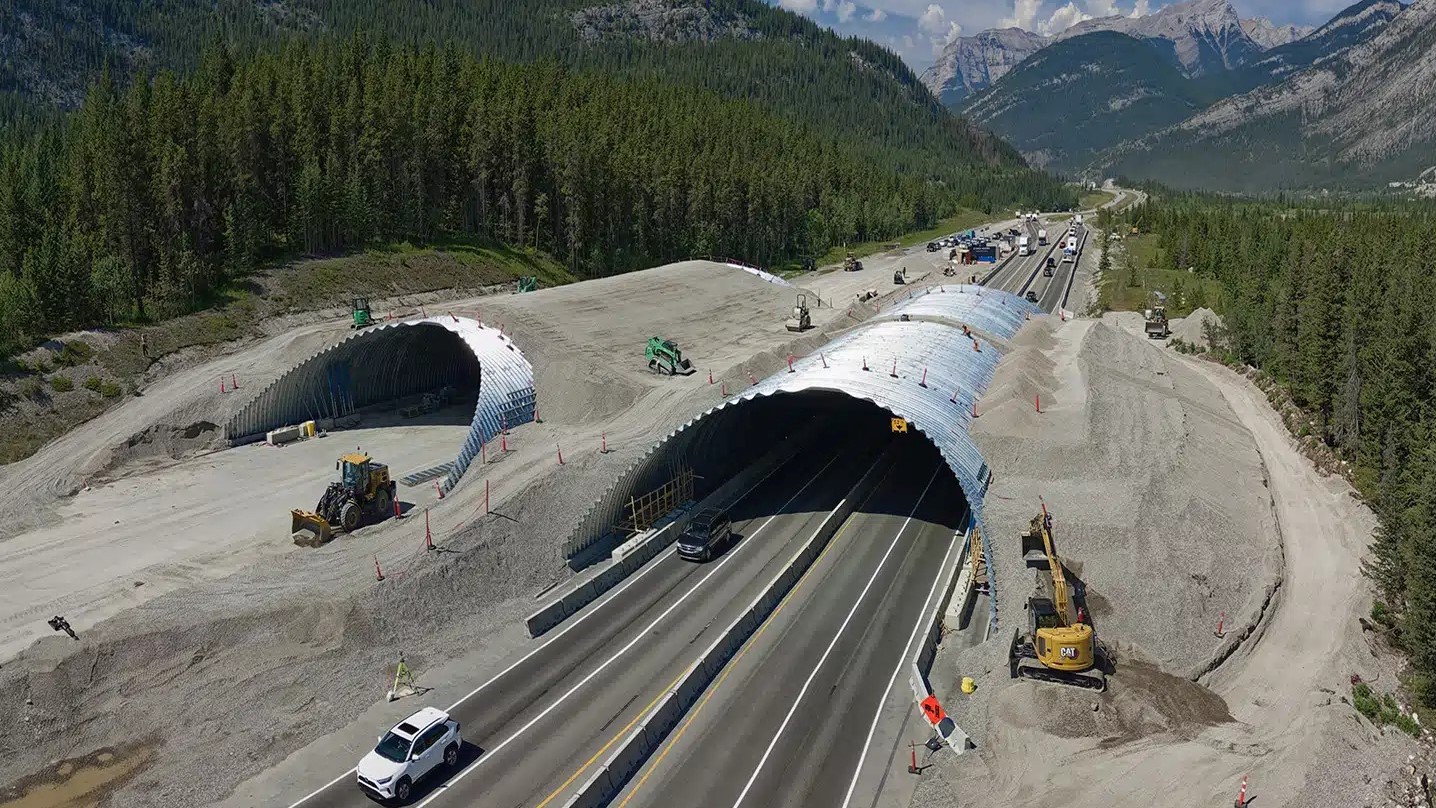
Corrugated Steel Animal Overpass Reduces Wildlife-Vehicle Collisions
Article provided by the National Corrugated Steel Pipe Association
The BF 84211 Stoney Nakoda Exshaw Wildlife Arch project is a ground breaking new animal overpass by Atlantic Industries Limited situated in the heart of Western Canada. This innovative project was designed with a dual purpose: to drastically reduce the number of wildlife-vehicle collisions and to preserve the area’s stunning natural beauty. This ambitious project is a testament to the growing awareness of the importance of harmonizing infrastructure development with environmental conservation.
Innovative Design and Engineering
Spanning an impressive 78.76 feet, the overpass consists of two 285-foot long structures made from corrugated steel. These structures are not only the largest of their kind in Western Canada but also showcase an aesthetically pleasing design that sets them apart from traditional overpasses. Instead of the typical square ends, these structures feature reinforced bevels and an elegant concrete collar, allowing them to blend seamlessly into the breathtaking backdrop of the Rocky Mountains.
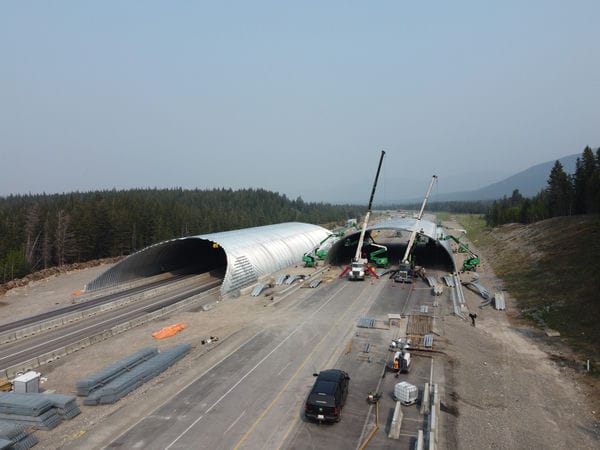
Spanning 78 feet, the overpass consists of two 285-foot long structures made from corrugated steel.
Enhancing Safety for Wildlife and Motorists
Furthermore, the BF 84211 project holds the distinction of being the first animal overpass constructed outside of a National Park in Western Canada. This is a significant milestone, as it addresses the needs of both wildlife and humans along a busy migratory corridor that sees over 24,000 vehicles pass through daily. To ensure the safety of both animals and motorists, the project includes 8 miles of specially designed fencing and 22 strategically placed “jump-outs.” These jump-outs act as escape routes, allowing animals to safely navigate away from the busy roadway and continue their natural migration patterns.

The Stoney Nakoda Exshaw Wildlife Arch is the first animal overpass constructed outside of a National Park in Western Canada.
A Model for Sustainable Infrastructure
The decision to construct this overpass was not taken lightly. In 2018, a feasibility study was conducted to assess the impact of wildlife-vehicle collisions in the area. The results were alarming, with motorists reporting claims ranging from $25,000 to $150,000 due to collisions with animals. This overpass is expected to significantly reduce these incidents, saving both lives and money.
As our world continues to develop and expand, it’s imperative that we prioritize sustainable infrastructure solutions that respect the delicate balance of our ecosystems. The BF 84211 project serves as an inspiring example of how engineering and environmental stewardship can work hand in hand. By incorporating innovative design elements and prioritizing the needs of both wildlife and humans, this project has set a new standard for infrastructure development in the region.
Looking Ahead: A Lasting Impact
Construction on the BF 84211 project began in the spring of 2023, and was projected to be completed in the summer of 2024. Upon completion, it will not only serve as a vital corridor for wildlife but also stand as a symbol of our commitment to building a future where both humans and nature can thrive.
What are buried steel bridges?
Buried steel bridges provide an economical choices for bridge replacement or bridge rehabilitation.
They essentially are a corrugated steel pipe or structural plate pipe systems that is “buried” with backfill to carry loads through soil-structure interaction. This means the bridge structure itself and the backfill soils surrounding the structure interact with each other to support the loads. In effect, the backfill material is part of the bridge.
Because of this interaction, the bridge structure is typically lighter, and there can be significant savings in structure costs.
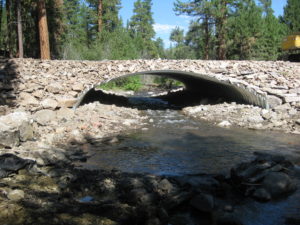
There are also many cases where buried bridges can carry heavier loads than traditional bridges because of the benefits of spreading vehicle loads through the fill. Buried bridges do not require abutments; and unless foundation soil conditions are poor, do not typically
require deep foundations.An additional benefit with buried bridges is that they can be tailored to site conditions and geometric requirements. The design includes inputs for site soils and backfill, meaning that locally available materials can often be used in construction and the structure can be tailored to fit the needs of the site and the owner’s requirements.
 Events
Free Webinar: Designing Stream Crossings to Improve Fish Passage and Flood Resiliency (April 23)
Join SSSBA member Contech Engineered Solutions for a webinar on Aquatic Organism Passage (AOP) and stream simulation design. Learn how properly sized bridges and culverts improve fish passage, strengthen flood resilience, and support long-term infrastructure performance.
 Buried Bridge
Buried Steel Bridge Preserves Streambed While Supporting Heavy Loads
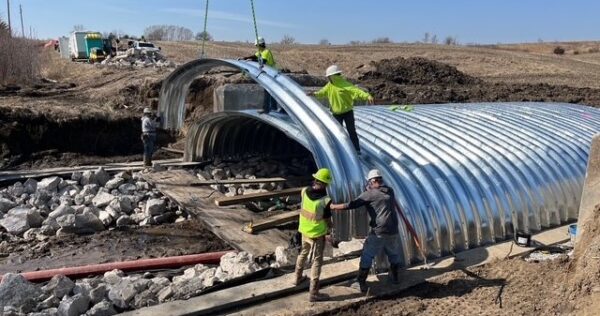
A new galvanized buried steel bridge in Riverside, Iowa, supplied by SSSBA member Lane Enterprises, replaced a weight-restricted structure and restored direct access for local farmers. Its open-bottom steel design preserves the natural streambed, enhances durability, and provides a cost-effective solution for rural infrastructure.
 Buried Bridge
Buried Steel Bridge Protects Wildlife and Motorists in New Mexico DOT Project
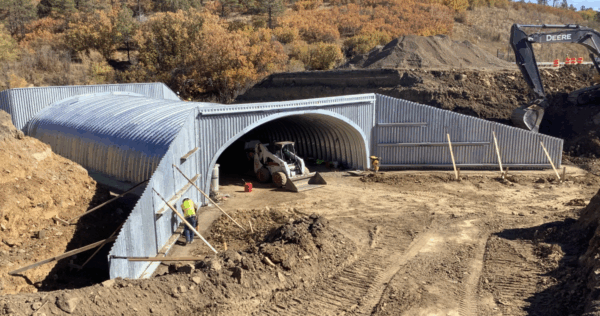
The New Mexico DOT buried steel bridge project, featuring SSSBA member Contech’s custom structural plate design, was honored as the NCSPA Project of the Year for its innovative wildlife crossing solution on I-25 at Raton Pass.
 Case Study
Steel in Action: On-Demand Steel Bridge Video Series
Watch this four-part, on-demand video series featuring expert-led case studies on cost-effective, resilient short span bridge projects—now available with downloadable presentation materials.
 News
News
NCSPA Announces 2025 Project of the Year Winners
The National Corrugated Steel Pipe Association announced the 2025 project of the year winners, including members of the Short Span Steel Bridge Alliance.
 Buried Bridge
NCSPA Releases Report to Simplify the Seismic Design for Buried Structures
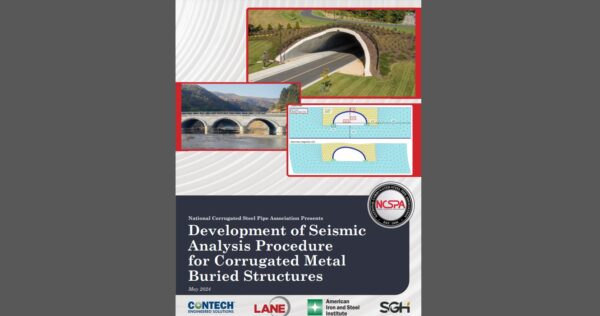
The National Corrugated Steel Pipe Association (NCSPA) released a groundbreaking report that simplifies the seismic design for buried structures including culverts, tunnels and buried steel bridges.