 Short Span Steel Bridges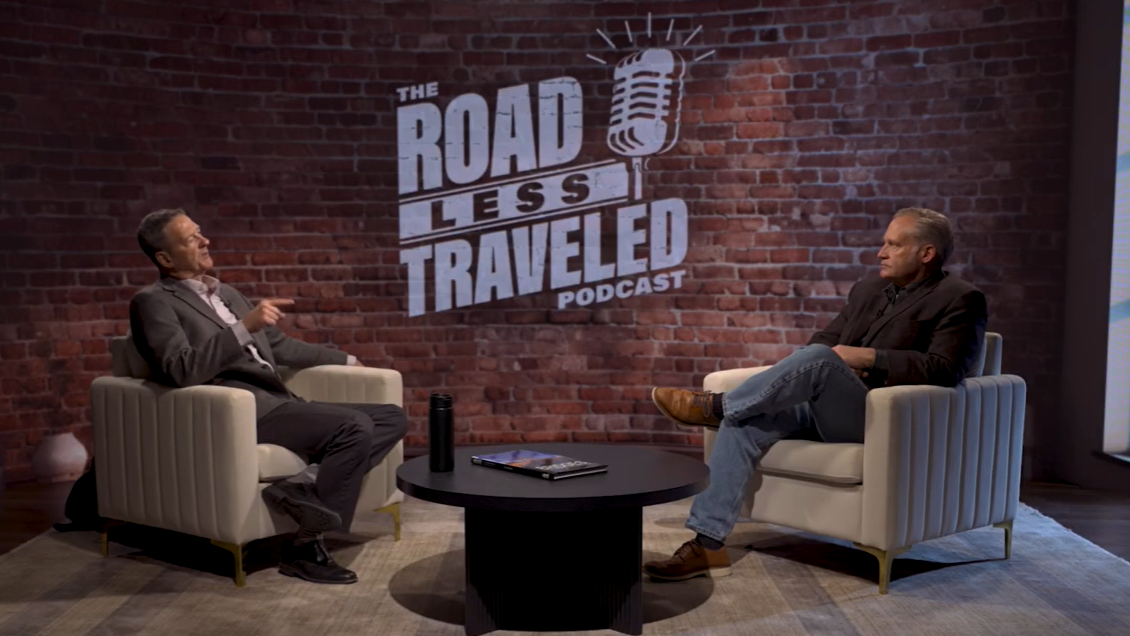
Dr. Robert Connor Featured on Road Less Traveled Podcast
In this engaging interview on the Road Less Traveled podcast, Dr. Robert Connor of Purdue University and a member of the American Iron and Steel Institute (AISI) Bridge Task Force, reflects on his path from a small coal town in northeastern Pennsylvania to becoming one of the nation’s leading authorities on steel bridge fatigue and fracture. He also shares a forward-looking vision for advancing steel bridge engineering, inspection practices, and long-term performance across the United States.
Watch the full interview below or visit the Road Less Traveled podcast.
Interview Highlights
Why Steel Bridges Demand Specialized Expertise
Connor explains why steel bridges are fundamentally different from vertical construction. Unlike buildings, bridges endure constant live loading, weather exposure, fatigue cycles, impact damage, and corrosion. These realities require deeper attention to detailing, inspectability, welding quality, and long-term performance.
He discusses how fatigue and fracture research—much of it rooted in Lehigh University’s historic steel program—has shaped today’s AASHTO specifications and improved bridge safety nationwide.
Risk, Responsibility and Real-World Decisions
The interview pulls back the curtain on how bridge issues are evaluated in real time. Closing a lane or a bridge is never a simple decision. Connor emphasizes that risk is a balance between likelihood and consequence—and that traffic backups can create serious safety risks of their own.
He defends state DOT engineers and inspectors, noting the enormous responsibility they carry while managing aging infrastructure with limited resources.
Addressing the Workforce Gap in Bridge Engineering
One of the compelling parts of the interview focuses on education.
Connor highlights a critical gap – most universities teach structural steel from a building perspective, not a bridge perspective. Bridge design involves different loads, codes, detailing requirements, and fatigue considerations. To address this need, the steel industry has committed significant funding to launch a dedicated steel bridge curriculum at Purdue.
The goal is clear, create a pipeline of engineers specifically trained for steel bridge design—and make the curriculum available to other institutions.
Building a Career Path for Bridge Inspectors
Beyond engineering education, Connor raises an important workforce issue – bridge inspection.
With aging infrastructure and increasing reliance on risk-based inspection methods, states need well-trained inspectors more than ever. Yet there is currently no widely recognized two-year academic pathway for bridge inspection technology.
Through the Center for Aging Infrastructure and S-BRITE at Purdue, Connor is working with state DOTs to develop structured training, certificates, and potential associate-level programs that create real career pathways in bridge inspection.
 News
News
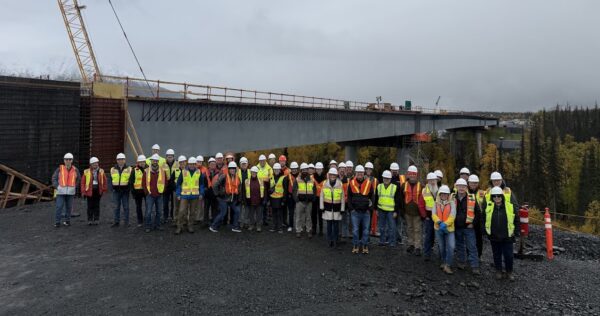
Bridge Task Force and AASHTO Steel Leaders Meet in Alaska
The Steel Bridge Task Force and AASHTO Steel and Metals Technical Committee met in Anchorage for technical presentations, project updates and industry recognition. The meetings concluded with an Alaska DOT hosted tour of the Juneau Creek Bridge and surrounding Sterling Highway construction.
 News
News
SSSBA to Present at North Central States Consortium in Omaha, NE (Sept. 28-30)
Dr. Michael Barker, University of Wyoming, will represent SSSBA at the North Central States Consortium (NCSC) in Omaha, Nebraska. His presentation (Tuesday, September 29, 1:30–2:15 p.m.) will explore how optimized plate girders can expand the range of steel solutions for bridges with spans of 60 to 100 feet.
 News
News
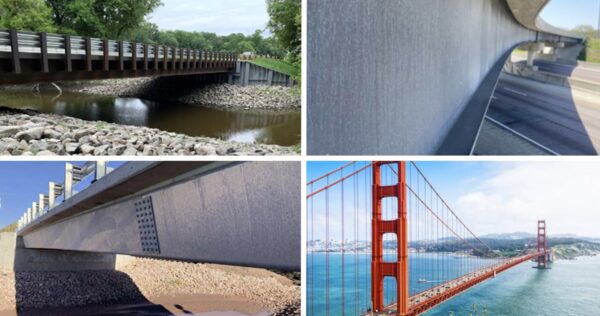
AISI Corrosion Advisory Group to Meet October 27 in Ohio
The AISI Corrosion Advisory Group (CAG) will meet October 27 at the Sherwin-Williams Research & Development Center in Ohio. Discussions will focus on corrosion research, coatings, steel durability and related industry needs.