 Short Span Steel Bridges
FHWA Announces Student Data Analysis Contest
The Federal Highway Administration (FHWA) Long-Term Infrastructure Performance (LTIP) Student Data Analysis Contest is designed to encourage university students to use pavement or bridge performance data to study the various factors affecting pavement and bridge lifecycles and to develop a technical paper to document their research.
Contest Details
The contest’s goal is to encourage university students to use data from the Long-Term Pavement Performance (LTPP) web portal, LTPP InfoPave™, or the Long-Term Bridge Performance (LTBP) web portal, LTBP InfoBridge™, for the analysis.
The intent is to introduce potential future transportation engineering professionals to using quality performance data, applying that data by using appropriate research methods to derive recommendations, and using that data to make informed decisions.
Eligibility and Guidelines
The contest is open to undergraduate and graduate students who are enrolled in degree-granting programs that support pavement or bridge curricula and research, including, engineering, planning, statistics, materials, computer science, and economics.
All students making submissions to the contest must meet the following requirements.
Eligibility
The student(s) must be enrolled in a 2- or 4-year college or university in the United States as an undergraduate or graduate student during the current contest year. Individuals who graduate within 6 months before the submission deadline are also eligible to participate.
Data Sources
Current undergraduate and graduate students are encouraged to prepare a technical paper for the competition based primarily on the use of InfoPave or InfoBridge data. The pavement or bridge data may be supplemented with data from FHWA InfoMaterials™, another FHWA web portal. Each portal may be accessed using its individual link or from FHWA InfoHighway™. Students may also use data from other sources—such as State departments of transportation (DOTs), local government agencies, and transportation research institutions—to support their analyses. However, InfoPave or InfoBridge must be the primary source of data used to perform the analyses.
Topic
Students are encouraged to come up with their own ideas to investigate topics that may advance long-term pavement or bridge performance. Suggested topics include the following:
- “Concerns Faced by a Region or State.”
- “Multidisciplinary Approach To Address Transportation Infrastructure Resilience and Sustainability.”
- “Condition Forecasting Models.”
- “Role of Preservation in Extending Service Life of Highway Infrastructure Assets.”
Original Research
At least 75 percent of the paper’s content shall be new and original.
The remaining 25 percent of the content may be referenced or reproduced with proper attribution to previously published work.
Deadline
Submit papers by August 1 at 11:59 p.m. EDT of the contest year.
Learn more about the contest.
 News
News
Steel Bridge Design Tools Featured at IBC Sessions Support Streamlined Bridge Delivery
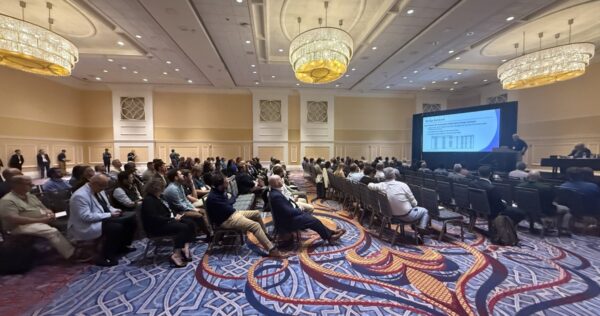
SSSBA supported sessions at the 2026 International Bridge Conference highlighted integrated steel bridge design tools that support efficient project delivery. Presenters showcased resources including eSPAN140, eBEAM140, LRFD Simon and AISC NSBA Standard Bridge Plans, drawing strong interest from bridge owners and designers.
 News
News
USDOT Makes $626M Available for Infrastructure Projects
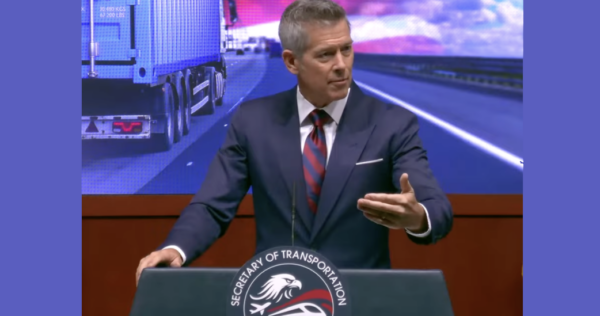
U.S. Transportation Secretary Sean P. Duffy announced a $626.7 million investment in America’s infrastructure. Eligible projects include repairing highways and bridges to reduce traffic congestion and freight bottlenecks.
 News
News
WV DOT Completes Fast-Track Bridge Project with Steel
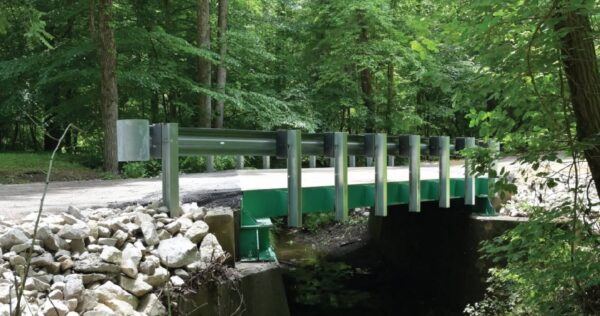
WV DOT completed a fast-track bridge project using salvaged steel beams from a nearby overpass to restore a 20-foot bridge in West Virginia.