 Short Span Steel Bridges
Modular Precast Wall Systems
Prefabricated wall panels can be assembled and connected on-site to create modular precast wall systems. The two common forms of this modular bridge technology include mechanically stabilized earth systems and modular block systems.
For mechanically stabilized earth systems, thin wall panels are placed and anchored to the soil behind them. The devices used to anchor the wall panels engage the soil mass behind the wall panels to create a soil mass gravity wall. The process of setting up this type of wall abutment can progress rapidly because the system is built while the soil is still being filled in behind the wall.

Mechanically Stabilized Earth Wing Wall
For the modular block system, modular reinforced concrete modules are interconnected to build a soil gravity wall.
Mechanically stabilized earth systems are anchored to the soil to help support the soil and support the bridge superstructure. Similarly, modular block systems are gravity walls placed against the soil to meet the same objectives.
Modular block systems interlock with each other as they are constructed into a wall. The mechanically-stabilized earth system panels, are anchored along the soil adjacently to create the full wall.
These wall systems provide an efficient construction process. Either, the wall and its anchorages are placed while the backfill is placed, or the wall is built using reinforced concrete modules while backfill is placed. This system can be constructed faster than geosynthetically confined soil wall abutments. Mechanically stabilized earth walls do have the downside of a failure rate of approximately 2-10%.
Where is the substructure and/or foundation on a bridge?
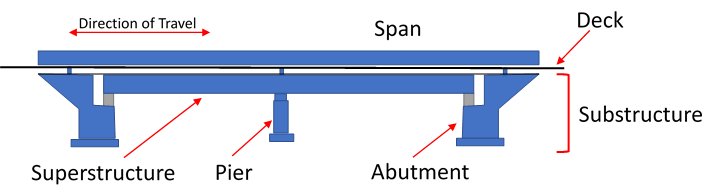
Substructure
The substructure consists of the portion of the bridge that supports the entire structure on the given surrounding soil. There are varying designs due to the different soil conditions for each bridge site and the different weights of the structures for each project.
Foundation
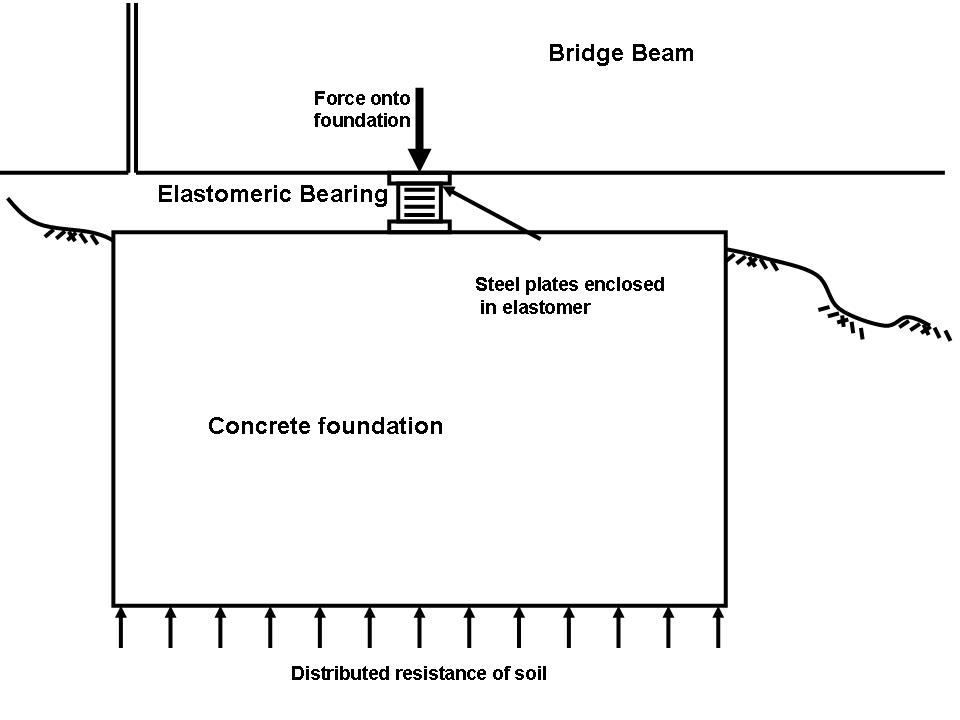
The role of the foundation of a bridge structure is to create a smooth transition allowing the internal forces to flow between the bridge and the ground. Foundations are the ‘bridges’ or links between the bridge and the ground.
There are really only two types of bridge foundations – although each has many variations – ‘spread’ foundations and ‘piled’ foundations. Both types must transfer forces into the soil beneath the bridge.
Spread Foundation
Piles Foundation
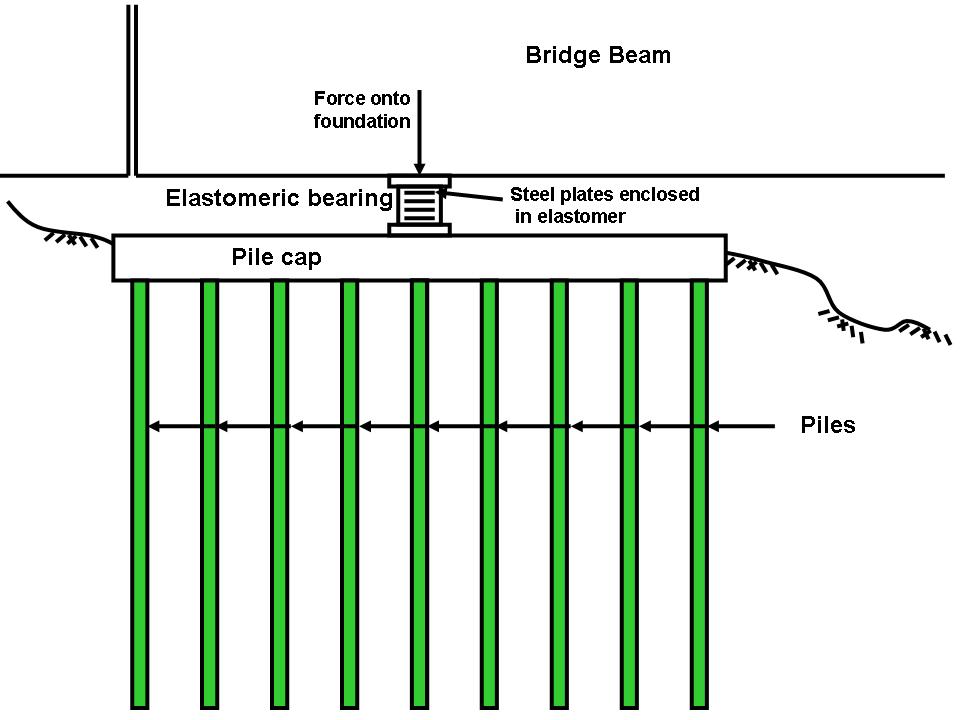
Photo Credit: Bridges
 Case Study
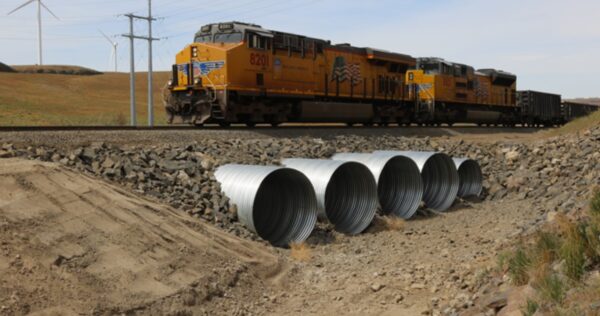
Corrugated Steel Pipe Safeguards Rail System from Excessive Storm Water
The National Corrugated Steel Pipe Association (NCSPA) spotlights a project that used corrugated steel pipe to provide a storm water solution in only 8 hours.
 Substructure & Foundation
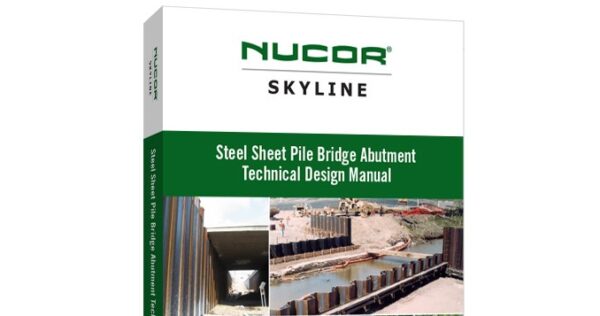
Nucor Skyline: FREE Steel Sheet Pile Bridge Abutment Technical Design Manual
Nucor Skyline has released a new technical design manual for steel sheet pile bridge abutments.
 Substructure & Foundation
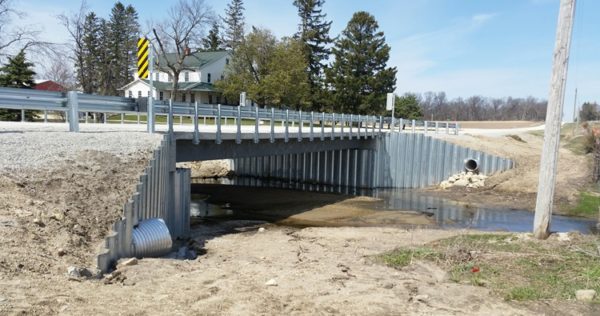
Sheet Pile Wall Abutments
Steel sheet piles prevents scour from becoming a problem.
 Substructure & Foundation
Driven Steel Piles
H-Piles beams are driven in the ground for deep foundation applications.
 Substructure & Foundation
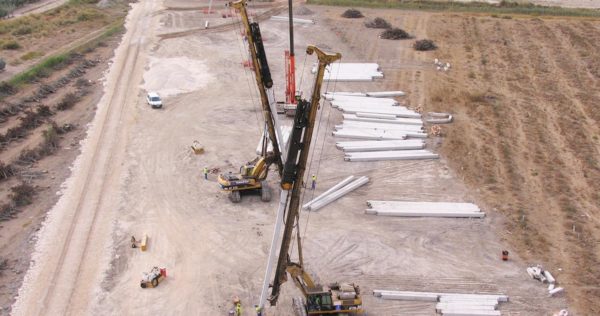
Precast Concrete Piles
Precast piles are made of prestressed concrete that are driven into the ground by means of a diesel or hydraulic hammer.
 Substructure & Foundation
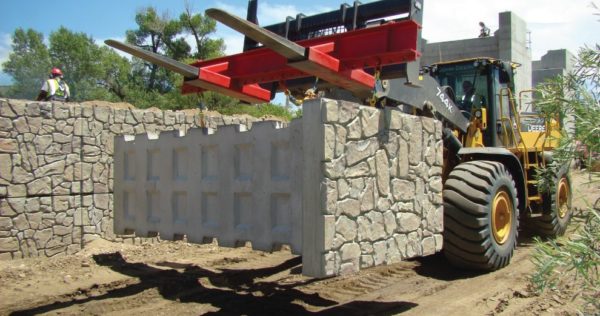
T-WALL® Retaining Wall System
T-WALL® is a gravity retaining wall system, consisting of modular precast concrete units and select backfill.