 Short Span Steel Bridges
Ryan Sherman Presents on Steel Additive Manufacturing for the 2023 Robert J. Dexter Memorial Award Lecture
Ryan Sherman, Ph.D., P.E., assistant professor in the School of Civil and Environmental Engineering at the Georgia Institute of Technology, presented the 2023 Robert J. Dexter Memorial Award Lecture to members of the Steel Bridge Task Force on September 21, 2023, in Denver, Colorado. His lecture topic was “Evaluation of Steel Additive Manufacturing Experimental Results.”

Professor Ryan Sherman presenting his lecture at the Steel Bridge Task Force Meeting in Denver, CO.
Dr. Sherman was selected as the recipient of the 2023 Robert J. Dexter Memorial Award Lecture by the Steel Bridge Task Force of the American Iron and Steel Institute (AISI), the National Steel Bridge Alliance (NSBA), and the American Association of State and Highway Transportation Officials (AASHTO) Steel and Metals Technical Committee. The program was instituted in 2005 in memory of Robert J. Dexter, an associate professor of civil engineering at the University of Minnesota, who was an internationally recognized expert on steel fracture and fatigue problems in bridges.
Robert J. Dexter Award Background
The Robert J. Dexter Memorial Award Lecture program provides an opportunity for individuals early in their careers in structural engineering to present a lecture on their steel bridge research activities to the Steel Bridge Task Force and to participate in its semiannual three-day meeting. Recipients become guests of the Steel Bridge Task Force, which is comprised of leading steel bridge experts.
Dr. Sherman has conducted large-scale laboratory testing and performed field monitoring and instrumentation projects on steel bridge and ancillary highway structures across the United States. His research encompasses the areas of large-scale structural experimentation, structural health monitoring, material characterization, finite element simulation, fatigue and fracture, and additive manufacturing for civil engineering infrastructure.
Ryan Sherman’s Background
He joined the faculty in the School of Civil and Environmental Engineering at Georgia Institute of Technology as an assistant professor in 2019. He earned his B.S. degree in Civil Engineering from Michigan Technological University and his M.S. degree and Ph.D. in Civil Engineering from Purdue University. Previously, he served on the faculty at the University of Nevada, Las Vegas (UNLV) in the Department of Civil & Environmental Engineering and Construction, and he worked as a research engineer at the Bowen Laboratory for Large-Scale Civil Engineering Research at Purdue University. He is a licensed professional engineer in the state of Nevada.
Previous recipients of the Robert J. Dexter Memorial Award Lecture include:
- William Collins, Ph.D., P.E., University of Kansas at Lawrence (2022)
- Matthew Yarnold, Ph.D., P.E., Texas A&M University (2021)
- Matthew H. Hebdon, Ph.D., P.E., Virginia Polytechnic Institute and State University (2019)
- Hussam Mahmoud, Ph.D., Colorado State University in Fort Collins, Colorado (2014)
- Caroline R. Bennett, Ph.D., P.E., University of Kansas in Lawrence (2013)
- Hassan H. Abbas, Ph.D., Auburn University (2012)
- Justin Ocel, Ph.D., P.E., Federal Highway Administration (2010)
- Emmett A. Sumner III, Ph.D., North Carolina State University in Raleigh (2009)
- Jennifer Righman McConnell, Ph.D., University of Delaware (2007)
- Reagan Herman, Ph.D., University of Houston (2006)
- Robert J. Connor, Ph.D., P.E., Purdue University (2005)
The Steel Bridge Task Force was formed more than 40 years ago to coordinate research that establishes safe, cost-effective steel bridges and to implement these developments into steel bridge design codes, specifically the AASHTO design codes. Its members include the American Iron and Steel Institute, National Steel Bridge Alliance, AASHTO Steel and Metals Technical Committee, steel producers, steel organizations, steel bridge fabricators, bridge owners, university faculty, consultants and representatives from the Federal Highway Administration.
AISI serves as the voice of the American steel industry in the public policy arena and advances the case for steel in the marketplace as the preferred material of choice. AISI’s membership is comprised of integrated and electric arc furnace steelmakers, and associate members who are suppliers to or customers of the steel industry. For more news about steel and its applications, view AISI’s websites at www.steel.org and www.buildusingsteel.org. Follow AISI on Facebook, LinkedIn, Twitter (@AISISteel, @BuildUsingSteel) or Instagram.
 News
News
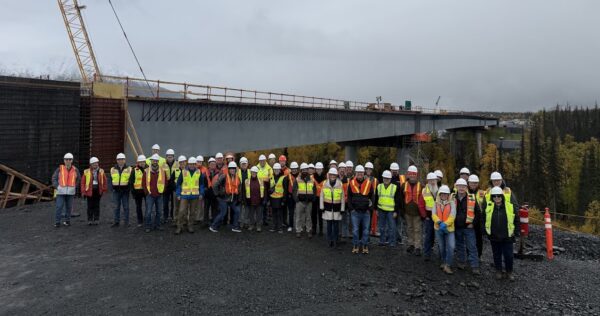
Bridge Task Force and AASHTO Steel Leaders Meet in Alaska
The Steel Bridge Task Force and AASHTO Steel and Metals Technical Committee met in Anchorage for technical presentations, project updates and industry recognition. The meetings concluded with an Alaska DOT hosted tour of the Juneau Creek Bridge and surrounding Sterling Highway construction.
 News
News
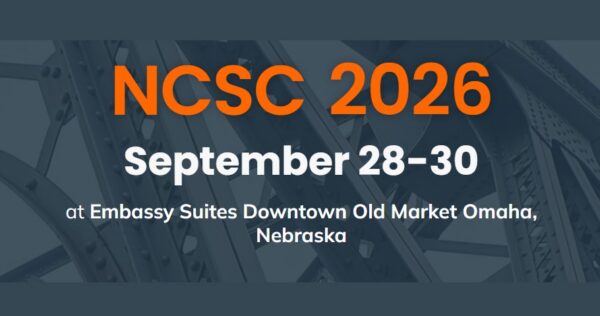
SSSBA to Present at North Central States Consortium in Omaha, NE (Sept. 28-30)
Dr. Michael Barker, University of Wyoming, will represent SSSBA at the North Central States Consortium (NCSC) in Omaha, Nebraska. His presentation (Tuesday, September 29, 1:30–2:15 p.m.) will explore how optimized plate girders can expand the range of steel solutions for bridges with spans of 60 to 100 feet.
 News
News
AISI Corrosion Advisory Group to Meet October 27 in Ohio
The AISI Corrosion Advisory Group (CAG) will meet October 27 at the Sherwin-Williams Research & Development Center in Ohio. Discussions will focus on corrosion research, coatings, steel durability and related industry needs.