 Short Span Steel Bridges
Shear Stud Welding: Before or After Hot-Dip Galvanizing?
Article and image provided by the American Galvanizers Association, authored by Alana Fossa, Technical Director
OSHA’s final rule on Safety Standards for Steel Erection requires installation of “Shear Studs” or “Nelson Studs” be field-installed to reduce the tendency for tripping hazards. However, there are some structure owners that allow or permit welding of studs prior to galvanizing. OSHA and the FHWA have addressed an exemption to OSHA’s final rule on Safety Standards for Steel Erection, but how this works on a state by state or even project by project basis will be different based on expressed concerns over safety.
When the contract requires field installation of studs after galvanizing, stud locations are either masked to prevent galvanizing in the stud location, or the stud locations are ground to remove the galvanizing down to bare steel. In those cases, it is not common to remedy or coat the top flange after shooting the studs. The concrete is poured, and little to no moisture is expected to travel all the way down to the flange surface (although possible). For this reason and to avoid staining, it is recommended to stop masking application 1-2 inches from the edges along the top flange surface.
Currently, the AGA provides recommendations for stud welding, AASHTO/NSBA S8.3 Hot-Dip Galvanizing Specification addresses considerations for field-applied shear studs in Section 6.5, and Welding of Shear Studs to Galvanized Steel Beams from The Steel Construction Institute (SCI) summarizes the history of technical challenges regarding this process.
New research Weldability of Bridge Steel with Protective Coatings is investigating new field welding procedures for shear studs without having to remove hot-dip galvanizing and metallizing, therefore minimizing repair work in the field. Specifically, this research will help determine if acceptable welds can be produced over zinc-coated ASTM A709, Grade 50 steel using flux-cored arc welding (FCAW) and arc-stud welding (SW). This is in direct response to a 2022 update of the AASHTO/AWS D1.5M/D1.5 Bridge Welding Code allowing welders to field-weld through coatings if they prove they are qualified. See Project Overview from Transportation Research Board (TRB).
Weldability of Bridge Steel with Protective Coatings
A Metalworker’s Guide to Safe Welding, Cutting and Brazing
Welding, cutting and brazing are the backbone of metalworking, integral to construction, shipbuilding, manufacturing and maintenance. However, these so-called “hot work” operations also present serious safety risks, including fire hazards, toxic fumes and physical injury. Whether these tasks are performed on a high-rise construction site, in a shipyard or in a small machine shop, safety depends on understanding the risks and following established safety standards. Learn more in the Metalworker’s Guide to Safe Welding, Cutting and Brazing offered by the OSHA Education Center. Thank you to Jacob Beahan for providing this reference.
Does steel provide a sustainable option for bridges?
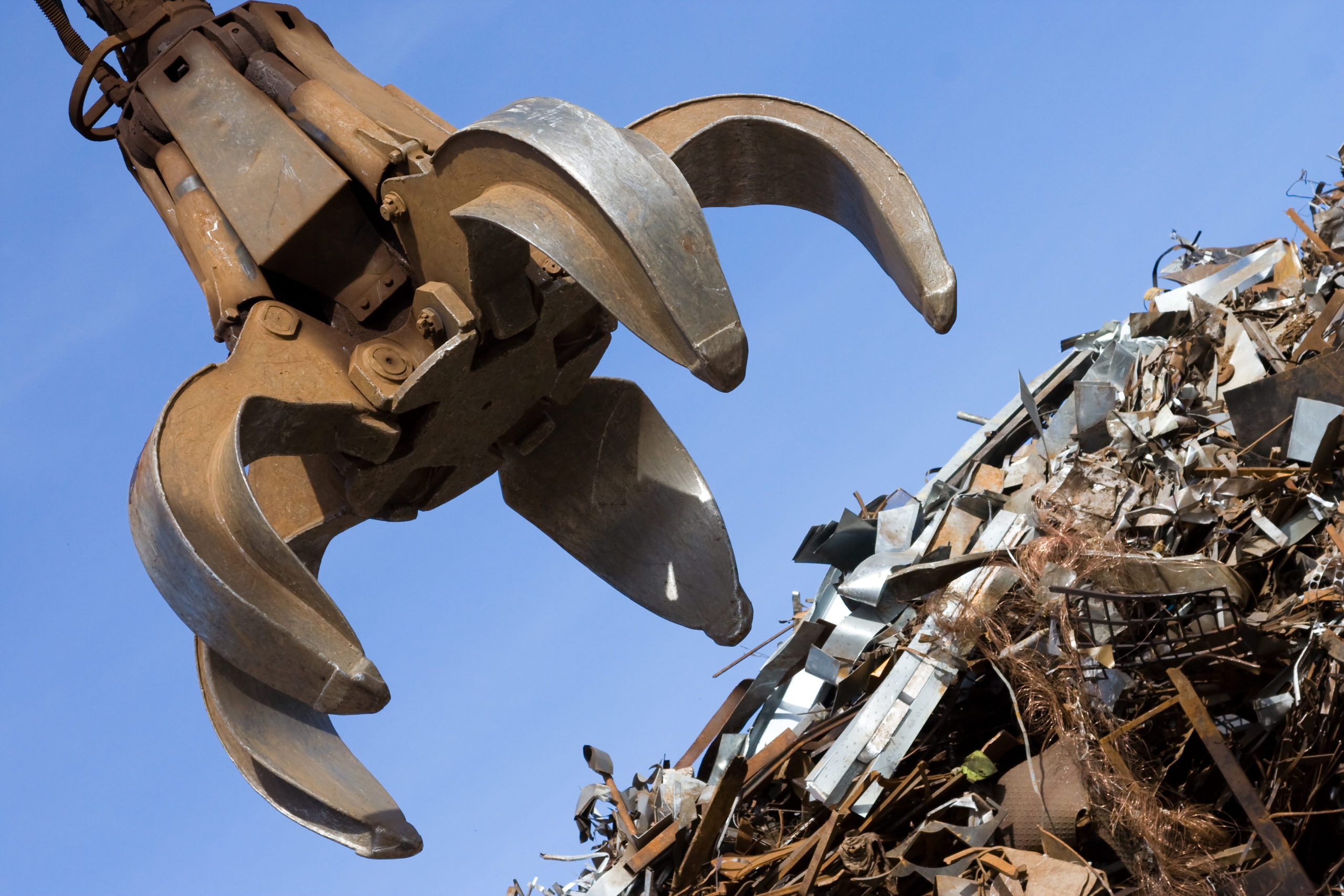
Steel is the most recycled material on the planet. Some of the sustainable advantages of steel include:
- Steel from a disassembled bridge can be used again for another project.
- Steel bridges can last 100 years or more, with minimal maintenance over their long service lives.
- The high strength of steel permits longer spans, which minimizes disruption to underlying habitats.
- Steel is highly resistant to extreme natural disasters such as earthquakes.
- The American steel industry has achieved a 31 percent reduction in energy intensity and a 36 percent reduction in greenhouse gas intensity since 1990.
 News
News
Industry Leaders Weigh In on AASHTO’s 2026 Transportation Priorities
During AASHTO’s 2026 Washington Briefing, a panel of industry leaders discussed reauthorization priorities, emphasizing federal funding, improved safety, faster project delivery, and the role of technology in advancing transportation outcomes.
 News
News
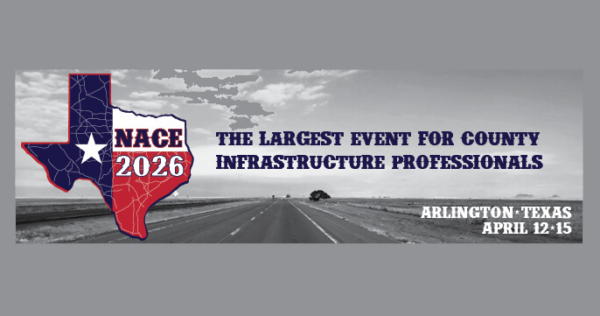
SSSBA to Present, Exhibit and Sponsor Executive Dinner at NACE Conference in Texas (April 12-15)
The SSSBA will present, exhibit and sponsor the Executive Committee dinner at the NACE Annual Conference, April 12-15, in Arlington, Texas. Stop by SSSBA exhibit booth #413 to learn about the benefits of steel bridges.
 News
News
Missouri Steel Bridge Bundle Project Wins Prize Bridge Award
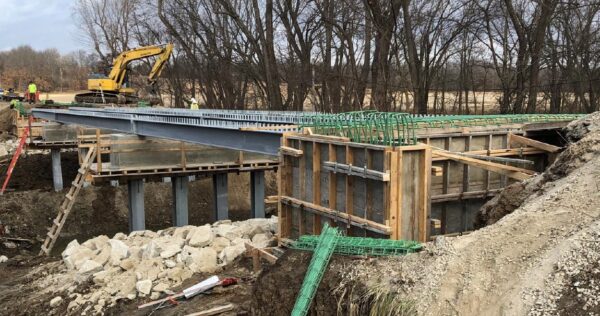
The National Steel Bridge Alliance (NSBA) named Missouri’s FARM Bridges Design/Build Bundle the 2026 Prize Bridge Award winner in the Short Span category. Fabricated by SSSBA member DeLong’s, the project delivered 31 rural bridges across 15 counties using galvanized steel and SDCL design for a 100-year service life.