 Short Span Steel Bridges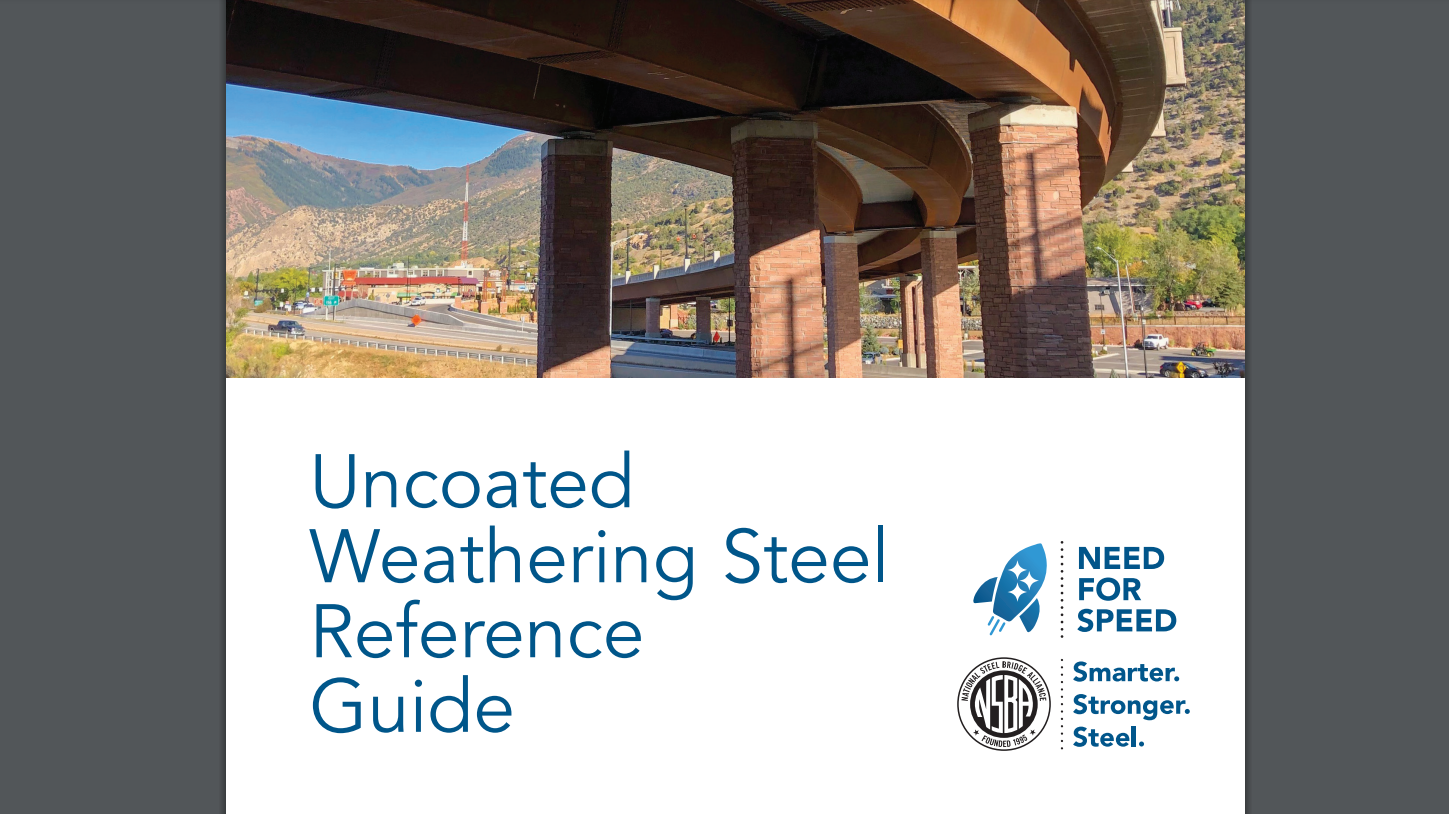
NSBA Uncoated Weathering Steel Guide
The following information was provided by the National Steel Bridge Alliance.
Want an easy and attractive way to speed up steel bridge construction while reducing long-term costs and environmental impacts? Use uncoated weathering steel (UWS)!
For more than 50 years, bridge owners have relied on UWS to deliver excellent performance in diverse environments, and its benefits go way beyond aesthetics. UWS has inherent corrosion protection and doesn’t require any coating applications, so the steel is ready for erection much faster than coated members. This shaves time off the construction schedule, and even long after construction, it minimizes traffic disruptions due to decreased maintenance needs.
In addition to the cost savings from eliminating coatings, UWS is also a friendlier choice for the environment. Less painting means less release of volatile organic compounds into the atmosphere. Plus, you won’t need to worry about the containment and disposal of removed paint nor the abrasive blast media used for surface preparation.
With the long and successful history of UWS in bridges, many best practices for achieving favorable performance are well-established. Numerous studies have confirmed the successful outcomes of using UWS best practices in bridges, and now you can find out all the important takeaways with NSBA’s new Uncoated Weathering Steel Reference Guide!
Download the guide today to learn about site and location considerations, design recommendations, structural design, detailing, maintenance, and more! The Uncoated Weathering Steel Reference Guide is your one-stop shop for everything you need to know about UWS.
Does steel provide an economical solution for bridge construction?
- Due to the light weight of steel, cost savings can be significant
- Studies show that weathering, A1010 (A709-50CR), and galvanized steel reduces both initial and life cycle costs.
- Steel can compete and even save costs when compared with nearly identical concrete structures. re.
- Steel bridges also have long lives, decreasing the need for replacement.
- Steel’s high strength permits longer spans, minimizing disruption to underlying habitats.
- Steel is highly resistant to extreme natural disasters such as earthquakes.
- Steel is the world’s most recycled material and is infinitely recyclable.
- Short span steel bridges can be designed with prefabricated elements which provide a simpler installation and cost savings.
 News
News
AISI Corrosion Advisory Group to Meet October 27 in Ohio
The AISI Corrosion Advisory Group (CAG) will meet October 27 at the Sherwin-Williams Research & Development Center in Ohio. Discussions will focus on corrosion research, coatings, steel durability and related industry needs.
 Events
Free Webinar: Galvanize It! Core Webinar (Aug. 26)
SSSBA member American Galvanizers Association’s Core Galvanize It! webinar provides an introduction to hot-dip galvanizing, covering the galvanizing process, zinc coatings, and key benefits such as corrosion resistance, durability, longevity, sustainability and life-cycle cost. The seminar is AIA and RCEP accredited for 1.0 LU/PDH.
 Durability & Coatings
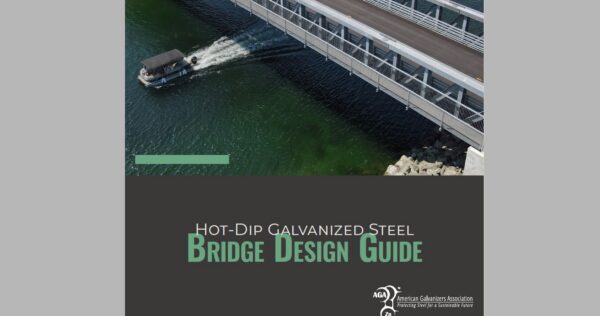
AGA Releases Guide for Hot-Dip Galvanized Steel Bridge Design
SSSBA member the American Galvanizers Association has released a new resource on hot-dip galvanized steel bridges, highlighting durable, low-maintenance solutions that support long service life.