 Short Span Steel Bridges
U.S. DOT Strategic Plan Includes $5 Billion in Research Funding
The U.S. Department of Transportation (DOT) released a strategic plan establishing the agency’s vision for research and technology deployment to help transform the nation’s transportation system over the next five years.
The Research, Development, and Technology (RD&T) Strategic Plan for Fiscal Years (FY) 2022-2026 is the DOT’s guiding plan for transportation research, development and technology deployment activities.
“The plan supports the DOT’s mission to deliver the world’s leading transportation system, serving the American people and economy through the safe, efficient, sustainable, and equitable movement of people and goods,” the agency stated in a press release.
The Strategic Plan guides more than $5 billion in research activities funded through the Bipartisan Infrastructure Law.
$5 Billion for Research Activities
The strategic plan will guide more than $5 billion in research activities funded through the Bipartisan Infrastructure Law including:
- Providing $500 million in funding to the Strengthening Mobility and Revolutionizing Transportation Program, to kickstart a new generation of smart city innovation.
- Establishing an Advanced Research Projects Agency for Infrastructure to scale up research and development efforts to keep pace with and drive innovation.
- Authorizing $50 million per year in funding to establish a new Open Research Initiative to accelerate the achievement of the department’s priorities and goals by funding unsolicited research proposals that yield disruptive technologies with high-impact potential.
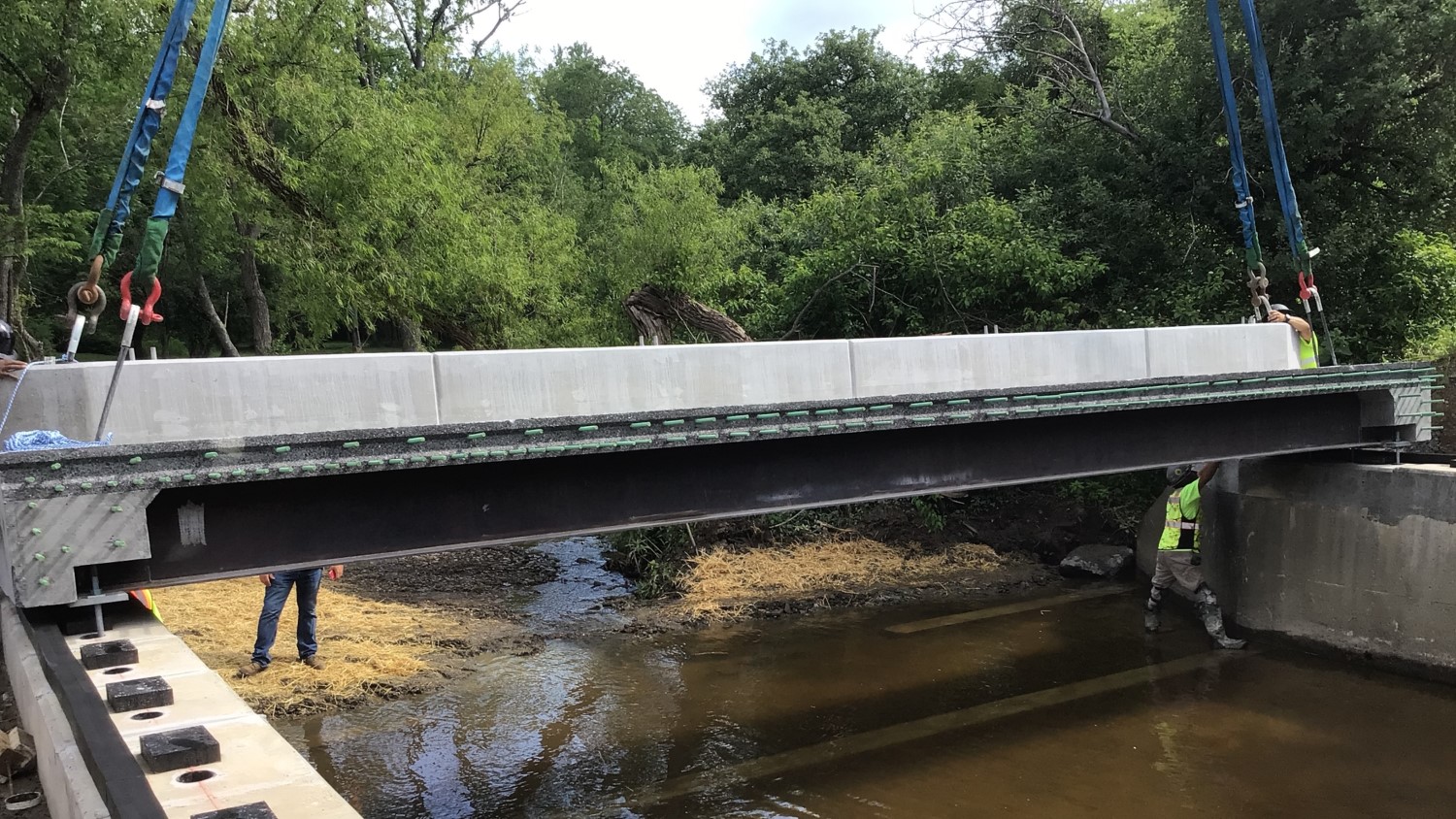
The Pennsylvania DOT implemented an innovative design to extend the service life for a new bridge currently being installed. The concept uses a Flex Beam bridge system combined with corrosion-resistant A709-50CR steel.
“In this time of rapid change and experimentation, research must drive the learning necessary for the public sector to keep pace with technological advancement and to adapt to evolving socio-economic needs,” said Dr. Robert Hampshire, U.S. DOT deputy assistant secretary for research and technology. “By providing a vision for a future transportation system made possible by research, we seek to foster collaborative innovation to create a better transportation future for all.”
Top 9 Technology Trends Transforming Transportation
The U.S. DOT strategic plan includes information on the primary technology trends that have the potential to transform transportation. Rapidly advancing technology coupled with generational transportation investments have the potential to accelerate the transformation of our transportation system. The trends include:
1) Connectivity & Digital Ecosystem
Information networks will support the integration of the transportation system-of-systems. Whether enabled by 6G, GPS, or advances in radio transmitter technologies, next-generation connectivity will allow networks to move massive amounts of data with extremely low latency and high reliability and flexibility. Connected devices embedded in infrastructure, personal vehicles, trains, ships, trucks, buses, and aircraft will require strategies to address security and privacy.
2) Digitization
The transportation system of the future will leverage massive amounts of data to inform research and development, support decision making, and optimize system operations. Digital twin virtual models of an object or system using real-time data, simulation, and machine learning will aid operational testing and decision-making, and inform and accelerate the design and testing of vehicles, traffic management systems, and air traffic systems.
3) Automation
Technologies that automate operations and control systems are being developed and implemented across every transportation mode including cars and trucks, planes, trains, and ships, as well as at ports, airports, and distribution centers. Automation has the potential to transform safety, mobility, energy, and environmental efficiency, as well as to improve the safety and productivity of the transportation workforce, and facilitate freight movement.
4) Artificial Intelligence (AI) and Machine Learning
AI algorithms that can detect patterns, make sense of their environment, and even learn and evolve, are enhancing our ability to conduct large-scale data analysis, and high-fdelity, high-resolution modeling and simulation to address critical traditional transformation challenges. AI and machine learning have the potential to enhance machine perception, accelerate automation, and improve human-machine interactions.
5) High Performance Computing
The continued evolution of computing power driven by quantum computing, edge computing, and cloud computing are enabling computers to solve massively complex problems at exceptional speed. Exponential improvements in data storage and data processing supported by high-speed connectivity have the potential to transform transportation research and technology and boost connected and automated technologies by enabling real-time decision-making and analytics.
Advancing sensor technology is a key force underlying developments in intelligent transportation systems, automation, and smart city concepts. The proliferation of smart, connected sensors that can monitor transportation system conditions and performance, as well as related noise and pollution, will provide data to support improved decision-making, and, in some cases, enable the automation of transportation system operations and maintenance.
7) Next Generation Batteries
Low-emissions transportation technologies such as hybrid and all-electric battery vehicles require next-generation batteries featuring safety, high-energy density, long life, and low cost. Researchers are exploring ways to enhance battery performance and safety, slow battery degradation, advance battery manufacturing and recycling capabilities, and advance alternatives to lithium-ion batteries.
8) Advanced Materials
Lightweight, impermeable, recyclable, and self-healing materials now under development have the potential to greatly improve the safety, sustainability, longevity, and resilience of transportation infrastructure.
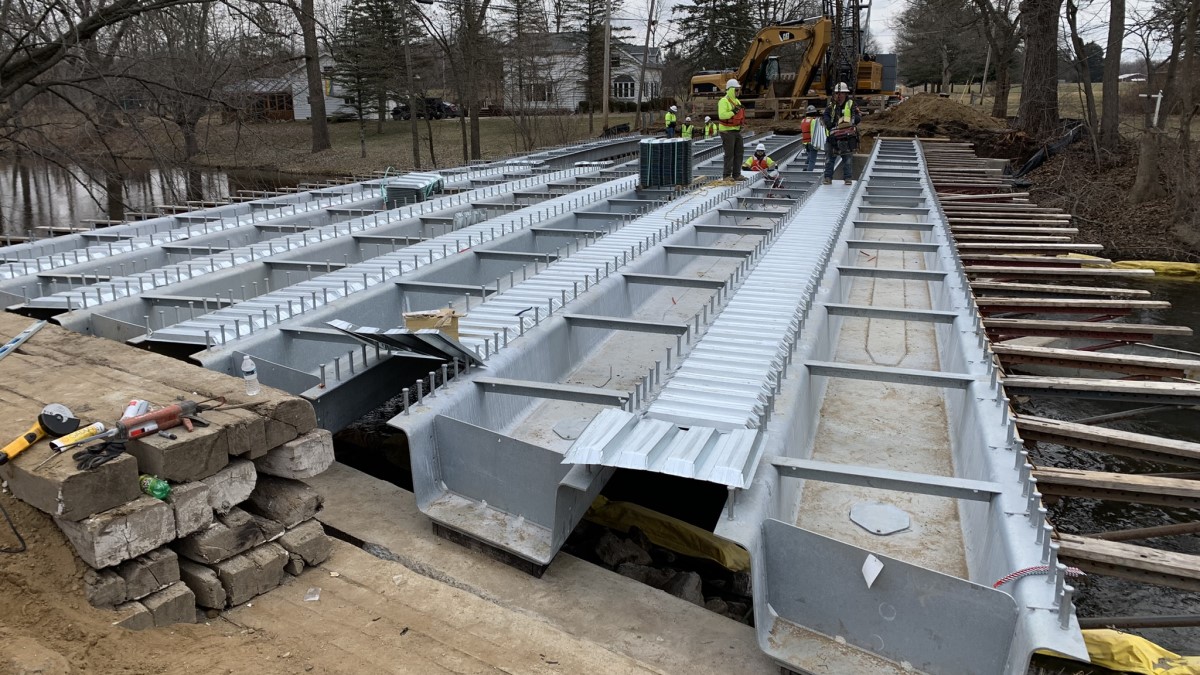
Hot-dip galvanized press-brake tub girders provide over 75 years of maintenance-free protection. (Photo Credit: Valmont Structures)
9) Additive Manufacturing
Additive manufacturing, also known as three-dimensional (3D) printing, is the process of building a 3D product by layering materials using a computer-aided design or laser scan. Currently, 3D printers are used to develop prototypes, rare parts, and highly customized products. Applied at scale, industrial-grade 3D printing could alter supply chains as businesses would not need to ship inventory or components long distances, leading to major changes in freight demand and logistics with related impacts to freight congestion and environmental impacts.
Does the SSSBA offer educational opportunities?
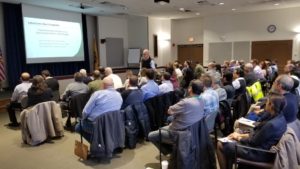
Yes! The SSSBA offers educational opportunities to students and professionals:
Professionals: The SSSBA provides complimentary half-day or full-day workshops on short span steel bridge design to states, counties, and design firms. Topics covered include practical and cost-effective steel bridge design and fabrication with eSPAN140, press-brake-formed steel tub girders, steel buried bridge design, galvanized coating solutions, and economical design with case studies, and more. The workshops can take place virtually or in-person, compliments of the steel industry. Learn more.
Students: The University of Wyoming and the Short Span Steel Bridge Alliance created a free 6-part live-lecture educational series to cover the many aspects of designing, fabricating, and constructing steel bridges. All students who successfully complete the education series will receive a Certificate of Completion from the University of Wyoming. Learn more.
Speakers: The SSSBA provides expert speakers to present topics of interest on the cost-effective design and construction of short span steel bridges. If you need a speaker for your next event, contact the SSSBA.
 News
News
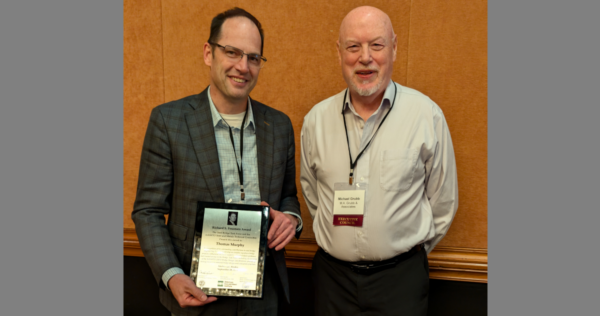
Steel Bridge Task Force Honors Thomas Murphy with 2026 Richard S. Fountain Award
The Steel Bridge Task Force honored Thomas P. Murphy of Modjeski and Masters with the 2026 Richard S. Fountain Award during its September 28 meeting in Anchorage, Alaska. The award recognizes Murphy’s outstanding leadership and contributions to advancing steel bridge design, research and AASHTO specifications.
 News
News
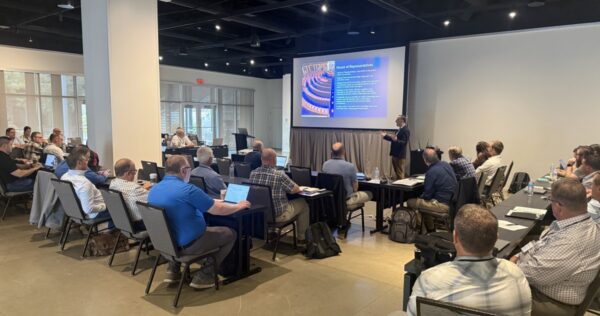
SSSBA Semi-Annual Meeting in Omaha Highlights Innovation and Industry Collaboration
Steel bridge industry leaders gathered in Omaha, Nebraska, for the SSSBA Semi-Annual Meeting. The meeting featured technical presentations, industry updates, facility tours and discussions on advancing short span steel bridges. The next meeting is scheduled for March 17, 2027, in Washington, D.C.
 Events
Free Steel Bridge Plate Girder Design Course: 6-Part Live Webinar Series (Starts Nov. 3)
Take your bridge design skills to the next level in this free six-part webinar series led by Dr. Michael Barker, University of Wyoming. Learn step-by-step how to design a composite plate girder bridge and earn a certificate of completion in this course from the SSSBA.