 Short Span Steel Bridges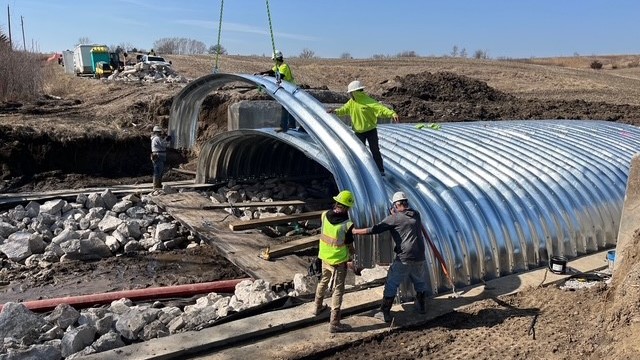
Buried Steel Bridge Preserves Streambed While Supporting Heavy Loads
Excerpt from Roads & Bridges Magazine, images provided by Lane Enterprises.
A new steel buried bridge in Riverside, Iowa has improved access for the local farming community, replacing a narrow, weight-restricted bridge that forced equipment operators to take lengthy detours. The two-lane replacement now allows unrestricted travel, saving farmers up to 30 minutes of travel time while maintaining the natural flow of the stream below.
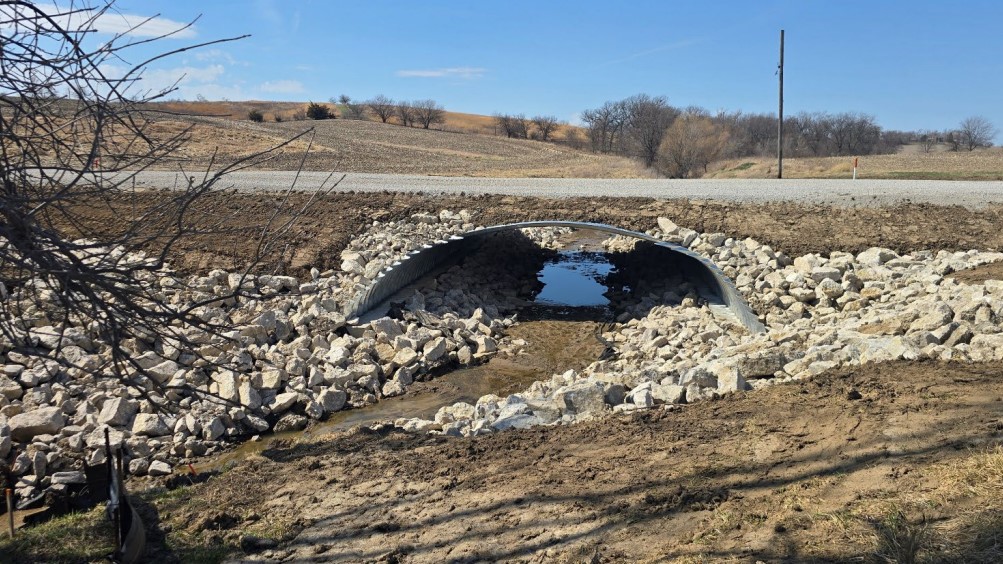
A new steel buried bridge in Riverside, Iowa has improved access for the local farming community.
Expanding Access for Rural Transportation
“The old bridge was limiting the traffic’s ability to get through the area, particularly the farming community,” said Washington County Engineer Jacob Thorius. “People had to drive three or four miles out of their way.”
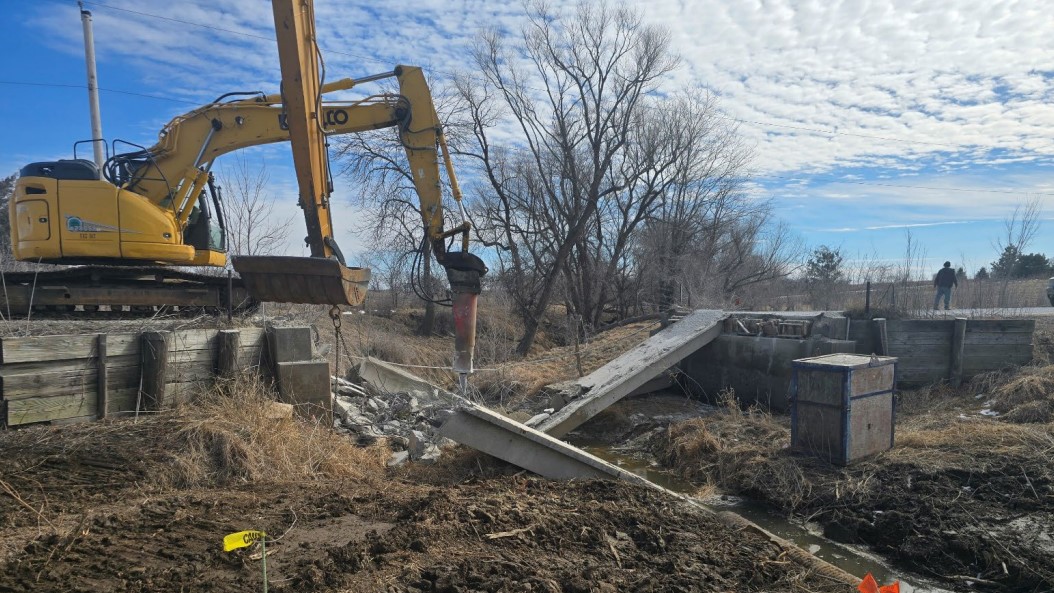
The original one-lane bridge was built in 1966 with prestressed concrete beams, double-T beams and a posted weight limit of 15 tons.
The county opted for a buried bridge design after learning about innovative steel bridge options through the Short Span Steel Bridge Alliance.
“We attended NACE, the National Association of County Engineers Annual Conference,” said Thorius. “They brought in speakers about bridges and the Short Span Steel Bridge Alliance talking about various options. Short span steel structures in Iowa aren’t real common, and we have a very strong concrete bridge industry. But I wanted to explore other options to see what was there to help control cost … with minimal impact to the traveling public.”
Steel Structural Plate Provides Durable, Cost-Effective Solution
According to the Roads & Bridges article, the final design of the 30-foot span buried steel bridge called for 80 feet of galvanized coated, steel structural plate sections that have 15-inch by 5.5-inch corrugations.
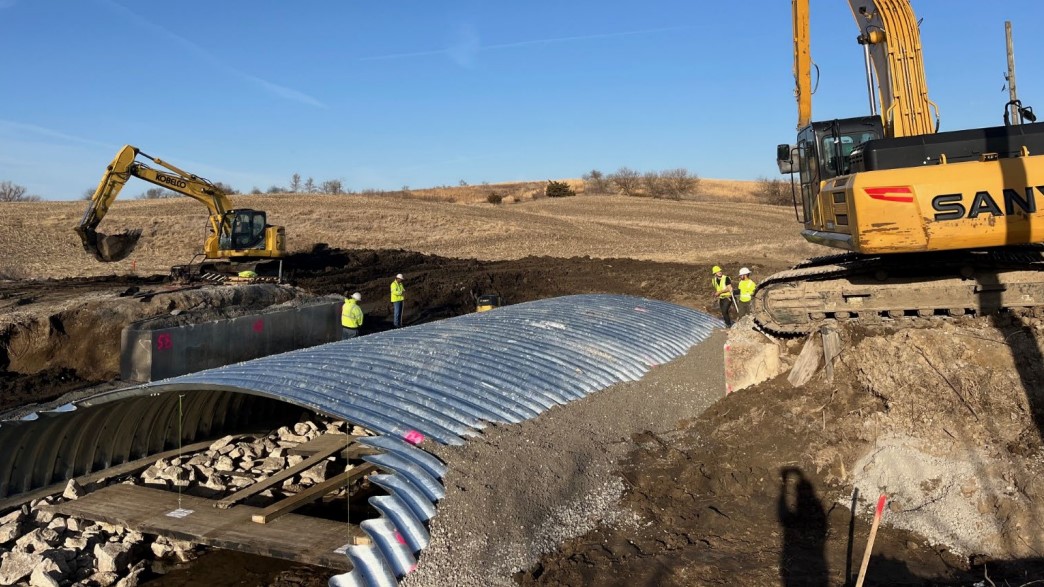
The 30-foot span buried steel bridge was constructed with steel structural plate sections with 15-inch by 5.5-inch corrugations.
The steel structural plate, made by SFIA member Lane Enterprises, LLC, has open-bottom design and headwalls, which reduce debris buildup and hydraulic pressure during floods. The arc of the buried bridge preserves the natural streambed, providing an uninterrupted path for fish and wildlife while avoiding excavation or added scour protection.
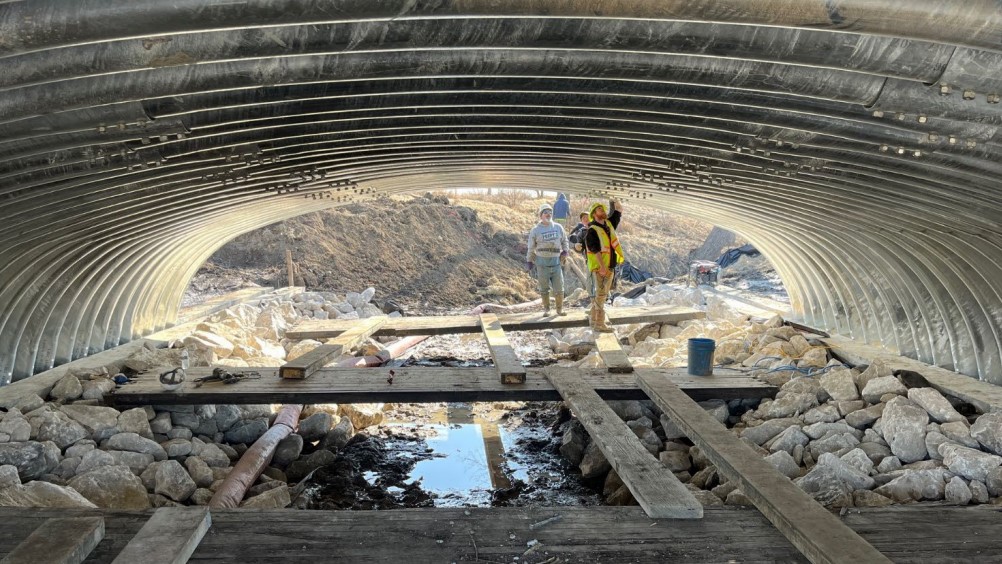
The arc of the buried bridge preserves the natural streambed, providing an uninterrupted path for fish and wildlife.
The structure’s simplicity—built on spread footings rather than deep piles—helped lower costs and streamline construction.
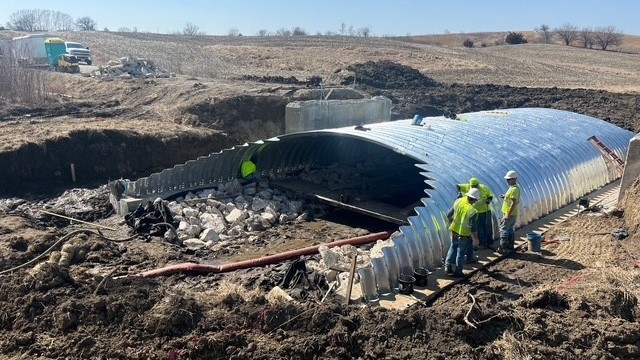
The buried steel bridge was built on spread footings to lower costs and streamline construction.
Strength, Longevity, and Environmental Benefits
Because the structure is built into the ground, the surrounding soil helps distribute vehicle loads, allowing it to support heavier farm equipment. The soil also acts as an insulator, helping to counter freezing conditions and extend service life.
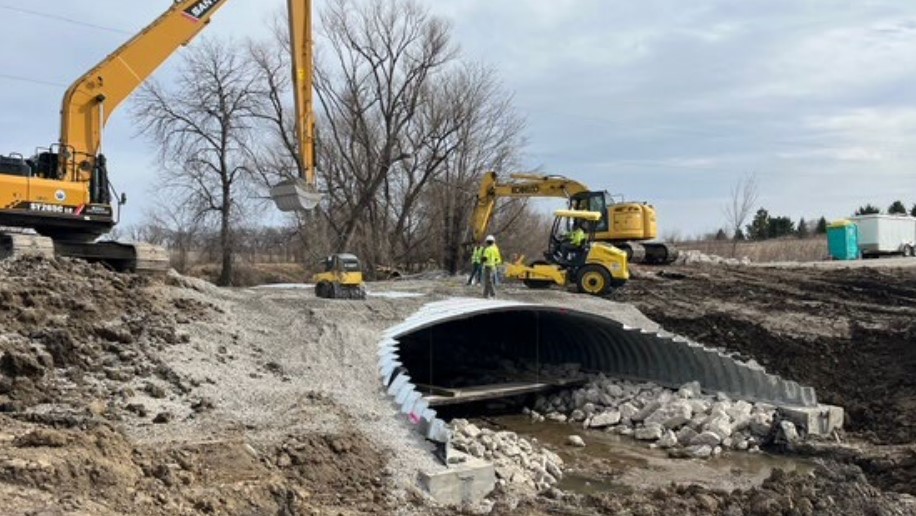
The surrounding soil helps distribute vehicle loads, allowing it to support heavier farm equipment.
“It took us about two and a half days to put it all together,” said Pete Hammes, superintendent of Iowa Bridge & Culvert LC.
With its quick assembly, durability, and environmental performance, Thorius said the county “will definitely be considering [the steel buried bridge] in the future when appropriate.”
“We’re glad the Short Span Steel Bridge Alliance could provide information to Washington County and help them consider steel as a cost-effective, durable option for this project,” said Dan Snyder, American Iron and Steel Institute (AISI) vice president of construction and SSSBA direct. “This buried steel bridge is a great example of how steel can improve rural connectivity while preserving the natural environment.”
Download Slide Deck with Project Photos
Read Original Article from Roads & Bridges Magazine
For more information, contact:
Keith Fraase
Regional Engineer
Lane Enterprises, LLC
A subsidiary of Lane Enterprises Holdings, Inc.
8271 Mercer Street, Pulaski, PA 16143
Mobile: (701) 526-80344
Email: kfraase@lane-enterprises.com
Website: https://lane-enterprises.com
What are buried steel bridges?
Buried steel bridges provide an economical choices for bridge replacement or bridge rehabilitation.
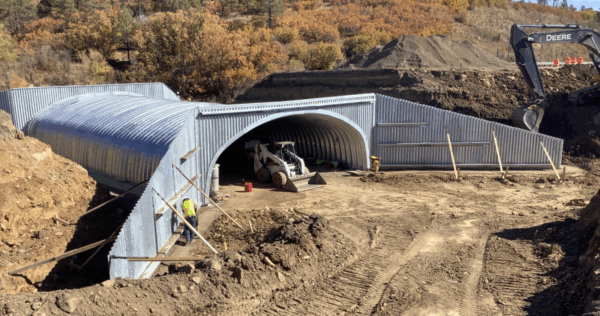
They essentially are a corrugated steel pipe or structural plate pipe systems that is “buried” with backfill to carry loads through soil-structure interaction. This means the bridge structure itself and the backfill soils surrounding the structure interact with each other to support the loads. In effect, the backfill material is part of the bridge.
Because of this interaction, the bridge structure is typically lighter, and there can be significant savings in structure costs.
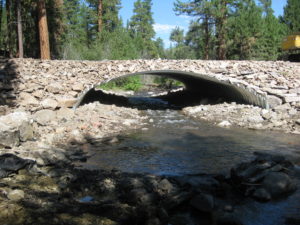
There are also many cases where buried bridges can carry heavier loads than traditional bridges because of the benefits of spreading vehicle loads through the fill. Buried bridges do not require abutments; and unless foundation soil conditions are poor, do not typically
require deep foundations.An additional benefit with buried bridges is that they can be tailored to site conditions and geometric requirements. The design includes inputs for site soils and backfill, meaning that locally available materials can often be used in construction and the structure can be tailored to fit the needs of the site and the owner’s requirements.
 Buried Bridge
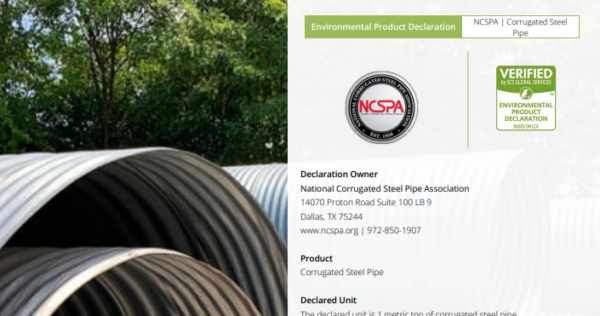
NCSPA Releases Industry-Wide Environmental Product Declaration for Corrugated Steel Pipe
NCSPA has released a third-party verified Environmental Product Declaration (EPD) for corrugated steel pipe, providing standardized environmental information for engineers, owners, contractors and public agencies.
 Buried Bridge
Buried Steel Bridge Protects Wildlife and Motorists in New Mexico DOT Project
To improve safety and preserve wildlife corridors, the New Mexico DOT installed two steel structural plate buried bridges beneath I-25 at Raton Pass. Supplied by SSSBA member Contech, the crossings offer a durable, low-maintenance solution for both transportation and conservation.
 Case Study
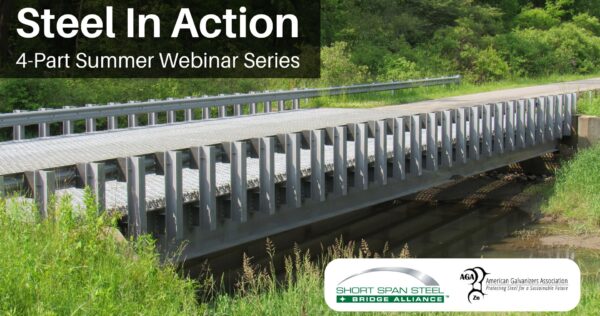
Steel in Action: On-Demand Steel Bridge Video Series
Watch this four-part, on-demand video series featuring expert-led case studies on cost-effective, resilient short span bridge projects—now available with downloadable presentation materials.
 News
News
NCSPA Announces 2025 Project of the Year Winners
The National Corrugated Steel Pipe Association announced the 2025 project of the year winners, including members of the Short Span Steel Bridge Alliance.
 Buried Bridge
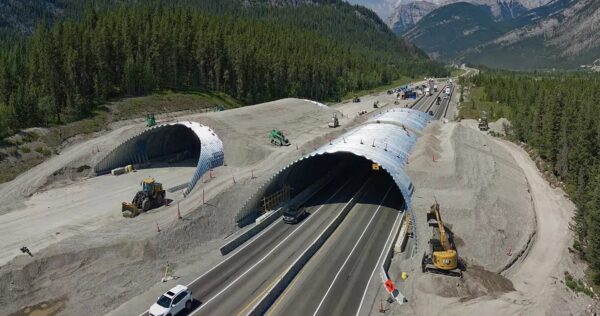
Corrugated Steel Animal Overpass Reduces Wildlife-Vehicle Collisions
The corrugated steel Stoney Nakoda Exshaw Wildlife Arch in Western Canada showcases the balance of engineering and environmental stewardship, setting a new standard for wildlife-friendly infrastructure.
 Buried Bridge
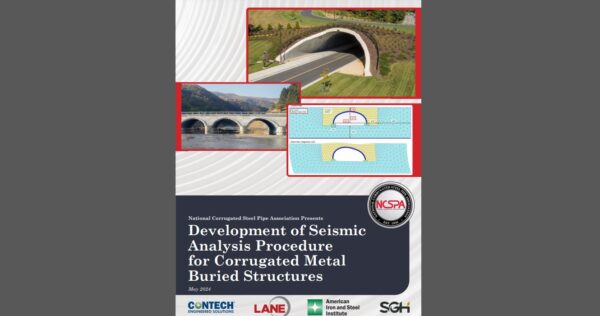
NCSPA Releases Report to Simplify the Seismic Design for Buried Structures
The National Corrugated Steel Pipe Association (NCSPA) released a groundbreaking report that simplifies the seismic design for buried structures including culverts, tunnels and buried steel bridges.