 Short Span Steel Bridges
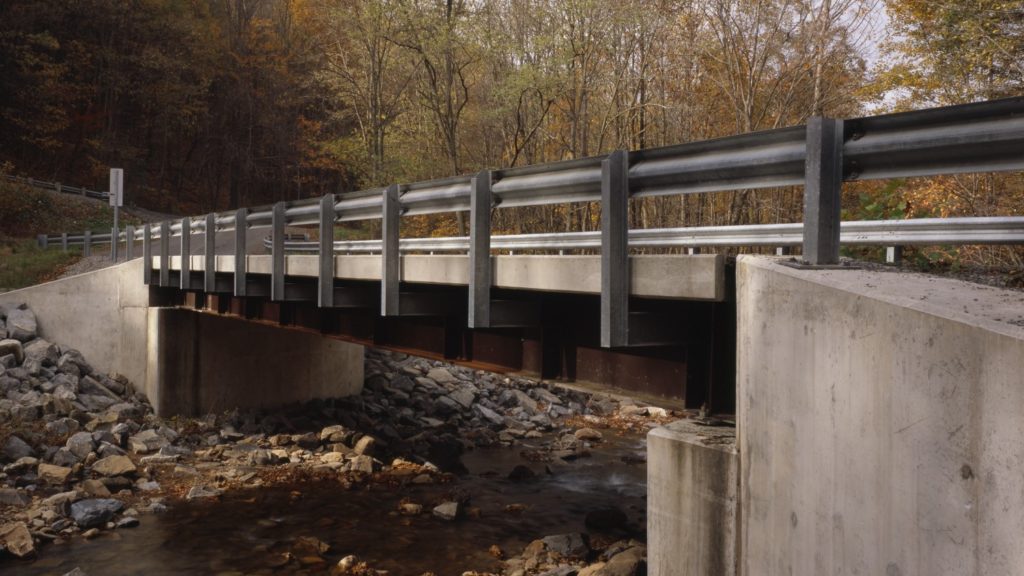
Research Report: An Assessment Of Weathering Steel Bridges In West Virginia
The use of weathering steel in highway bridges has historically been a source of controversy, despite the potential for significant increases in cost-effectiveness. The first weathering steel bridges in America were constructed in the mid-1960s, with a significant percentage of the early weathering steel bridges constructed in Michigan.
Numerous problems with weathering steel bridges in that state, along with problems reported in other states, led many states to question the performance of these structures. In the past two decades, research has attributed the majority of these past problems to: the use of weathering steel bridges in inappropriate environments, excessive salt contamination from deicing salts or marine environments, or problems with design details (such as leaky joints). Therefore, when these problems are controlled or eliminated, weathering steel bridges are an attractive alternative that can provide substantial cost savings to bridge owners.
While the initial material cost of weathering steel is more expensive than that of traditional (non-weathering) steels, considering the cost of painting causes weathering steel to be a cost-effective alternative. In addition to the cost savings offered, implementation of weathering steel provides environmental benefits such as preventing the release of volatile organic compounds into the atmosphere during maintenance painting as well as eliminating concerns with containment and disposal of removed paint.
This paper will provide an overview of a comprehensive assessment of the performance of the weathering steel bridge inventory in West Virginia. It will present findings from an evaluation that was used to categorize locations and site conditions that may lead to less than favorable performance of weathering steel bridges, if applicable. It will also present recommendations regarding detailing procedures to be incorporated with weathering steel bridges.
For More Information:
Karl E. Barth, Ph.D.
Co-Leader, SSSBA Bridge Technology Center
Jack H. Samples Distinguished Professor at West Virginia University
Email: Karl.Barth@mail.wvu.edu
-
Attend the AISI Corrosion Advisory Group Meeting (April 17)
Join technical experts at the AISI Corrosion Advisory Group (CAG) meeting in Lancaster, Pennsylvania, to review recent developments in steel corrosion research, protective coatings and structural durability practices. The day includes a tour of High Steel Structures and a hybrid meeting session – attend in person or virtually – to share insights, discuss emerging technologies and collaborate with industry peers on practical corrosion mitigation strategies.
-

Free Webinar – Galvanize It! Duplex Systems: Coating Galvanized Steel (March 26)
The American Galvanizers Association invites you to attend a free, one-hour webinar on hot-dip galvanized steel and the synergistic benefits of combining galvanizing with paint or powder coatings.
-
SSSBA to Present at 2026 Purdue Road School in West Lafayette, IN (March 17)
Join the SSSBA at the 2026 Purdue Road School on March 17 (11:00–11:50 AM) to explore free tools for designing short span steel bridges. Hear a contractor’s perspective on simplifying construction, improving efficiency, and reducing costs.
-

Free Steel Bridge Plate Girder Design Course: 6-Part Live Webinar Series (Starts Feb. 24)
Take your bridge design skills to the next level in this free six-part webinar series led by Dr. Michael Barker, University of Wyoming. Learn step-by-step how to design a composite plate girder bridge and earn a certificate of completion in this course from the SSSBA.
-
 Economics
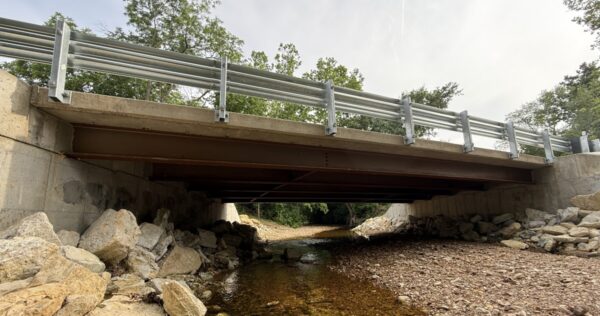
Steel vs. Concrete: A Deep Dive into Bridge Life Cycle Economics
A comprehensive study by Dr. Michael Barker of the University of Wyoming analyzes 1,186 steel and concrete girder bridges in Pennsylvania to compare life cycle costs, offering data-driven insights into long-term economic performance and service life.
 News
News
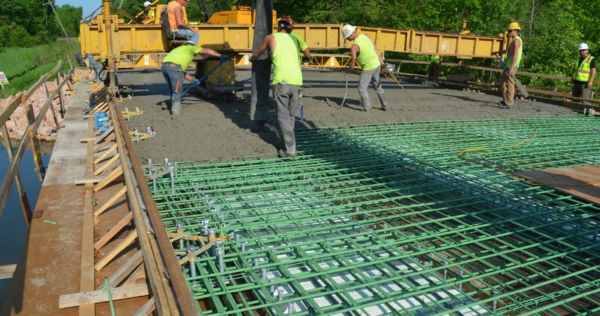
Report Finds $198 billion Needed to Repair America’s Rural Transportation System
A new report from TRIP indicates the U.S. faces a $198 billion backlog in funding for needed repairs and improvements to the rural transportation system.
 News
News
How Will Artificial Intelligence Impact the Construction Industry?
The application of artificial intelligence in various elements is well underway. Applying AI within the construction industry has arrived.
 News
News
U.S. DOT Strategic Plan Includes $5 Billion in Research Funding
The U.S. DOT released a strategic plan that will guide more than $5 billion in research activities funded through the Bipartisan Infrastructure Law.
 News
News
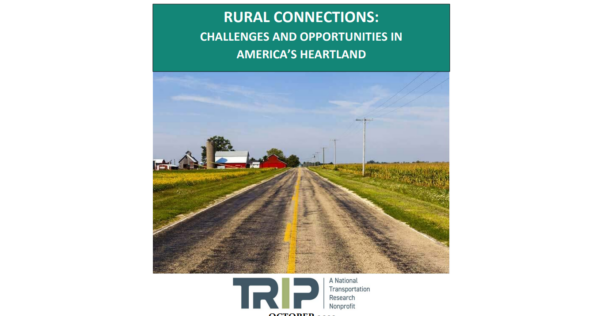
Report Finds $180 Billion Needed to Repair U.S. Rural Transportation System
A new report from TRIP indicates the U.S. faces a $180 billion backlog in funding for needed repairs and improvements to the rural transportation system.
 Press Brake & Folded Plate
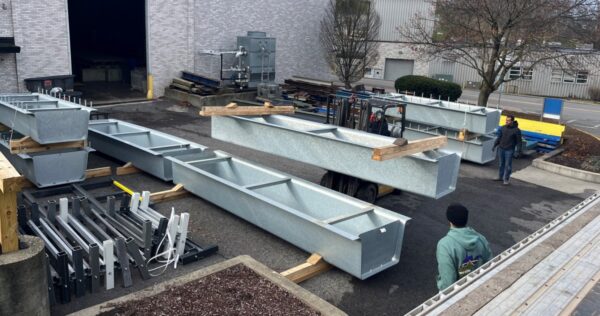
Steel Tub Girder High-Cycle Fatigue Testing Underway at West Virginia University
Galvanized steel press-brake steel tub girder sections arrived at West Virginia University for high-cycle fatigue testing.