 Short Span Steel Bridges
How Will Artificial Intelligence Impact the Construction Industry?
Metal Construction News recently published an article, “Another Perspective on Artificial Intelligence in Construction,” by Joshua Quinter, commercial litigation attorney at Offit Kurman, providing a unique viewpoint on artificial intelligence (AI) within the construction industry. In the article, Quinter focused on the legal considerations that must be acknowledged when introducing AI into the construction industry.
Construction Contracts and AI
Dealing with emerging technologies like AI takes time, so for integration within the construction industry the fastest way is through contracts.
“The law is traditionally a conservative industry,” said Quinter. “It takes a long time for legislatures and courts to catch up, so the best way to deal with these inevitable changes is through your construction contracts.”
While it may be difficult to provide specific clauses for AI, construction contracts will likely need to identify an “owner” when something goes wrong. For example, who is at fault when AI-operated equipment goes rogue? This may include various people on the jobsite such as health and safety professionals, a general contractor, or even the software provider. Moving forward, this information will be critical to include in construction contracts.
AI or Human, Whose Role is It?
There are additional questions that should be considered when introducing AI into construction contracts:
- When is it appropriate to use AI versus an actual person?
- What forms of AI will be permissible?
- How will AI be used?
As with all new technology, a lack of history and experience will make it difficult to answer some of these initial questions. Therefore, it may be difficult to determine the proper place to start.
“The bad news is that this is a new frontier and, as a result, there is no road map,” said Quinter. “The lack of a specific road map is also good news in that it allows parties to be creative in setting their own rules.”
In any case, construction companies should prepare for this technology, because it is entering the industry at a speed never seen before.
Joshua Quinter Speaking at Upcoming SSSBA Event
Joshua Quinter will be speaking on AI and the construction industry at the upcoming SSSBA Semiannual Meeting in New Orleans, LA on January 22-23, 2024.
For more information visit:
Short Span Steel Bridge Alliance Semiannual Meeting (January 22-23) – Short Span Steel Bridges
Read the original article from Metal Construction News.
Learn more about Joshua Quinter by visiting: Joshua Quinter, attorney at law: Plymouth Meeting, Pennsylvania | Offit Kurman
Does the SSSBA offer educational opportunities?
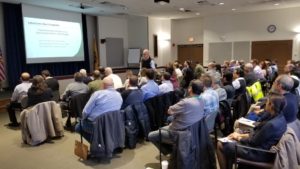
Yes! The SSSBA offers educational opportunities to students and professionals:
Professionals: The SSSBA provides complimentary half-day or full-day workshops on short span steel bridge design to states, counties, and design firms. Topics covered include practical and cost-effective steel bridge design and fabrication with eSPAN140, press-brake-formed steel tub girders, steel buried bridge design, galvanized coating solutions, and economical design with case studies, and more. The workshops can take place virtually or in-person, compliments of the steel industry. Learn more.
Students: The University of Wyoming and the Short Span Steel Bridge Alliance created a free 6-part live-lecture educational series to cover the many aspects of designing, fabricating, and constructing steel bridges. All students who successfully complete the education series will receive a Certificate of Completion from the University of Wyoming. Learn more.
Speakers: The SSSBA provides expert speakers to present topics of interest on the cost-effective design and construction of short span steel bridges. If you need a speaker for your next event, contact the SSSBA.
 News
News
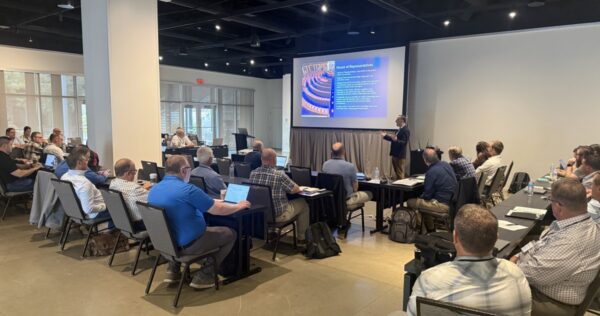
SSSBA Semi-Annual Meeting in Omaha Highlights Innovation and Industry Collaboration
Steel bridge industry leaders gathered in Omaha, Nebraska, for the SSSBA Semi-Annual Meeting. The meeting featured technical presentations, industry updates, facility tours and discussions on advancing short span steel bridges. The next meeting is scheduled for March 17, 2027, in Washington, D.C.
 Events
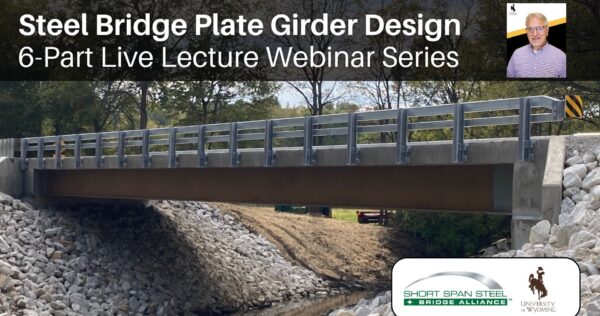
Free Steel Bridge Plate Girder Design Course: 6-Part Live Webinar Series (Starts Nov. 3)
Take your bridge design skills to the next level in this free six-part webinar series led by Dr. Michael Barker, University of Wyoming. Learn step-by-step how to design a composite plate girder bridge and earn a certificate of completion in this course from the SSSBA.
 News
News
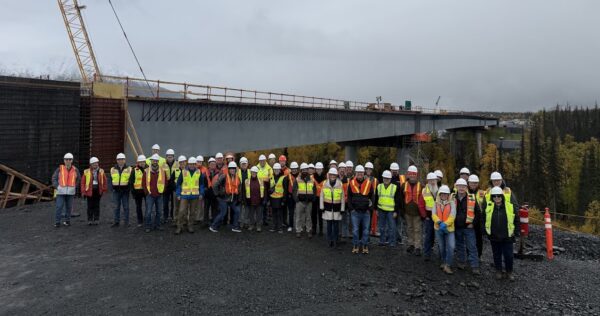
Bridge Task Force and AASHTO Steel Leaders Meet in Alaska
The Steel Bridge Task Force and AASHTO Steel and Metals Technical Committee met in Anchorage for technical presentations, project updates and industry recognition. The meetings concluded with an Alaska DOT hosted tour of the Juneau Creek Bridge and surrounding Sterling Highway construction.