 Short Span Steel Bridges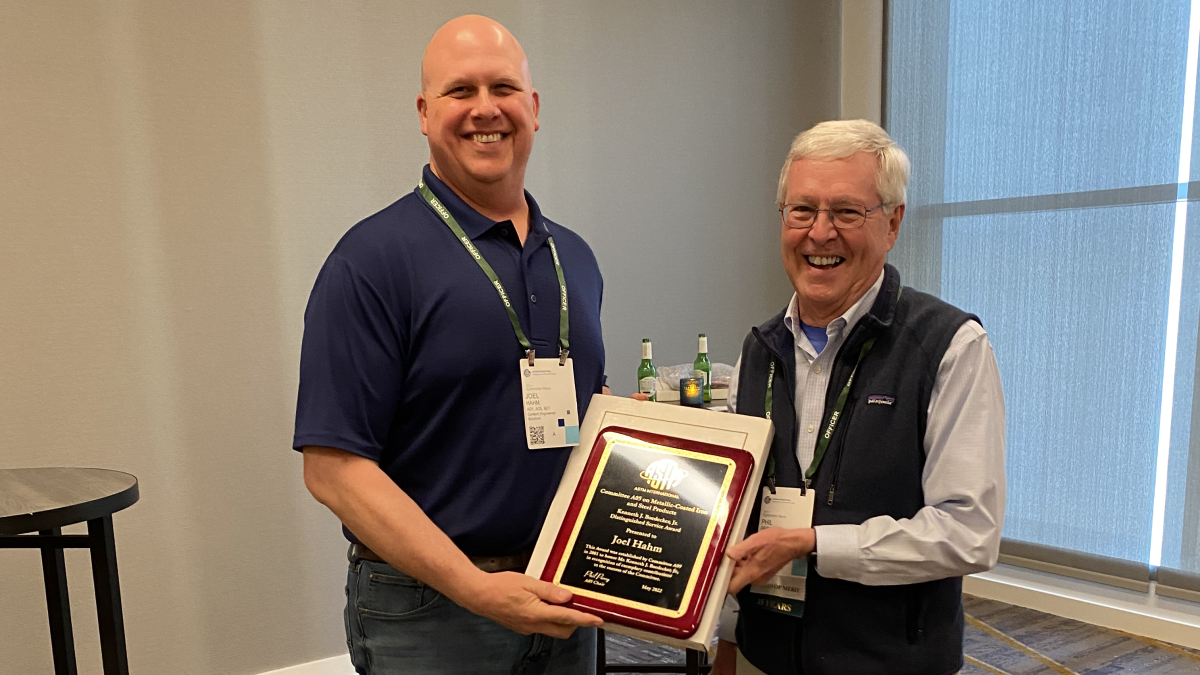
ASTM International Honors Joel Hahm with Distinguished Service Award
ASTM International’s committee on metallic-coated iron and steel products (A05) has presented Joel Hahm, senior engineer at Contech Engineered Solutions, LLC, with its Kenneth J. Boedecker, Jr. Award.
Hahm was recognized for his exemplary contributions to the success of committee A05 and industry-leading expertise on buried bridges. A long-time member of ASTM International, Hahm has been previously honored by the committee with the Award of Appreciation (2017).
Hahm has worked with Contech Engineered Solutions since 2019, and his work includes design of structural plate buried bridge structures and working with engineers, owners, and contractors on development of buried bridge projects. Earlier in his career, he worked with such organizations as Big R Bridge, Geotechnical Services, Inc., and American Engineering Testing, Inc.
Hahm’s other professional memberships include:
- American Railway Engineering and Maintenance of Way Association
- Short Span Steel Bridge Alliance
- Transportation Research Board
- National Corrugated Steel Pipe Association
In the video above, Joel Hahm explains how a buried bridge system is different from an above-ground “traditional girder” bridge.
About American Society for Testing Materials (ASTM): For almost 125 years, ASTM has been well known as one of the world’s largest and most established standards creating organizations. Today, ASTM also offers a wide range of products and services that go well beyond standards: training, proficiency testing, certification and the new portal service Compass. These offerings significantly enhance the benefits ASTM provides to its stakeholders worldwide.
What are buried steel bridges?
Buried steel bridges provide an economical choices for bridge replacement or bridge rehabilitation.
They essentially are a corrugated steel pipe or structural plate pipe systems that is “buried” with backfill to carry loads through soil-structure interaction. This means the bridge structure itself and the backfill soils surrounding the structure interact with each other to support the loads. In effect, the backfill material is part of the bridge.
Because of this interaction, the bridge structure is typically lighter, and there can be significant savings in structure costs.
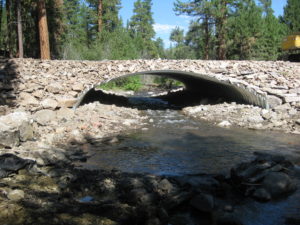
There are also many cases where buried bridges can carry heavier loads than traditional bridges because of the benefits of spreading vehicle loads through the fill. Buried bridges do not require abutments; and unless foundation soil conditions are poor, do not typically
require deep foundations.An additional benefit with buried bridges is that they can be tailored to site conditions and geometric requirements. The design includes inputs for site soils and backfill, meaning that locally available materials can often be used in construction and the structure can be tailored to fit the needs of the site and the owner’s requirements.
 News
News
Missouri Steel Bridge Bundle Project Wins Prize Bridge Award
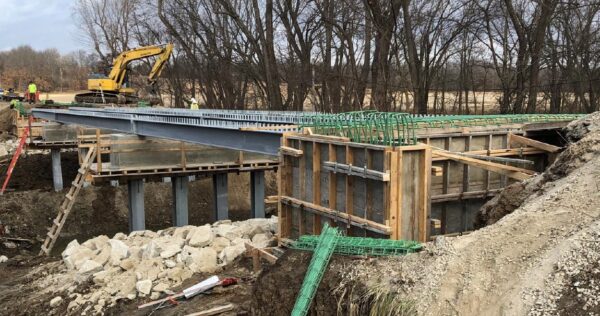
The National Steel Bridge Alliance (NSBA) named Missouri’s FARM Bridges Design/Build Bundle the 2026 Prize Bridge Award winner in the Short Span category. Fabricated by SSSBA member DeLong’s, the project delivered 31 rural bridges across 15 counties using galvanized steel and SDCL design for a 100-year service life.
 Design
NSBA Releases Updated Bolted Splice Spreadsheet 4.01
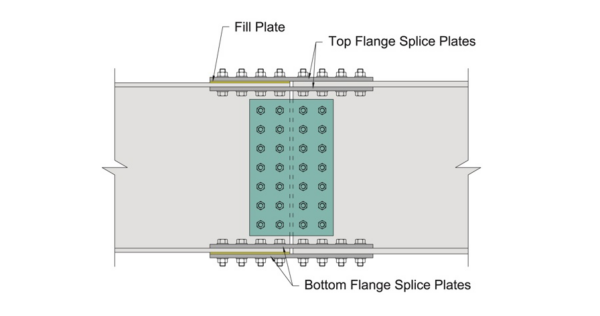
NSBA’s Bolted Splice Spreadsheet 4.01 streamlines connection design with expanded options and updated AASHTO LRFD provisions for faster, more economical solutions.
 News
News
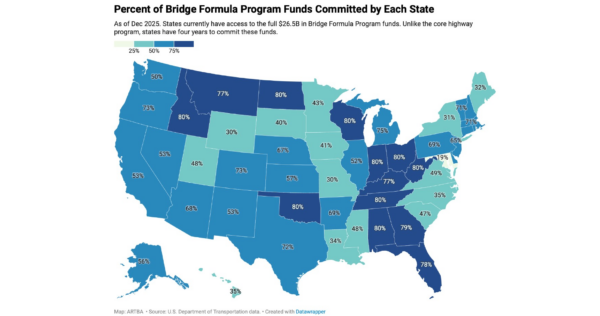
ARTBA Reports $15 Billion Committed Through Bridge Formula Program as Needs Remain
According to an ARTBA analysis, states have committed $15 billion through the bridge formula program, yet one in three bridges still needs work.