 Short Span Steel Bridges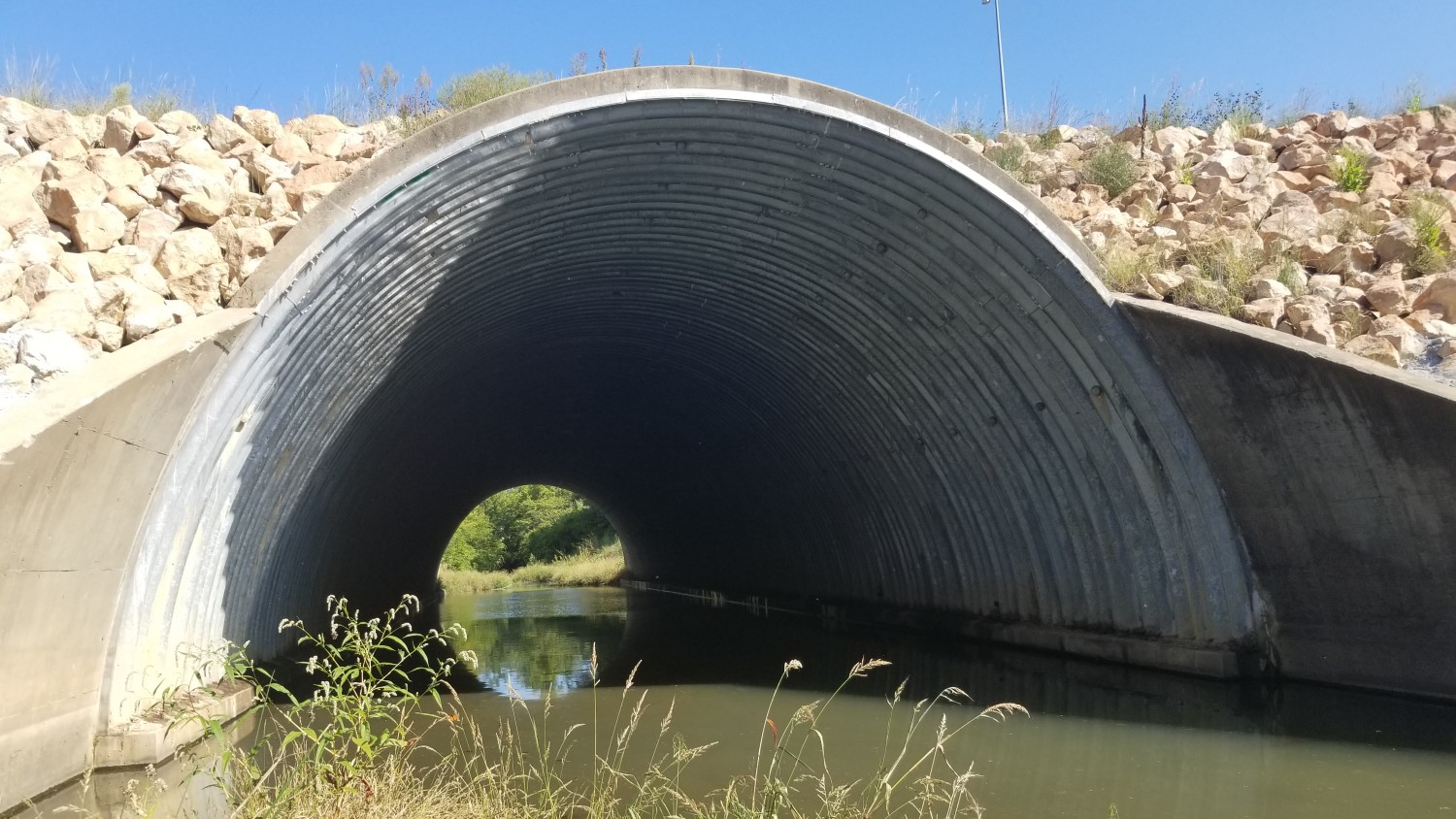
Buried Steel Bridge Provides Solution for Deteriorated Concrete Arch
Article provided by the National Corrugated Steel Pipe Association (NCSPA)
The Deer Creek arch is a 44 foot span by 27 foot rise structure that was originally constructed in 1959 out of cast-in-place concrete. The arch passes under I-70 at Exit 364B – on the east side of Topeka, Kansas. Regular inspections indicated deterioration of the arch, which triggered a need for action.
Replacement of the arch was cost prohibitive and repair of the arch was also determined to be too costly. The Kansas Department of Transportation (KDOT) elected to effectively replace the existing arch in place using a deep corrugated structural plate buried bridge.
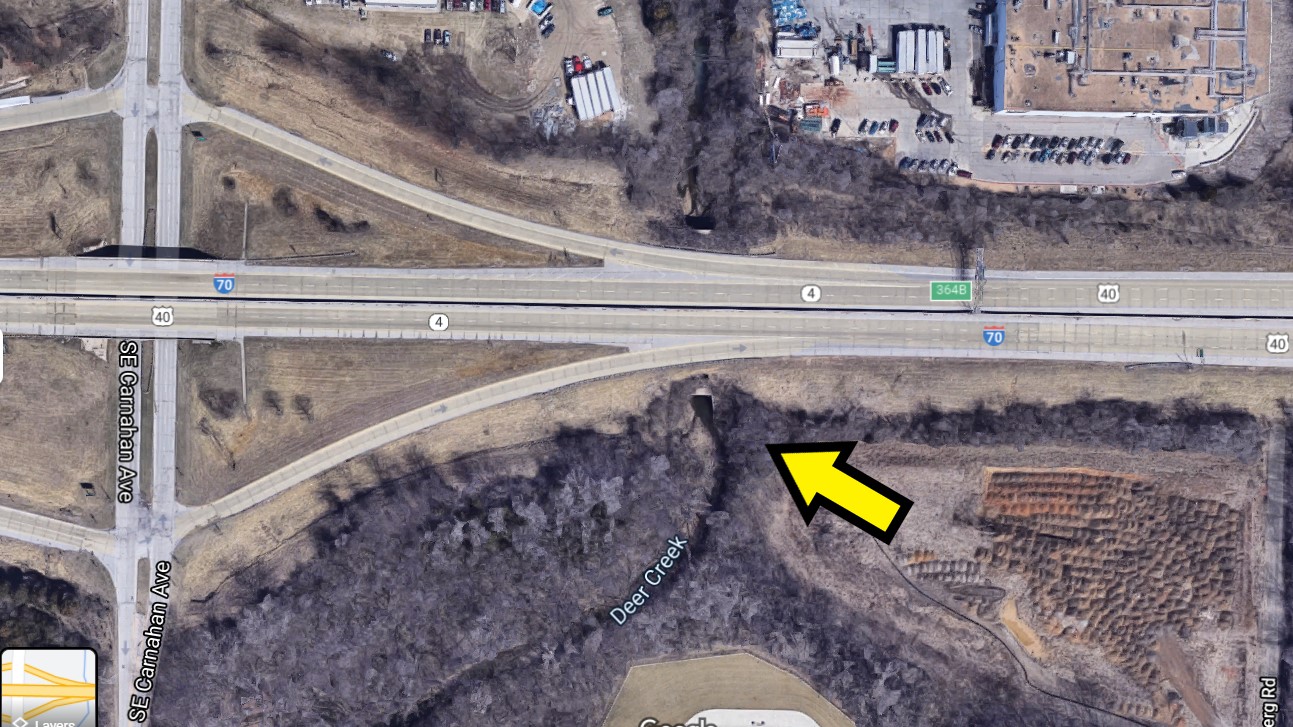
The Deer Creek arch passes under I-70 at Exit 364B – on the east side of Topeka, Kansas.
Buried Steel Bridge Provides Solution For Deteriorated Arch
KDOT was able to obtain the original plans for the existing concrete arch. The results of their inspections indicated that the shape was consistent with the shape in the original plans, so the plans could be used as the basis for developing a custom geometry for the new deep corrugated structural plate Buried Bridge to fit inside the original structure.
The base of the new structure was raised to bear on a new foundation on the inside of the existing arch and above the original footing. The new structure was designed according to current AASHTO LRFD design standards to carry all of the soil cover and interstate highway loads and meet current design standards – as if the existing arch wasn’t there.
Steel Easily Meets All Load Rating Requirements.
The project also required load rating of the new Buried Bridge according to KDOT and AASHTO Manual for Bridge Evaluation (MBE) requirements. At that time, KDOT did not have a load rating procedure in place for deep corrugated structural plate structures and the current AASHTO MBE did not address load rating buried flexible structures.
Big R Bridge engineers worked with KDOT and the project consulting engineer to develop a procedure to comply with KDOT specifications. The new Buried Bridge easily met all load rating requirements.
Custom Geometry Developed to Match Inside of Existing Arch
The geometry of the new Buried Bridge was developed based on the provided dimensions of the existing multi-radius concrete arch. It was critical to closely match the shape of the existing arch to satisfy hydraulic requirements while providing adequate space between the two arches to facilitate installation and grouting of the annular space.
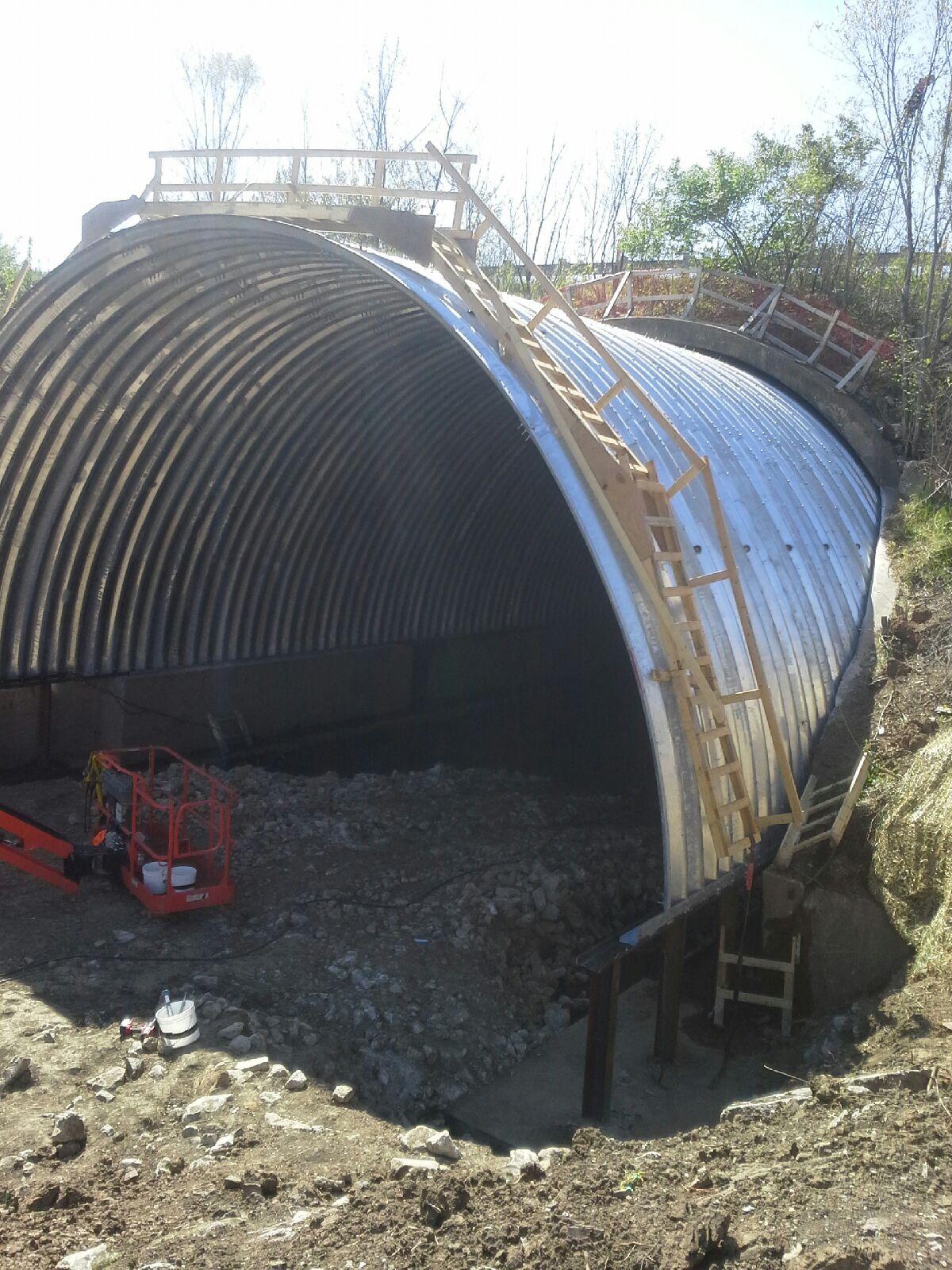
The geometry of the new Buried Bridge was developed to closely match the shape of the existing arch to satisfy hydraulic requirements.
The custom Buried Bridge geometry was developed as part of the finite element analysis (FEA) design process to closely match the inside of the existing arch and provide an annular space of about 6 to 9 inches around the periphery of the structure.
The new structure had inside dimensions of 41’4” span and 21’3” rise with an overall length of 200 feet. The new Buried Bridge consisted of hot dipped galvanized steel deep corrugated structural plate with a corrugation profile of 15” peak to peak by 5½” deep, steel thickness of 0.170” (8 gauge), and overall structure weight of about 155,000 lbs. The structure was shipped in standard 30” wide plates and was assembled on site using 5 plates per ring.
Project Sets Record for Largest Buried Bridge Below an Interstate
The arch was assembled several rings at a time at one end of the existing concrete arch on temporary shoring and then slid into place incrementally on the new foundation inside the existing arch as rings were added. After the arch was completed and in place, drainage holes were cut at various locations to extend lateral drainage lines from the existing concrete arch through the new arch. After the drainage lines were extended the space between the new Buried Bridge and existing concrete arch was grouted to provide intimate contact between the old & new structures.
The space between the new Buried Bridge and existing concrete arch was grouted to provide intimate contact between the old & new structures.
The project experienced significant flooding during construction, halting the project. The partially constructed Buried Bridge was unaffected by the flooding, with no need for adjustments or repairs, and construction resumed after cleanup. At the time it was built, this structure was the largest deep corrugated structural plate Buried Bridge below an interstate highway in the United States.
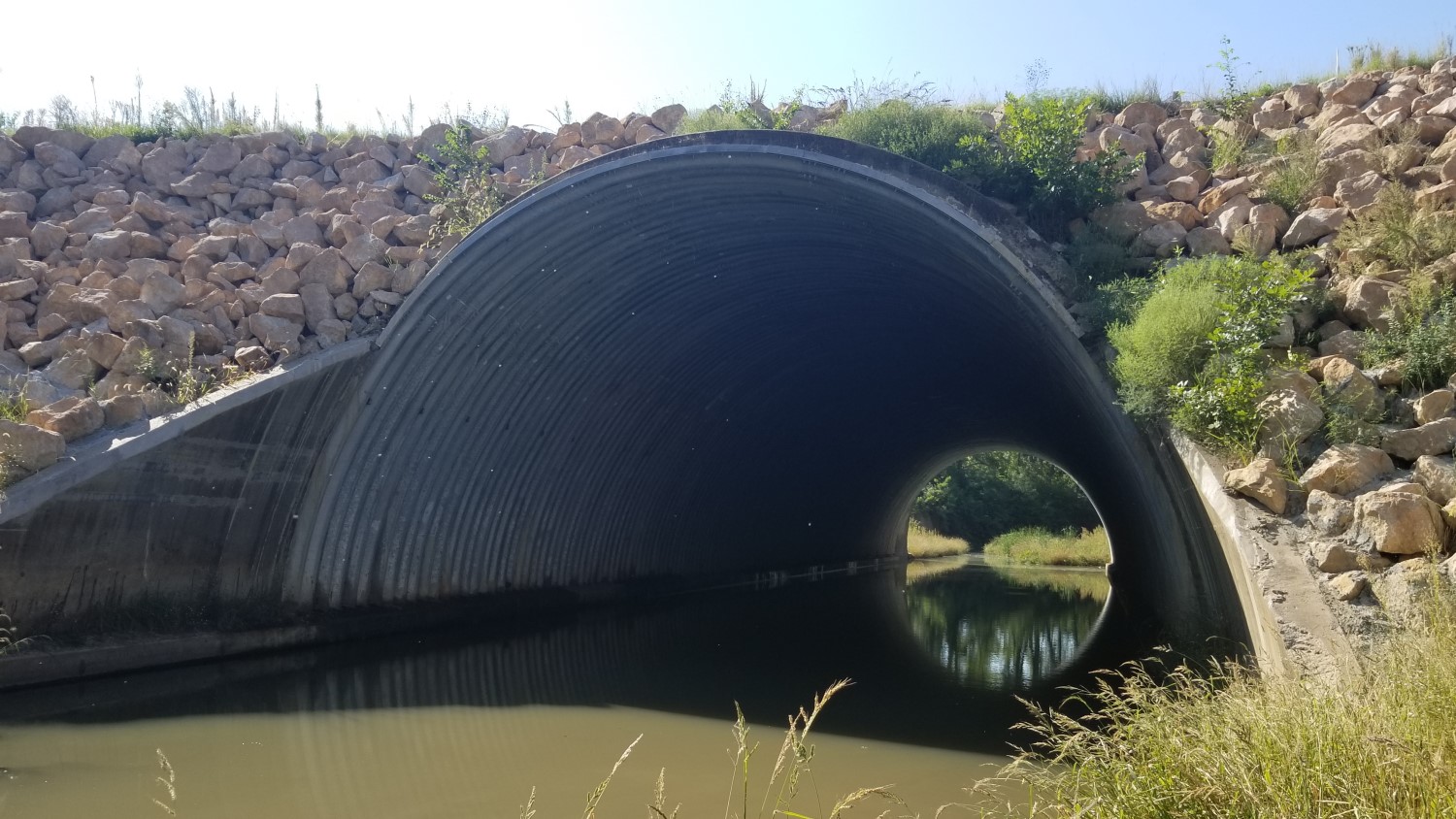
This structure was the largest deep corrugated structural plate Buried Bridge below an interstate highway in the United States (at time of installation).
Deep corrugated structural plate Buried Bridges are emerging as an economical, easy to build alternative for replacement and rehabilitation of existing bridges and concrete arch structures. These structures meet all AASHTO design, construction, and material requirements and can be custom designed and sized for almost any application. NCSPA member fabricators of these products have in-house experts available to assist on your project.
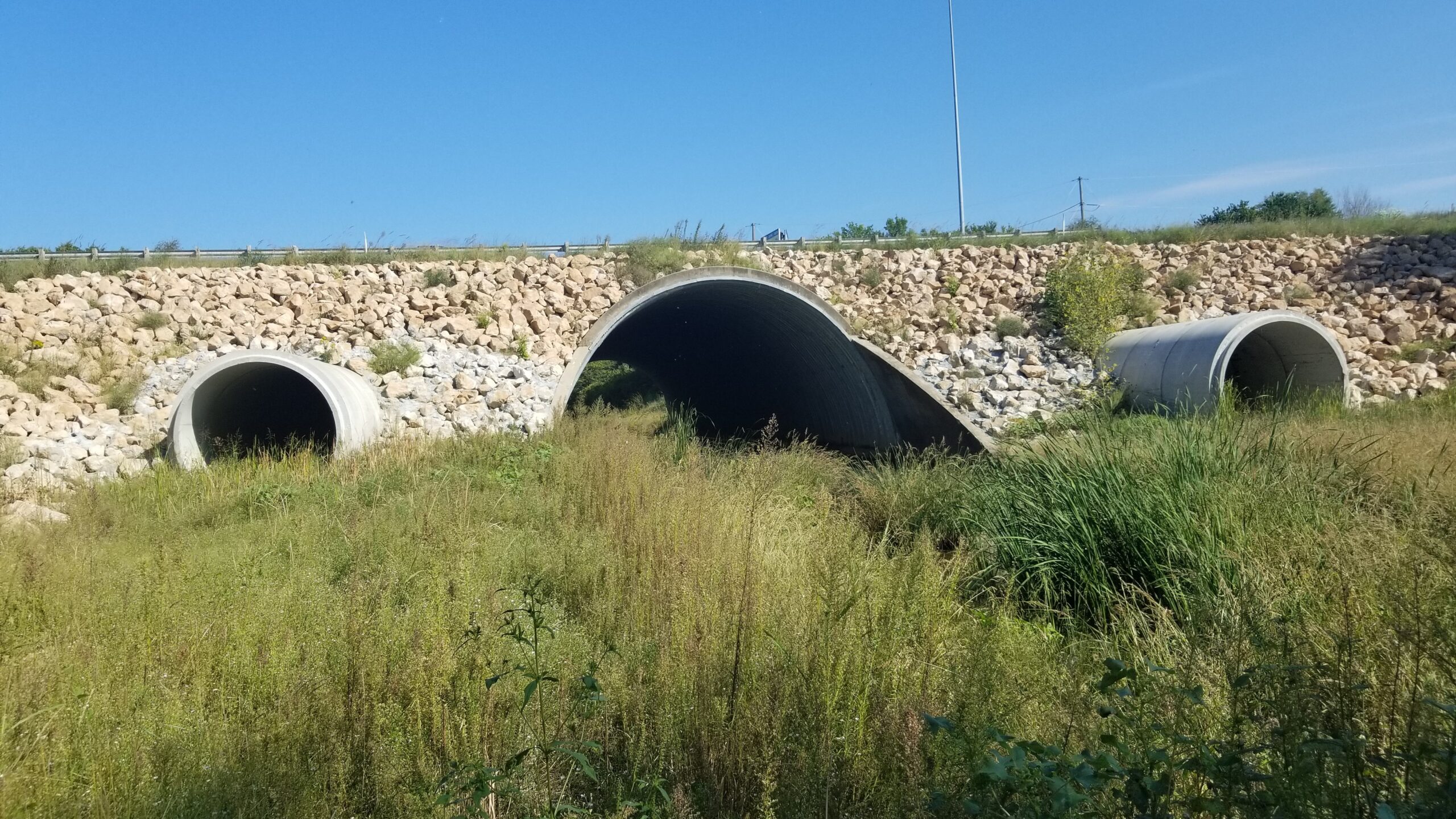
Buried steel bridges meet all AASHTO design, construction, and material requirements and can be custom designed and sized for almost any application.
Contact Information:
Joel Hahm, PE
Contech Engineered Solutions LLC
Senior Engineer
Office: 970.347.2208
Mobile: 970.590.7907
joel.hahm@conteches.com
What are buried steel bridges?
Buried steel bridges provide an economical choices for bridge replacement or bridge rehabilitation.
They essentially are a corrugated steel pipe or structural plate pipe systems that is “buried” with backfill to carry loads through soil-structure interaction. This means the bridge structure itself and the backfill soils surrounding the structure interact with each other to support the loads. In effect, the backfill material is part of the bridge.
Because of this interaction, the bridge structure is typically lighter, and there can be significant savings in structure costs.
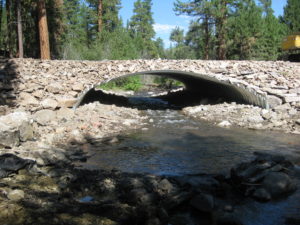
There are also many cases where buried bridges can carry heavier loads than traditional bridges because of the benefits of spreading vehicle loads through the fill. Buried bridges do not require abutments; and unless foundation soil conditions are poor, do not typically
require deep foundations.An additional benefit with buried bridges is that they can be tailored to site conditions and geometric requirements. The design includes inputs for site soils and backfill, meaning that locally available materials can often be used in construction and the structure can be tailored to fit the needs of the site and the owner’s requirements.
 Buried Bridge
NCSPA Releases Industry-Wide Environmental Product Declaration for Corrugated Steel Pipe
NCSPA has released a third-party verified Environmental Product Declaration (EPD) for corrugated steel pipe, providing standardized environmental information for engineers, owners, contractors and public agencies.
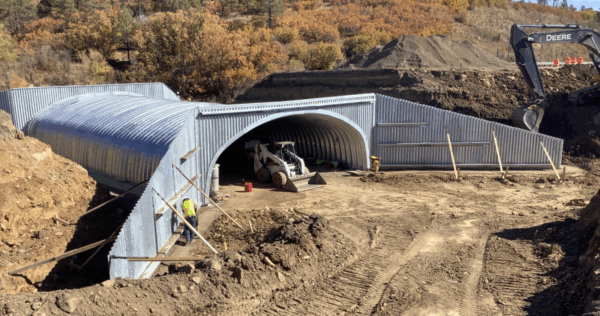 Buried Bridge
Buried Steel Bridge Protects Wildlife and Motorists in New Mexico DOT Project
To improve safety and preserve wildlife corridors, the New Mexico DOT installed two steel structural plate buried bridges beneath I-25 at Raton Pass. Supplied by SSSBA member Contech, the crossings offer a durable, low-maintenance solution for both transportation and conservation.
 Buried Bridge
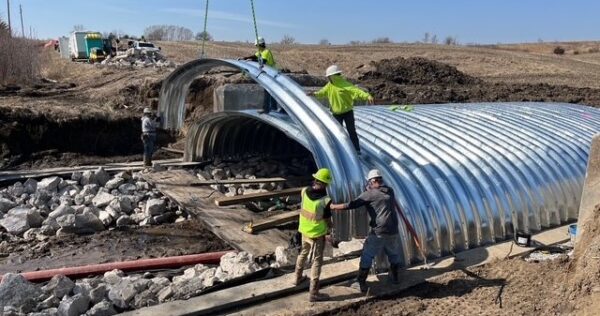
Buried Steel Bridge Preserves Streambed While Supporting Heavy Loads
A new galvanized buried steel bridge in Riverside, Iowa, supplied by SSSBA member Lane Enterprises, replaced a weight-restricted structure and restored direct access for local farmers. Its open-bottom steel design preserves the natural streambed, enhances durability, and provides a cost-effective solution for rural infrastructure.
 Case Study
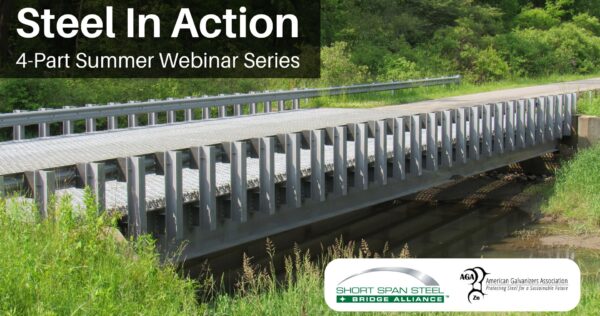
Steel in Action: On-Demand Steel Bridge Video Series
Watch this four-part, on-demand video series featuring expert-led case studies on cost-effective, resilient short span bridge projects—now available with downloadable presentation materials.
 News
News
NCSPA Announces 2025 Project of the Year Winners
The National Corrugated Steel Pipe Association announced the 2025 project of the year winners, including members of the Short Span Steel Bridge Alliance.
 Buried Bridge
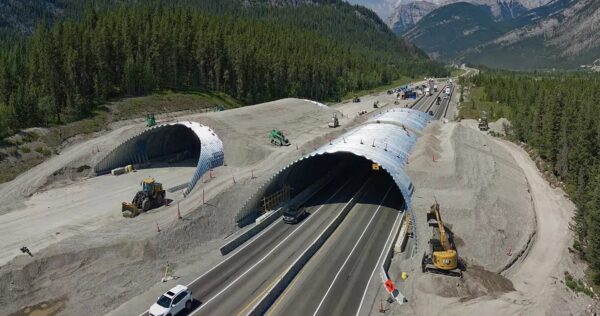
Corrugated Steel Animal Overpass Reduces Wildlife-Vehicle Collisions
The corrugated steel Stoney Nakoda Exshaw Wildlife Arch in Western Canada showcases the balance of engineering and environmental stewardship, setting a new standard for wildlife-friendly infrastructure.