 Short Span Steel Bridges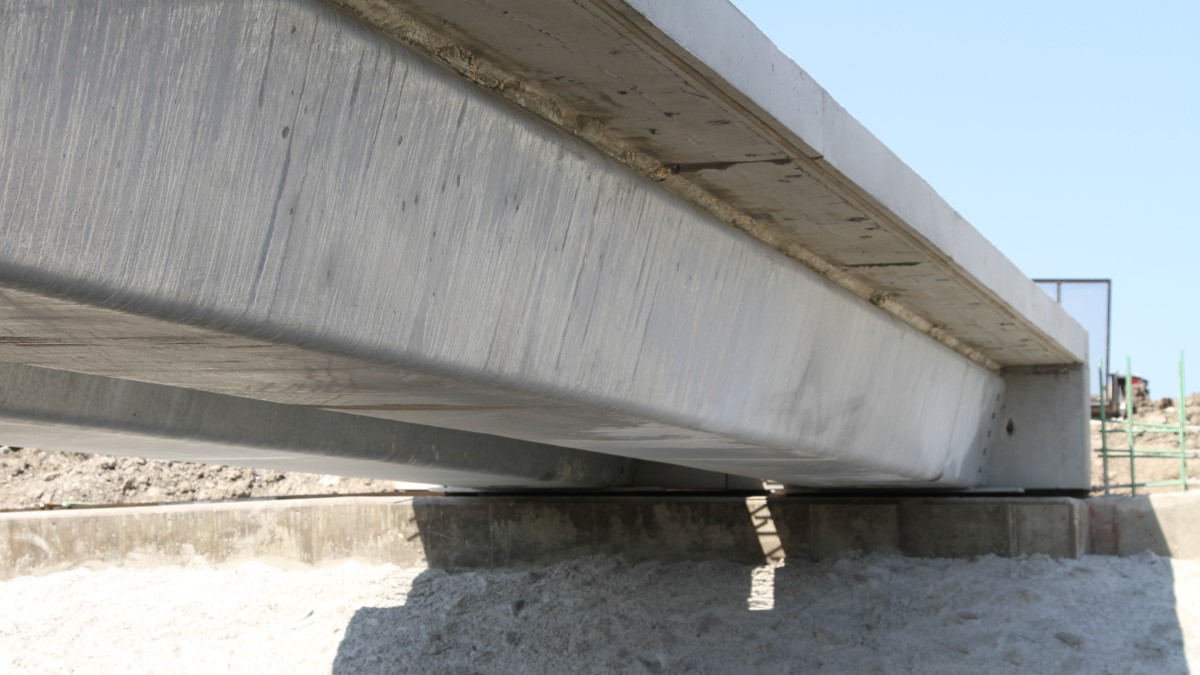
FHWA Announces Additional $1.14 Billion for Bridges, Update to Inspection Standards
Photo Credit: Valmont Structures (Guy Nelson)
On May 9, 2022 the Federal Highway Administration (FHWA) made two announcements regarding an increase in funding for bridges and and update to bridge inspection standards.
$1.14 Billion for Bridge Repair and Replacement
The Federal Highway Administration (FHWA) announced an additional $1.14 billion in formula funding for bridge repair and replacement.
The $1.14 billion in funding for bridge replacement and rehabilitation was provided by the Department of Transportation Appropriations Act, 2022 and complements the Bipartisan Infrastructure Law’s focus on bridge improvement and safety, which included $27.5 billion for the Bridge Formula Program and $12.5 billion for the Bridge Investment Program. For more information, see the Appointments Notice.
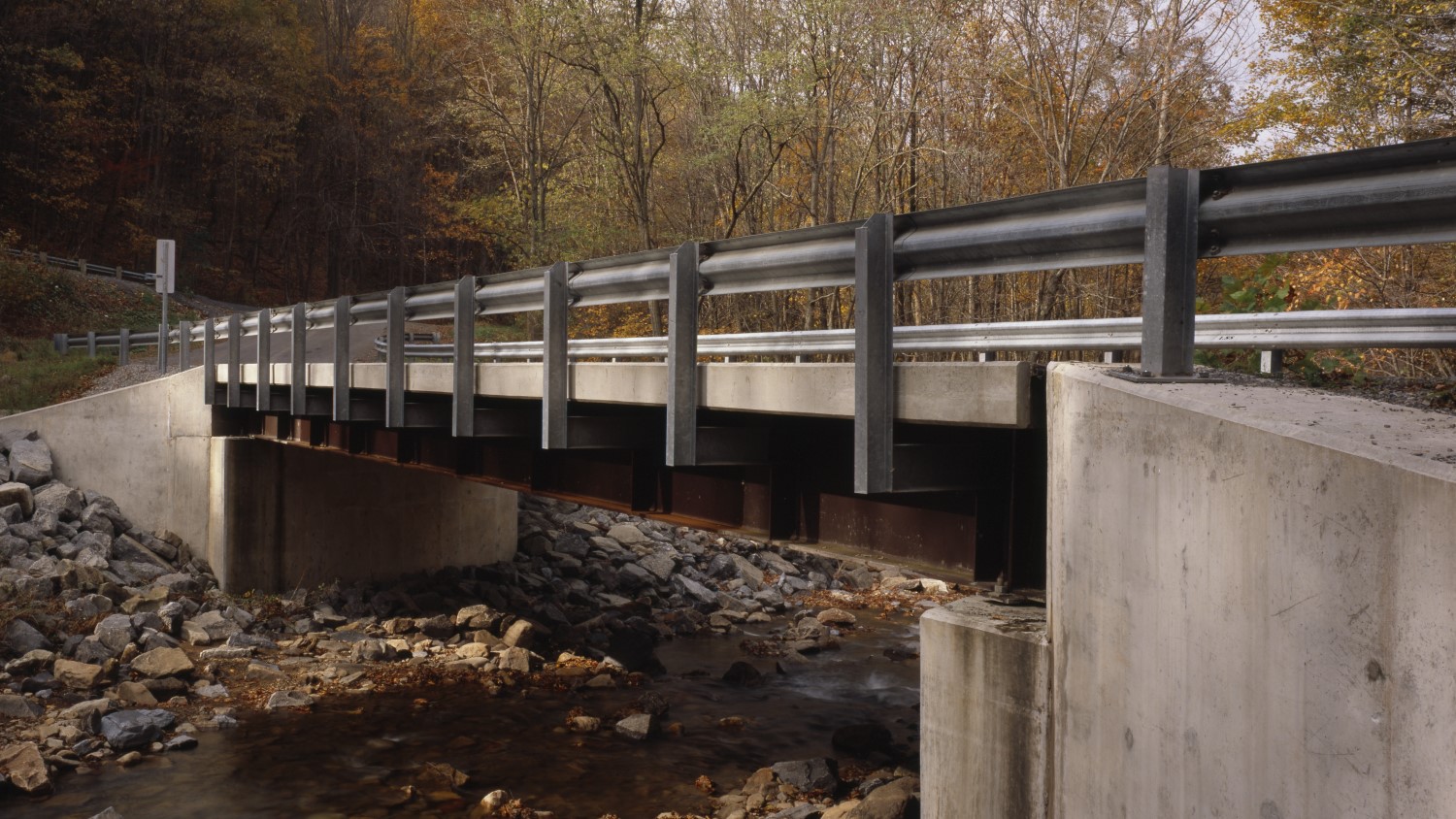
Steel bridge systems have the potential to achieve service lives well over 100 years. Two of the main reasons steel lasts so long is its ease of inspection and repair, enabling steel bridges to have much longer and sustainable service lives than other materials.
Update to Bridge Inspection Standards, Renames “Fracture-Critical”
FHWA also announced updates to the National Bridge Inspection Standards (NBIS). This is part of a process to periodically update the NBIS to continue to strengthen safety inspections and oversight processes nationwide.
The changes announced will help improve bridge safety by ensuring the uniformity of inspections and evaluations, clarifying responsibilities, and requiring action for higher risk issues. They also update the training and qualification requirements for bridge inspectors, establishing a national certification for inspectors, and expanding the regulatory requirements to tribally owned highway bridges.
The new regulation was mandated by the 2012 Moving Ahead for Progress in the 21st Century Act (MAP-21).
According to ENR, a key focus in the MAP-21 provisions is a directive that FHWA use a “risk-based” approach in revising bridge inspection requirements and that approach is a theme in the agency’s new standard.
In its Federal Register notice, FHWA said the risk-based approach “provides additional flexibility to bridge inspection organizations by applying their experience and engineering knowledge to determine the use of limited resources in a more optimal way across their inventory.”
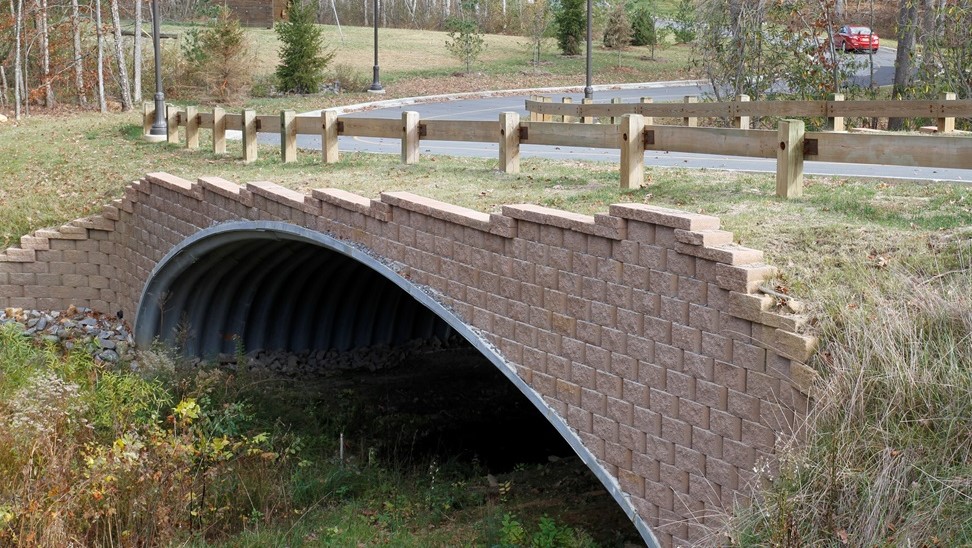
Buried steel bridges have a maintenance advantage over other structures. There is no bridge deck to maintain on a buried bridge, and there are no joints or bearings to repair and replace, resulting in low maintenance and inspection costs.
An important provision of the new standard centers on the required minimum interval between inspections. For details, see the National Bridge Inspection Standards.
The new standard also renames the term “fracture-critical member” as a “non-redundant steel tension member.” For more information, see NBIS 2022 updates.
Want to Learn How You Can Save With Steel?
The SSSBA is offering complimentary customized educational guest speakers/webinars and workshops (on-site or virtual) specifically for county engineers, state DOTs, and design firms. The webinars/workshops are taught by industry experts with decades of experience in the cost-effective design and construction of short span bridges.
For more information or to customize a workshop for your organization, please contact:
- Dan Snyder (Director of the SSSBA) at dsnyder@steel.org or 301-367-6179.
- Michael Barker (University of Wyoming & SSSBA Director of Education) at barker@uwyo.edu
Does the SSSBA offer educational opportunities?
Yes! The SSSBA offers educational opportunities to students and professionals:
Professionals: The SSSBA provides complimentary half-day or full-day workshops on short span steel bridge design to states, counties, and design firms. Topics covered include practical and cost-effective steel bridge design and fabrication with eSPAN140, press-brake-formed steel tub girders, steel buried bridge design, galvanized coating solutions, and economical design with case studies, and more. The workshops can take place virtually or in-person, compliments of the steel industry. Learn more.
Students: The University of Wyoming and the Short Span Steel Bridge Alliance created a free 6-part live-lecture educational series to cover the many aspects of designing, fabricating, and constructing steel bridges. All students who successfully complete the education series will receive a Certificate of Completion from the University of Wyoming. Learn more.
Speakers: The SSSBA provides expert speakers to present topics of interest on the cost-effective design and construction of short span steel bridges. If you need a speaker for your next event, contact the SSSBA.
 News
News
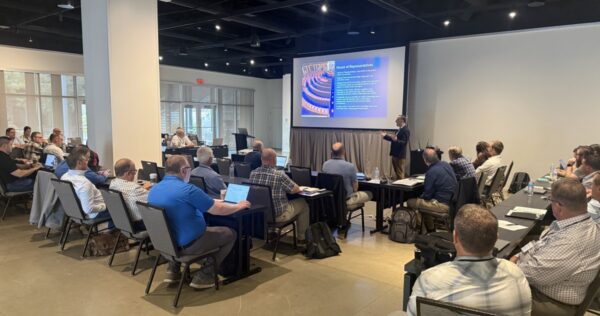
SSSBA Semi-Annual Meeting in Omaha Highlights Innovation and Industry Collaboration
Steel bridge industry leaders gathered in Omaha, Nebraska, for the SSSBA Semi-Annual Meeting. The meeting featured technical presentations, industry updates, facility tours and discussions on advancing short span steel bridges. The next meeting is scheduled for March 17, 2027, in Washington, D.C.
 Events
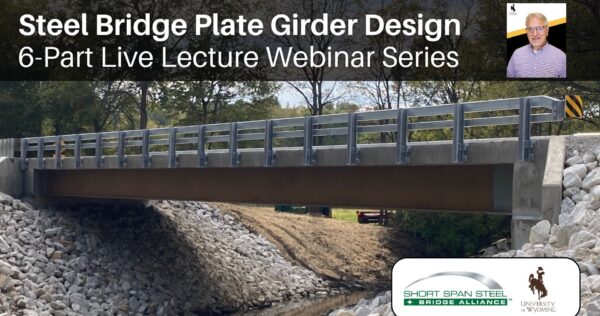
Free Steel Bridge Plate Girder Design Course: 6-Part Live Webinar Series (Starts Nov. 3)
Take your bridge design skills to the next level in this free six-part webinar series led by Dr. Michael Barker, University of Wyoming. Learn step-by-step how to design a composite plate girder bridge and earn a certificate of completion in this course from the SSSBA.
 News
News
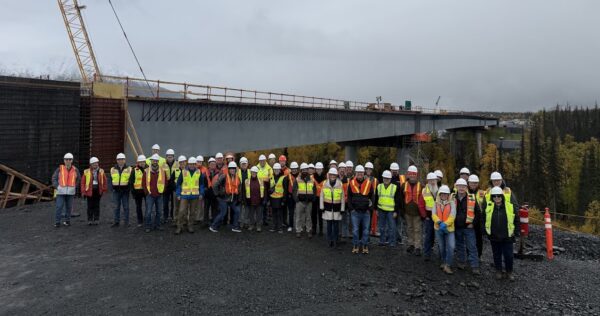
Bridge Task Force and AASHTO Steel Leaders Meet in Alaska
The Steel Bridge Task Force and AASHTO Steel and Metals Technical Committee met in Anchorage for technical presentations, project updates and industry recognition. The meetings concluded with an Alaska DOT hosted tour of the Juneau Creek Bridge and surrounding Sterling Highway construction.