 Short Span Steel Bridges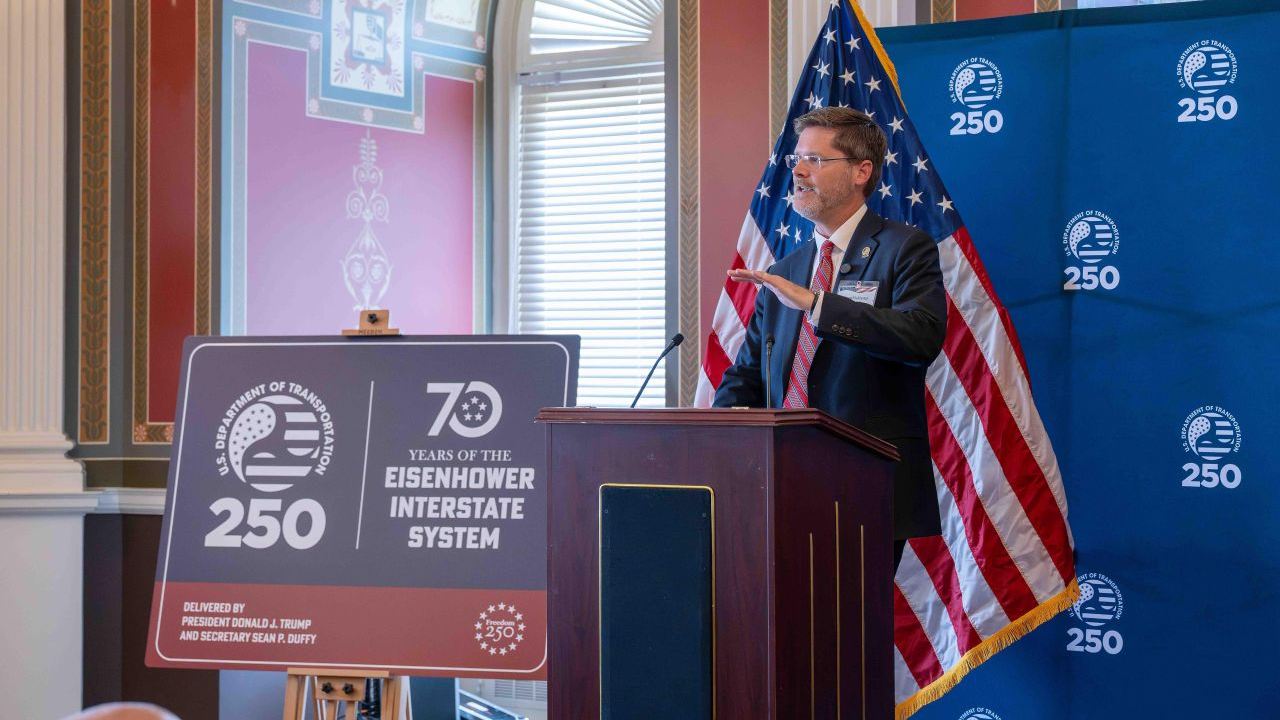
FHWA Launches “Reimagining America’s Interstates” Initiative, Seeks Public Input
Photo: FHWA Administrator Sean McMaster launches the “Reimagining America’s Interstates” initiative, celebrating 70 years of the Eisenhower Interstate System and encouraging collaboration to shape its future.
The Federal Highway Administration (FHWA) has launched a new nationwide initiative, “Reimagining America’s Interstates,” inviting transportation agencies, industry partners, and the public to help shape the future of the nation’s Interstate Highway System.
The initiative was announced during a June 30 media event celebrating the 70th anniversary of the Dwight D. Eisenhower National System of Interstate and Defense Highways, created when President Dwight Eisenhower signed the Federal-Aid Highway Act of 1956. The event also included the unveiling of new “Freedom 250” highway signs recognizing this historic milestone.
Watch the announcement video below to learn more about FHWA’s vision for the future of America’s interstate system.
After seven decades of transforming how Americans travel and how goods move throughout the country, FHWA is seeking input on how the Interstate System can continue to support a changing economy, emerging technologies, and future transportation needs.
“After having propelled America into prosperity for 70 years, it is time to envision how our nation’s interstates can better serve a modern economy,” said FHWA Administrator Sean McMaster.
“This nationwide call for public comment is the next step in addressing modern challenges of our Interstate Highway System. We want the American people to help us build a system that conquers today’s challenges and secures tomorrow’s growth,” he added.
The initiative will gather feedback on new interstate facility suggestions, major upgrades needed on existing routes, and opportunities to improve safety, efficiency, resiliency, and connectivity across the nation’s transportation network.
Looking Beyond the Original Interstate System
When the Interstate Highway System was authorized in 1956, it transformed transportation in the United States. The original vision created a connected network that improved mobility, strengthened commerce, and supported national defense.
However, transportation needs have changed significantly over the past 70 years. Population growth, increased freight movement, new technologies, and evolving economic demands are creating new challenges for the nation’s highway system.
Through the “Reimagining America’s Interstates” initiative, FHWA is seeking input on important questions, including:
- Where should future interstate connections be developed?
- Which existing corridors require major improvements or reconstruction?
- How can the system better support growing freight demands?
- How can new technologies improve safety and mobility?
- What investments are needed to support the transportation network of the future?
A formal Request for Information (RFI) is expected to be published in the Federal Register to collect feedback from transportation stakeholders across the country.
Modernization Means More Than New Highways
The future of the Interstate System will require more than new construction—it will require strategic investment in maintaining and modernizing existing infrastructure.
During a recent episode of the Talking Michigan Transportation podcast, Jim Tymon, executive director of the American Association of State Highway and Transportation Officials (AASHTO), discussed the importance of balancing future expansion with the need to reconstruct and improve aging infrastructure.
“The fact that anything that you have that’s 70 years old, 50 years old, you have to invest in maintaining it too,” Tymon noted. “At this point, probably reconstructing major parts of it.”
Many interstate bridges and highway structures constructed during the original expansion of the system are now approaching significant rehabilitation or replacement needs. These investments provide opportunities to improve safety, increase resilience, reduce congestion, and incorporate new construction methods.
Technology Will Shape the Next Generation of Infrastructure
The initiative also recognizes the growing role technology will play in the future of transportation.
Tymon noted that future interstate investments must consider connected and automated vehicles, digital infrastructure, and improved communication between transportation systems.
FHWA and transportation organizations are exploring opportunities to create smarter transportation corridors that allow states to share information related to traffic operations, work zones, and travel conditions.
These advancements will require infrastructure that is adaptable and capable of supporting future transportation technologies.
An Opportunity for Steel Bridge Solutions
As states evaluate the future of the Interstate System, bridge replacement and modernization will remain a critical component of transportation investment.
Steel bridges provide many advantages that align with the goals of a modern, resilient transportation network, including:
- Accelerated construction that reduces impacts to the traveling public
- Long-span capabilities that improve flexibility in challenging locations
- Durable and resilient designs that support long service lives
- Adaptability for future modifications, widening, and rehabilitation
- Sustainable construction using domestically produced structural steel
Advancements in weathering steel, high-performance steel, modular bridge systems, and accelerated bridge construction continue to expand opportunities for steel bridge solutions.
For short span bridges in particular, innovative steel solutions can provide cost-effective alternatives for replacing aging bridges, improving local mobility, and accelerating project delivery.
Building the Future of America’s Transportation Network
The “Reimagining America’s Interstates” initiative provides an important opportunity to consider how the nation’s transportation system should evolve over the next several decades.
As FHWA gathers input from transportation stakeholders across the country, the bridge community has an important role in identifying solutions that improve safety, resilience, and efficiency.
The next generation of America’s Interstate System will require innovative approaches to design, construction, and maintenance – and modern steel bridge solutions will continue to play an important role in building the infrastructure needed for the future.
Does the SSSBA offer educational opportunities?
Yes! The SSSBA offers educational opportunities to students and professionals:
Professionals: The SSSBA provides complimentary half-day or full-day workshops on short span steel bridge design to states, counties, and design firms. Topics covered include practical and cost-effective steel bridge design and fabrication with eSPAN140, press-brake-formed steel tub girders, steel buried bridge design, galvanized coating solutions, and economical design with case studies, and more. The workshops can take place virtually or in-person, compliments of the steel industry. Learn more.
Students: The University of Wyoming and the Short Span Steel Bridge Alliance created a free 6-part live-lecture educational series to cover the many aspects of designing, fabricating, and constructing steel bridges. All students who successfully complete the education series will receive a Certificate of Completion from the University of Wyoming. Learn more.
Speakers: The SSSBA provides expert speakers to present topics of interest on the cost-effective design and construction of short span steel bridges. If you need a speaker for your next event, contact the SSSBA.
 News
News
Bridge Task Force and AASHTO Steel Leaders Meet in Alaska
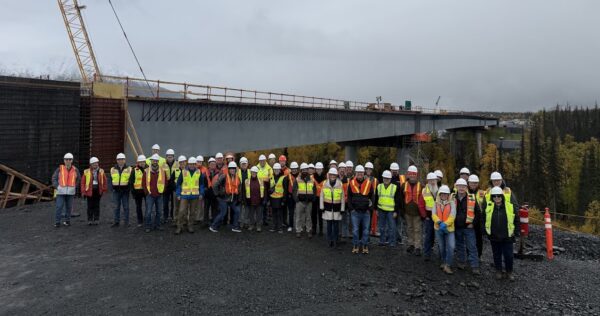
The Steel Bridge Task Force and AASHTO Steel and Metals Technical Committee met in Anchorage for technical presentations, project updates and industry recognition. The meetings concluded with an Alaska DOT hosted tour of the Juneau Creek Bridge and surrounding Sterling Highway construction.
 News
News
SSSBA to Present at North Central States Consortium in Omaha, NE (Sept. 28-30)
Dr. Michael Barker, University of Wyoming, will represent SSSBA at the North Central States Consortium (NCSC) in Omaha, Nebraska. His presentation (Tuesday, September 29, 1:30–2:15 p.m.) will explore how optimized plate girders can expand the range of steel solutions for bridges with spans of 60 to 100 feet.
 News
News
AISI Corrosion Advisory Group to Meet October 27 in Ohio
The AISI Corrosion Advisory Group (CAG) will meet October 27 at the Sherwin-Williams Research & Development Center in Ohio. Discussions will focus on corrosion research, coatings, steel durability and related industry needs.