 Short Span Steel Bridges
 Temporary Steel Bridge Reused to Help Remote Haitian Community
Guest blog written by the American Galvanizers Association
In its previous life, the Fore River Bridge was a temporary structure connecting Quincy, MA with Weymouth, MA handling around 46,000 vehicles per day. This temporary bridge structure was erected in the early 2000s to replace a structurally deficient bascule bridge originally built in 1936.
The Acrow Panel Modular Bridge System was used to build this temporary hot-dip galvanized bridge structure to stand while the new permanent bridge was constructed.
Temporary Bridge Becomes the New Riviere Cochon Gras Bridge
The Fore River Temporary Bridge was in place for 15 years and withstood high traffic demand, harsh New England winters, salt and deicing chemicals, all of which were no match for the hot-dip galvanized coating on the structure. When it came time for the temporary structure to be demolished, Jay Cashman Inc., whose headquarters were adjacent to the bridge, recognized the hot-dip galvanized coating was still in excellent condition despite exposure to this aggressive environment.

Portions of the Fore River Temporary Bridge were dismantled and repurposed to help the remote community of Perches, Haiti.
Instead of selling the bridge steel for scrap, Cashman decided to repurpose portions of the bridge to the Cashman Family Foundation (a philanthropic arm of the Cashman company) and reuse the structure to help the remote community of Perches, Haiti.
With help from Tighe & Bond and volunteers from Engineers Without Borders, they were able to work with the Haitian government to make the project happen.
New Bridge Provides Access to Hospital and Industrial Park
The residents of Perches relied on an unpaved road without a bridge to access their nearby hospital and industrial park, risking their lives in the rainy season to cross overflooded waters. Several thousand linear feet of the hot-dip galvanized Fore River Bridge was repurposed for a community that would otherwise not receive much attention or aid.

The bridge had more than 50 years of “life” still remaining before significant maintenance would be required.
The bridge sections still had more than 50 years of “life” before significant maintenance would be required, so the disassembled parts were shipped halfway across the world to become the 60-foot Riviere Cochon Gras Bridge.
The bridge sections required no repair, showed no signs of corrosion, and did not require any additional coating costs for future protection of the main structure. The only new parts required were fasteners, as some were damaged during demolition.
Hot-dip Galvanized Steel Withstands the Test of Time
The Riviere Cochon Gras Bridge is a great example of innovation and sustainable development. Not only was the Fore River Bridge not scrapped, but it also did not need to be reprocessed or recycled after only 15 years of life. Instead, it was able to be repurposed for a community in need.
The social, economic and political dynamic of Haiti is complicated, and infrastructure development is a key element in improving the daily lives of those in the community. The success of this project has led the Cashman Family Foundation to partner with the Haitian Ministry of Public Works, Transportation and Communications on two additional bridges in Saint-Marc.
Hot-dip galvanized steel’s durability and maintenance-free longevity make it the only coating able to withstand the test of time and remain versatile for similar future projects.
Learn More
To view a Galvanized Steel Story video on this project produced by the American Galvanizers Association (AGA) that includes interviews with the engineer and Jay Cashman, check out the AGA’s YouTube page, click here, or view the video at the top of this page.
Does steel provide a sustainable option for bridges?
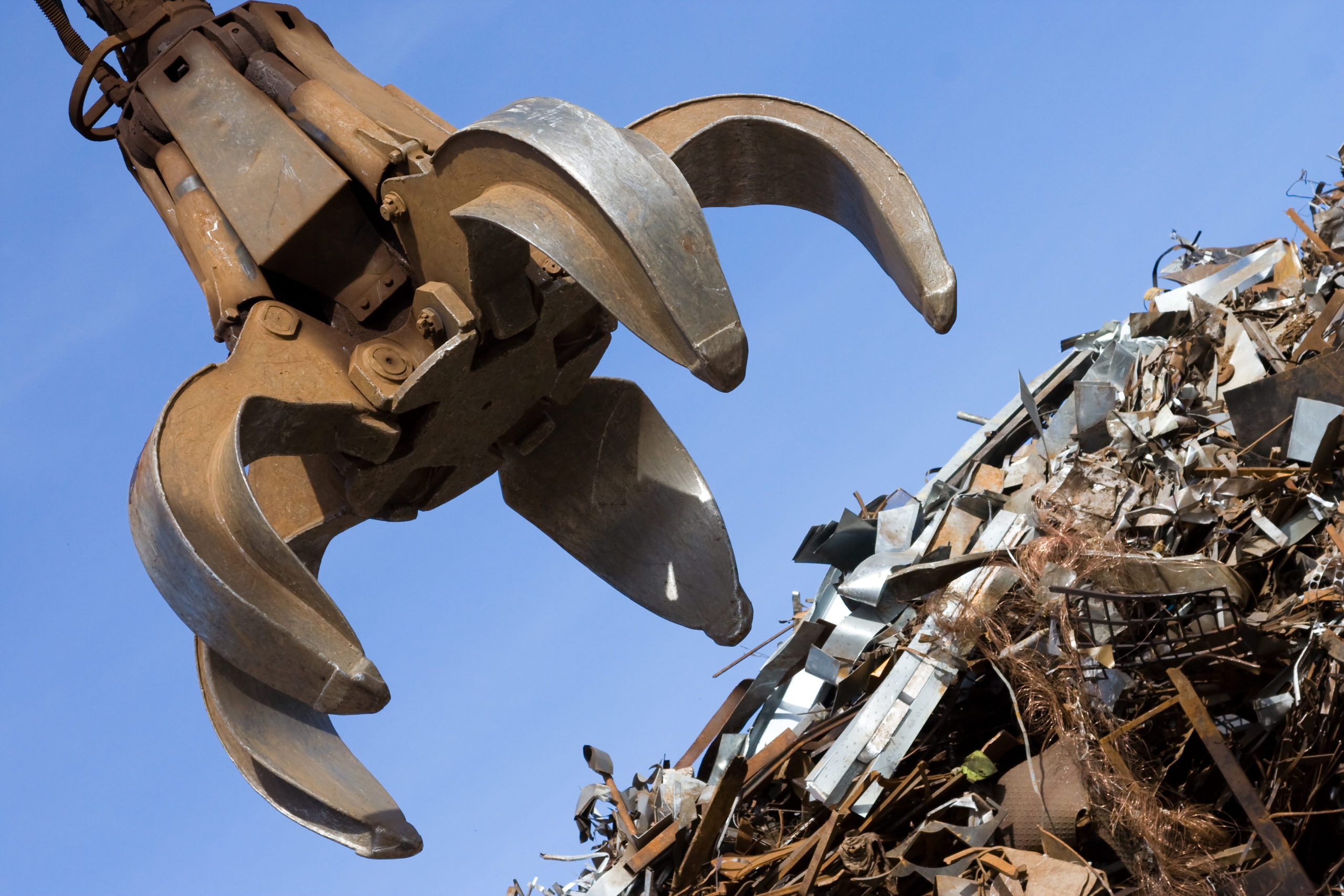
Steel is the most recycled material on the planet. Some of the sustainable advantages of steel include:
- Steel from a disassembled bridge can be used again for another project.
- Steel bridges can last 100 years or more, with minimal maintenance over their long service lives.
- The high strength of steel permits longer spans, which minimizes disruption to underlying habitats.
- Steel is highly resistant to extreme natural disasters such as earthquakes.
- The American steel industry has achieved a 31 percent reduction in energy intensity and a 36 percent reduction in greenhouse gas intensity since 1990.
 Buried Bridge
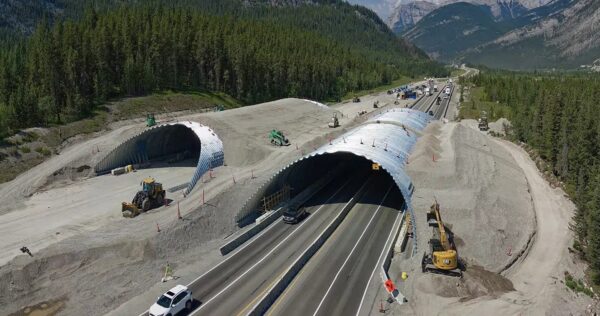
Corrugated Steel Animal Overpass Reduces Wildlife-Vehicle Collisions
The corrugated steel Stoney Nakoda Exshaw Wildlife Arch in Western Canada showcases the balance of engineering and environmental stewardship, setting a new standard for wildlife-friendly infrastructure.
 Sustainability
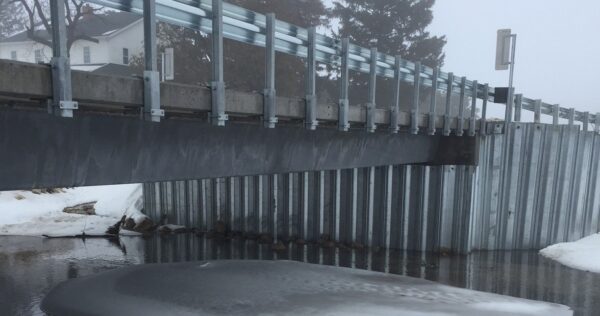
Steel Bridge Restores Fish Migration in Olympic National Forest
A new 70-foot steel bridge in the Olympic National Forest restores a vital fish passage, demonstrating steel’s durability and adaptability for environmentally sustainable infrastructure.
 Sustainability
Infrastructure Week 2024 Recording: Preservation of Steel Bridges
In this webinar recording, industry experts discuss the most effective methods to preserve steel bridges.