 Short Span Steel Bridges
Buried Steel Bridge Saves $500,000 and Three Months Versus Concrete Option
Article provided by Contech Engineered Solutions and the National Corrugated Steel Pipe Association
The I-44 EB & WB Over CR1147 & Route 96 projects consisted of the replacement of four interstate bridges with buried bridges at two locations on the project.
The overall project, known as the I-44 Bridge Rebuild Project, consisted of the replacement of 19 interstate bridges over a 29 mile section of I-44 between Joplin and Springfield, Missouri.
The project was developed through a design-build process, with the design-build team consisting of Emery Sapp & Sons, Inc. as the contractor and a partnership of Lochmueller Group & Parsons Engineering as the engineer. Collaboration through the design-build process was critical to the success of the project.

The I-44 Rebuild included the replacement of twin eastbound and westbound bridges with a buried steel bridge.
Contech Provides Design Efficient Solution
The I-44 Rebuild included the replacement of twin eastbound and westbound bridges carrying I-44 traffic over CR1147 (a two-lane county road) and Route 96 (a single lane entrance ramp from Route 96 to westbound I-44).
The design process for the two bridges involved the development of custom geometries by Contech based on inside clearance requirements for the roads passing through the structures, along with the need to limit the sizes of the structures to avoid conflicts with the existing bridges and foundations.
There were several iterations as Contech developed multiple geometry options, receiving feedback from the engineers and contractor along the way, resulting in final shapes that provided the best solutions based on design efficiency and ability to meet all of the project requirements.

The design-build team opted to go with a deep corrugated steel buried bridges instead of a concrete alternative.
Design-Build Team Selects Steel Over Concrete Option
As part of the solution evaluation process, the design-build team also considered conventional precast concrete girder and various precast arch and box options. Priorities with the bridge replacements were to eliminate/minimize detours, minimizing construction time, installed cost & life cycle cost savings, and the ability to achieve a 75 year service life.
In the end the team opted to go with deep corrugated steel buried bridges. Main factors in the structure selection were:
- Weight vs. span capabilities
- Limited head room to construct below existing bridges
- Speed of construction
- Lower cost of maintenance (no bridge deck, bearings, barrier walls, approach slabs, abutments, joints)
- No head-to-head traffic during construction
- Simpler / faster bridge inspection
- Bridge alignment able to achieve mowable slopes
- Ability to extend to add future lanes

The buried steel bridge was constructed below the existing bridges without taking them out of service
Existing Bridges Remain in Service During Construction
Both structures were constructed below the existing bridges without taking them out of service. The new foundations were constructed adjacent to the existing bridge foundations, structures were assembled in place below the existing bridges, and a majority of the backfill was placed without disrupting interstate traffic.
When fill heights neared the underside of the existing bridges, traffic was temporarily moved using lane restrictions while the existing bridge superstructures were removed in sections, the remaining fill was placed, and the new road was paved.

Rather than skewing the structure and having to build a concrete collar or headwalls to support the ends, the team opted to use an unbalanced step bevel.
Unbalanced Step Bevel Used Rather Than Skewing the Structure
The deep corrugated steel structures were able to accommodate different step beveled configurations at the ends to accommodate the desired embankment slopes and eliminate the need for headwalls.
The Route 96 structure was at a skewed alignment to I-44. Rather than skewing the structure and having to build a concrete collar or headwalls to support the ends, the team opted to use an unbalanced step bevel. This allowed for graded slopes at the ends and eliminated the need for a special design or reinforcing for end treatments.
The CR1147 was essentially square with I-44 and was able to use a more conventional step beveled configuration to accommodate the desired graded slopes.

The buried steel bridge saved 3 months of construction time and $500,00 versus precast/conventional options.
Steel Saves Big Over Concrete Option
The projects included installed cost and time benefits in addition to the structure benefits:
- Anticipated construction time was 8 months for precast/conventional options vs. 5 months for structural plate buried bridges
- $3.5 million estimated installed cost for precast/conventional options vs. $3.0 million for the structural plate buried bridges
- Foundation construction time & cost savings, advantages of spread footings vs. deep foundations
- Reduction in long term maintenance costs
This project drives home the value and many of the advantages that structural plate buried bridges can bring to a bridge replacement project. Additionally, the design-build project delivery method and resulting input from the contractor and engineers during design allowed the team to effectively find the best solution for the project.
What are buried steel bridges?
Buried steel bridges provide an economical choices for bridge replacement or bridge rehabilitation.
They essentially are a corrugated steel pipe or structural plate pipe systems that is “buried” with backfill to carry loads through soil-structure interaction. This means the bridge structure itself and the backfill soils surrounding the structure interact with each other to support the loads. In effect, the backfill material is part of the bridge.
Because of this interaction, the bridge structure is typically lighter, and there can be significant savings in structure costs.
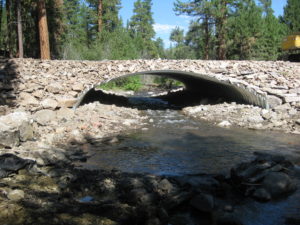
There are also many cases where buried bridges can carry heavier loads than traditional bridges because of the benefits of spreading vehicle loads through the fill. Buried bridges do not require abutments; and unless foundation soil conditions are poor, do not typically
require deep foundations.An additional benefit with buried bridges is that they can be tailored to site conditions and geometric requirements. The design includes inputs for site soils and backfill, meaning that locally available materials can often be used in construction and the structure can be tailored to fit the needs of the site and the owner’s requirements.
 Buried Bridge
Buried Steel Bridge Preserves Streambed While Supporting Heavy Loads
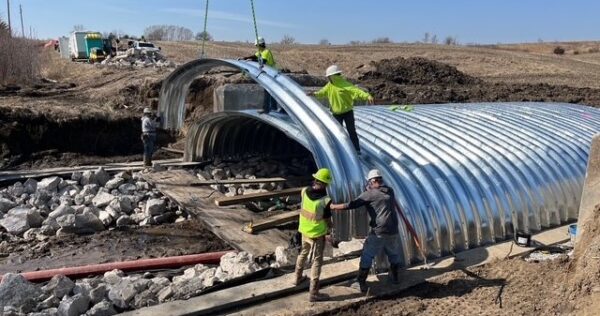
A new galvanized buried steel bridge in Riverside, Iowa, supplied by SSSBA member Lane Enterprises, replaced a weight-restricted structure and restored direct access for local farmers. Its open-bottom steel design preserves the natural streambed, enhances durability, and provides a cost-effective solution for rural infrastructure.
 Buried Bridge
Buried Steel Bridge Protects Wildlife and Motorists in New Mexico DOT Project
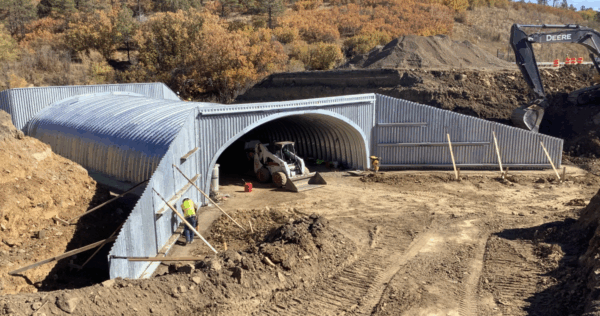
The New Mexico DOT buried steel bridge project, featuring SSSBA member Contech’s custom structural plate design, was honored as the NCSPA Project of the Year for its innovative wildlife crossing solution on I-25 at Raton Pass.
 Case Study
Steel in Action: On-Demand Steel Bridge Video Series
Watch this four-part, on-demand video series featuring expert-led case studies on cost-effective, resilient short span bridge projects—now available with downloadable presentation materials.
 News
News
NCSPA Announces 2025 Project of the Year Winners
The National Corrugated Steel Pipe Association announced the 2025 project of the year winners, including members of the Short Span Steel Bridge Alliance.
 Buried Bridge
Corrugated Steel Animal Overpass Reduces Wildlife-Vehicle Collisions
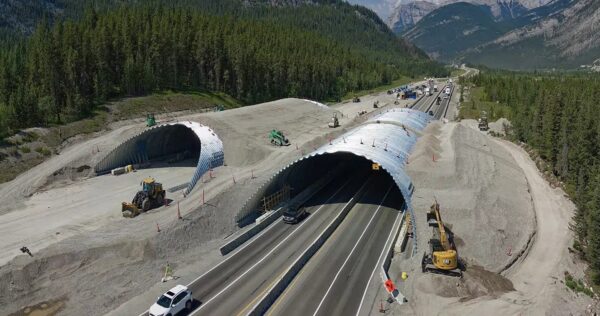
The corrugated steel Stoney Nakoda Exshaw Wildlife Arch in Western Canada showcases the balance of engineering and environmental stewardship, setting a new standard for wildlife-friendly infrastructure.
 Buried Bridge
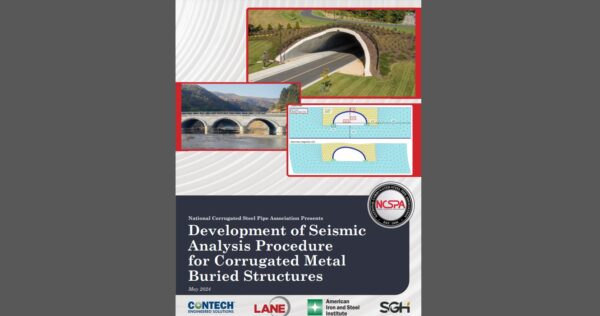
NCSPA Releases Report to Simplify the Seismic Design for Buried Structures
The National Corrugated Steel Pipe Association (NCSPA) released a groundbreaking report that simplifies the seismic design for buried structures including culverts, tunnels and buried steel bridges.