 Short Span Steel Bridges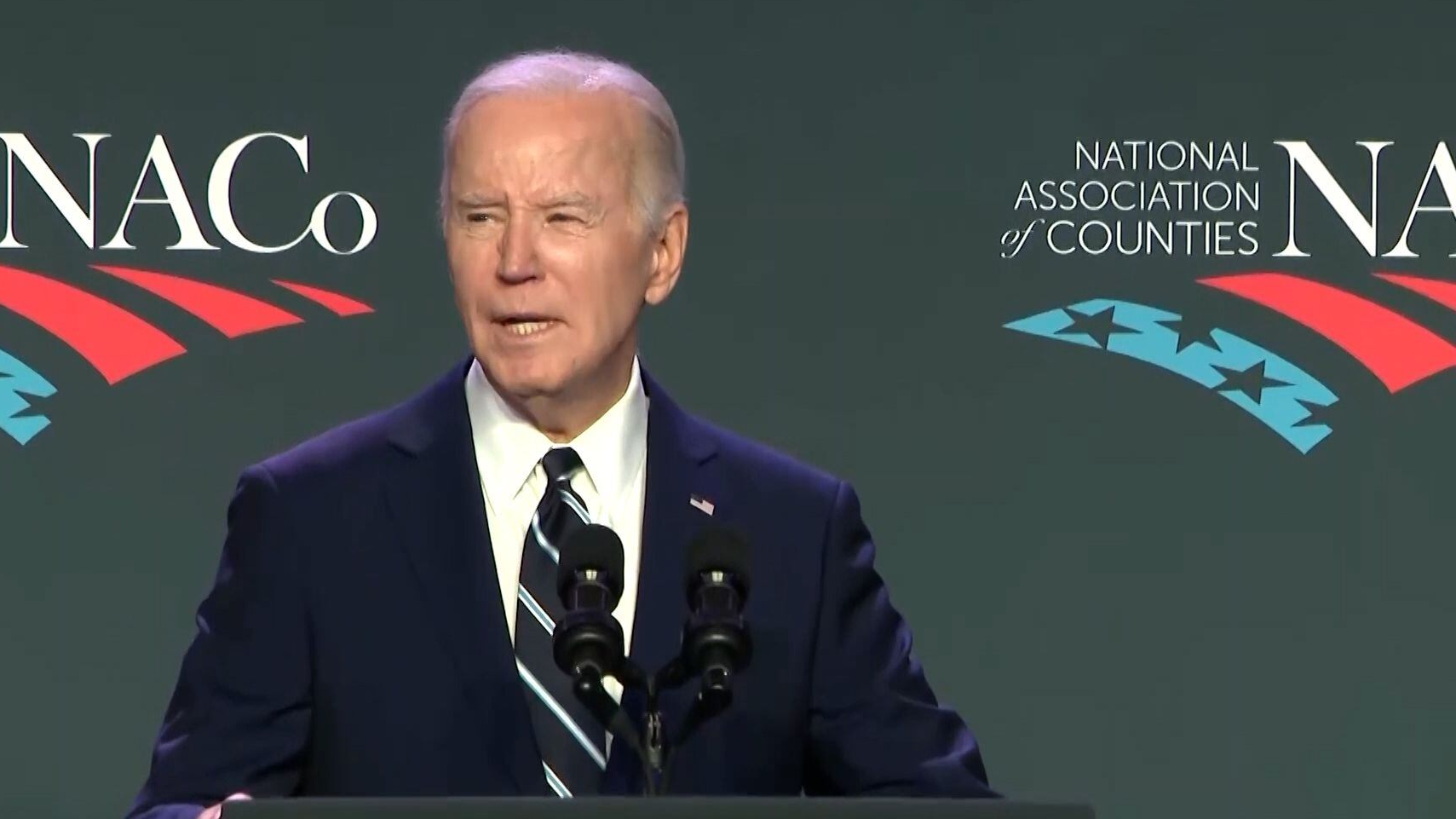
President Biden Highlights Infrastructure in Address to the National Association of Counties (NACo)
On February 12th, President Joe Biden addressed the National Association of Counties at their annual legislative conference. The president spoke about his administration’s policy priorities and accomplishments to date. Biden had previously addressed the 2022 and 2023 Legislative Conferences, the 2015 Legislative Conference as vice president and the 2020 Fall Board Meeting, remotely, as president-elect.
Video of the Address
The focus of the Address
During his address, the president cited infrastructure-related programs such as the American Rescue Plan Act and the Bipartisan Infrastructure Law. These programs were highlighted because they allowed local governments to replace lost revenue and avoid budget cuts due to the pandemic’s economic slowdown.
The Bipartisan Infrastructure Law is a once-in-a-generation investment to fix the nation’s infrastructure. The law directs nearly $40 billion over five years to repair or replace as many as 15,000 bridges, with states required to use at least 15 percent of this new money to build off-system bridges.
Biden mentioned, how the state of American infrastructure fell behind its global peers. “How can you have the best economy in the world when you don’t have the best infrastructure in the world?” he asked. The president stressed the need for a broad focus on economic development, redevelopment of communities nationwide, focus on renewable energy and advanced manufacturing and sustainability. As local counties continue to implement projects from the Bipartisan Infrastructure Law, a friendly reminder that short span steel bridges are essential to local economies and the SSSBA is here to help. Learn more below.
The Importance of Counties to the Bridge Industry
According to the National Association of County Engineers, local roads account for 75 percent of the nation’s highways and roads (about 2.93 million miles).
Counties manage about 1.74 million miles of those roads, while cities and townships oversee another 1.19 million miles.
Counties also own 219,000 bridges (40 percent of the nation’s bridges) and operate one-third of the nation’s transit systems.
The national Highway Bridge Replacement and Rehabilitation Program (HBRRP) sufficiency ratings indicate that 31.9 percent of county bridges are considered structurally deficient and 11.5 percent functionally obsolete for 43.4 percent in need of replacement or rehabilitation.
SSSBA is Here to Help
The SSSBA is a group of bridge and buried soil steel structure industry leaders who have joined together to provide educational information on the design and construction of short span steel bridges in installations up to 140 feet in length.
SSSBA’s objective is to provide essential information to bridge and highway professionals on the varied and innovative steel solutions available to solve their short span bridge design and construction challenges.
The SSSBA currently provides:
- Education (free webinars, workshops, forums, conferences)
- Technical Resources (standards, guidelines, best practices)
- Case Studies
- Simple Design Tools (eSPAN140, a free web-based design tool that provides preliminary short span steel bridge designs in less than five minutes)
- Project Assistance
- Industry Contacts/Providers
- Innovative and Accelerated Bridge Construction (ABC) Options
For more information or to join the SSSBA, contact Dustin Young at dyoung@steel.org.
Does the SSSBA offer educational opportunities?
Yes! The SSSBA offers educational opportunities to students and professionals:
Professionals: The SSSBA provides complimentary half-day or full-day workshops on short span steel bridge design to states, counties, and design firms. Topics covered include practical and cost-effective steel bridge design and fabrication with eSPAN140, press-brake-formed steel tub girders, steel buried bridge design, galvanized coating solutions, and economical design with case studies, and more. The workshops can take place virtually or in-person, compliments of the steel industry. Learn more.
Students: The University of Wyoming and the Short Span Steel Bridge Alliance created a free 6-part live-lecture educational series to cover the many aspects of designing, fabricating, and constructing steel bridges. All students who successfully complete the education series will receive a Certificate of Completion from the University of Wyoming. Learn more.
Speakers: The SSSBA provides expert speakers to present topics of interest on the cost-effective design and construction of short span steel bridges. If you need a speaker for your next event, contact the SSSBA.
 News
News
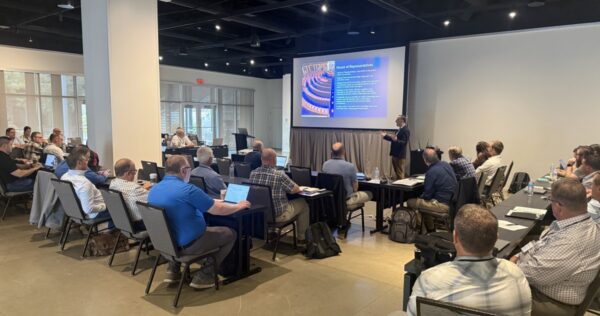
SSSBA Semi-Annual Meeting in Omaha Highlights Innovation and Industry Collaboration
Steel bridge industry leaders gathered in Omaha, Nebraska, for the SSSBA Semi-Annual Meeting. The meeting featured technical presentations, industry updates, facility tours and discussions on advancing short span steel bridges. The next meeting is scheduled for March 17, 2027, in Washington, D.C.
 Events
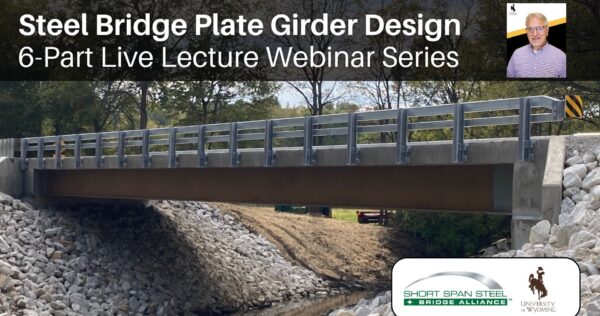
Free Steel Bridge Plate Girder Design Course: 6-Part Live Webinar Series (Starts Nov. 3)
Take your bridge design skills to the next level in this free six-part webinar series led by Dr. Michael Barker, University of Wyoming. Learn step-by-step how to design a composite plate girder bridge and earn a certificate of completion in this course from the SSSBA.
 News
News
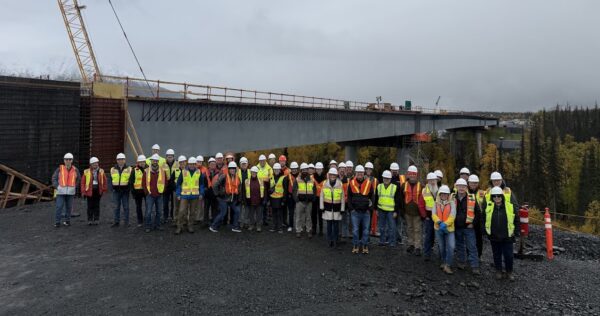
Bridge Task Force and AASHTO Steel Leaders Meet in Alaska
The Steel Bridge Task Force and AASHTO Steel and Metals Technical Committee met in Anchorage for technical presentations, project updates and industry recognition. The meetings concluded with an Alaska DOT hosted tour of the Juneau Creek Bridge and surrounding Sterling Highway construction.