 Short Span Steel Bridges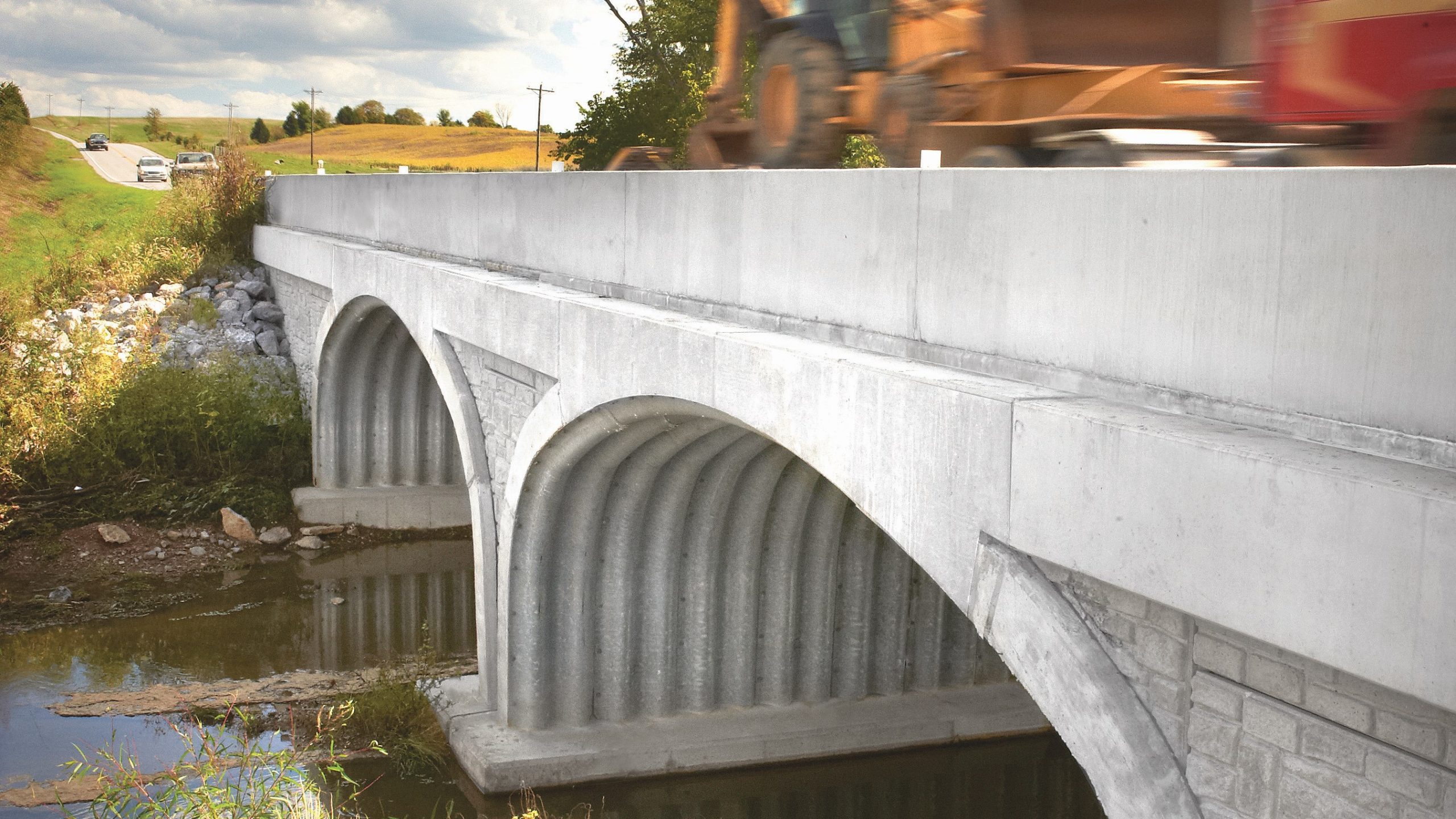
Smart Ways to Save Time and Money on Short Span Bridge Design and Construction
While America’s infrastructure continues to crumble, federal lawmakers are still unresolved on how to fund these projects.
In the meantime, bridges continue to need repair or replacement. Short span bridges (140 feet or less) dominate the national inventory, and county engineers are forced to find innovative ways to fund and resource these projects. With the increasingly growing demand and continued gridlock for additional funding, what’s a county engineer to do? Here are some options to consider.

A local crew from Buchanan County, Iowa, replaced the Jesup South bridge with steel.
“Bundling” Bridges and Other Approaches With Cost-Saving Results
Going at it Alone
Buying in bulk to save costs works for groceries, and can also be applied to bridges. The Missouri Department of Transportation (MoDOT) demonstrated this approach when it launched a $685 million Safe & Sound Bridge Improvement Program in September 2008, with the goal of having 802 bridge projects across each of its 114 counties completed by the end of 2014. Nearly 250 of those bridges were rehabilitation projects processed through the DOT’s monthly letting schedule, with 100 under contract by the spring of 2009. The remaining 554 bridges were complete replacements through a single design-build contract, which was undertaken by KTU Constructors.
The results are impressive – all 802 bridges were completed in just 3.5 years (more than a year ahead of schedule), with more than 90 percent of the work performed by Missouri workers (Read more here). This program was recognized with the People’s Choice Award in the 2013 America’s Transportation Awards competition sponsored by the American Association of Highway and Transportation Officials (AASHTO), AAA and the National Chamber of Commerce.
Public/Private Partnerships (P3)
The U.S. Chamber of Commerce defines this relationship as such: “A typical P3 works as a contract between a private entity and a state or local government to help finance and build a specified infrastructure project; the private partner may also take on responsibility for managing and maintaining the project. In return, the private entity is paid back through tolls, gas tax revenues or any associated fees. Read more here.
The Pennsylvania Department of Transportation (PennDOT) took a P3 approach with its Rapid Bridge Replacement Program to address the state’s nearly 4,200 structurally deficient bridges. Approved in September 2013, this program was selected to replace 558 of those bridges, with the benefits of less construction time, significant cost savings for taxpayers, and minimal impact on the traveling public. In October 2014, Plenary Walsh Keystone Partners was selected as PennDOT’s private partner.
The bridges selected for the Rapid Bridge Replacement Program have similar characteristics, are relatively small and can be designed and constructed to standard sizes. Their similarity allows for streamlined design, prefabrication of standardized components such as beams, and a compressed time frame for replacement.
Under the contract, the company and its subcontractors will manage the bridges’ design, construction and maintenance for 25 years after construction is complete, while PennDOT maintains ownership of the bridges throughout the contract. Construction begins this summer, and all 558 bridges must be replaced within three years. Significant savings will be realized: The average cost for design, construction and maintenance per bridge in the project is $1.6 million; compared with PennDOT’s standard process, where the cost to design, construct and maintain a bridge for 28 years would average more than $2 million. The savings will be used to address other infrastructure needs. Read more here.
A New Approach Offering Even More Cost Savings
In a fairly new approach, some county engineers are crossing state lines to explore similar options to “bundle” their bridge projects with neighboring Departments of Transportation. This strategy empowers multiple states to combine their funding and workforce resources to get the most cost-effective and time-saving results.
County engineers can take additional steps to cut costs by choosing steel for their projects and using a new free, web-based tool, eSPAN140, to design them. The cost of a steel bridge can be lower than a concrete bridge, as demonstrated in a comparison study of two nearly identical short span bridges built with steel and concrete in Audrain County, Missouri. Researchers found that steel saved more than 25 percent over the concrete superstructure, with an overall 19.3% savings in the total cost of the structure. View video.
eSPAN140 delivers additional cost savings by providing simplified standard plans for rolled beam, plate girder, corrugated structural plate, and corrugated steel pipe structures. eSPAN140 also provides contact information for multiple fabricators with the capacity to replace hundreds of bridges quickly. To use eSPAN140, the user simply enters a minimum of three project requirements and receives customized design results in less than five minutes. Since its launch in 2012, more than 1,800 designs have been generated by eSPAN140.
With these resources readily available, steel is a logical choice for bundled solutions that save taxpayers and state DOTs even more time and money.
Using Local Crews
A new video is now in production that will provide comprehensive training for county crews on how to construct a short span steel bridge in 30 days. The work is demonstrated by a seasoned crew working on two bridge replacement projects in Muskingum County, Ohio – the Green Valley Road Bridge and the Boggs Road Bridge. The use of local crews is a proven cost-saving measure in the construction of short span bridges.
To learn more about the cost-effective benefits of steel or to request a free workshop for your state’s Local Technical Assistance Program (LTAP) Center, contact us.
Does steel provide an economical solution for bridge construction?

- Due to the light weight of steel, cost savings can be significant
- Studies show that weathering, A1010 (A709-50CR), and galvanized steel reduces both initial and life cycle costs.
- Steel can compete and even save costs when compared with nearly identical concrete structures. re.
- Steel bridges also have long lives, decreasing the need for replacement.
- Steel’s high strength permits longer spans, minimizing disruption to underlying habitats.
- Steel is highly resistant to extreme natural disasters such as earthquakes.
- Steel is the world’s most recycled material and is infinitely recyclable.
- Short span steel bridges can be designed with prefabricated elements which provide a simpler installation and cost savings.
 Education
Steel Bridges for Smarter, Faster Construction – On-Demand Steel Bridge Video Series
This three-part on-demand video series covers integral abutments, simple for dead continuous for live designs and prefabricated bridge options.
 Case Study
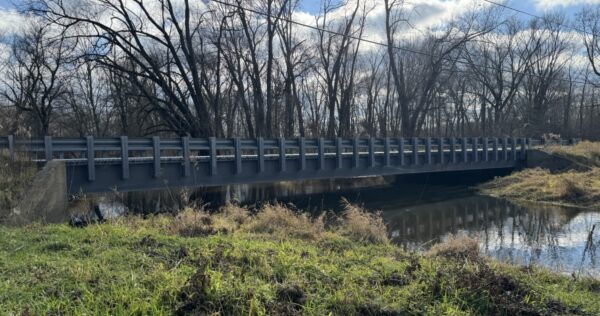
Bridges of Franklin County: Why Missouri is Turning to Steel
Franklin County, Missouri, saved $283,000 by selecting steel over concrete for four short-span bridge projects, demonstrating that simplified designs combined with a competitive bidding process can deliver exceptional value, durability and long-term performance.
 Decks
Decks
Pennsylvania County Selects Hot-Dip Galvanized Steel for Urgent Bridge Project
For a recent bridge replacement, Mercer County chose a hot-dip galvanized steel bridge to ensure a durable, cost-effective solution that could be delivered quickly and withstand a corrosive environment.
 Case Study
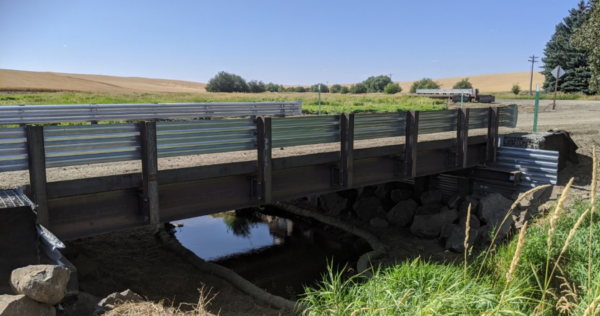
Whitman County Saves 32 Percent with Steel Superstructure
By choosing a steel beam girder bridge, the county reduced the overall project costs and decreased the time for construction.
 News
News
Report Finds $198 billion Needed to Repair America’s Rural Transportation System
A new report from TRIP indicates the U.S. faces a $198 billion backlog in funding for needed repairs and improvements to the rural transportation system.
 Case Study
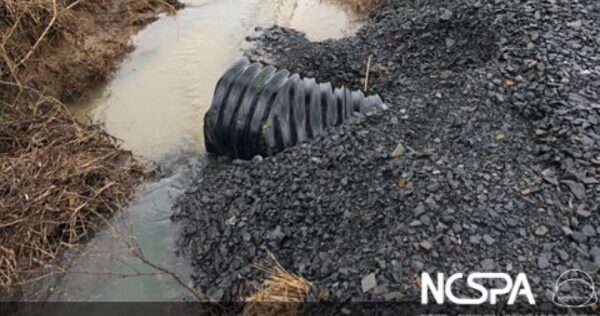
NCSPA Project Spotlight: Corrugated Steel Used for Culvert Rehabilitation Project
The National Corrugated Steel Pipe Association (NCSPA) spotlights a project that used galvanized corrugated metal pipe to rehabilitate a damaged culvert.