 Short Span Steel Bridges
Steel Culvert Saves Minnesota County Time and $15,000 Over Concrete Options
Article provided by Metal Culverts and the National Corrugated Steel Pipe Association
The problems facing every local government agency—eroding transportation infrastructure and limited funding along with minimizing road closures during construction. Corrugated metal pipe created the best solution possible just outside of Rochester, Minnesota.
Crumbling Concrete Culvert Needs Replaced
Installed in 1972, a concrete culvert located a half mile downstream from a large farming operation housing over 2,000 head of cattle and 9,000 head of swine, was quickly deteriorating.
After another local operation unexpectedly started carrying heavy loads over the culvert, the timeline for replacement had to be shortened.
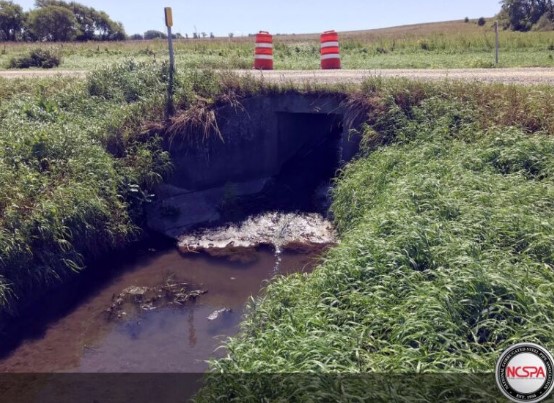
Olmsted County Public Works needed a cost-effective solution quickly before a concrete structure collapsed.
Signage was installed to limit weight and barrels were placed to deter traffic away from the worst parts of the crumbling concrete.
Olmsted County Public Works needed a cost-effective solution quickly before the less than 50-year-old concrete structure collapsed. Closing the road would create a five-mile detour for local residents and a business on the other side of the culvert.
Decision Criteria Leads to a Steel Solution
Jeff Webster, a Highway Supervisor with the Olmsted County Public Works Department was tasked with determining a solution to replace the failing concrete culvert. His decision criteria included:
- Service life in elevated PH levels due to runoff from the feed lot operation.
- Installation time to limit the length of the road closure
- Timeline of delivery for the replacement culvert
- Total costs of the un-budgeted replacement project
Webster stated, “We looked at the different options including reinforced concrete pipe (RCP), a concrete box culvert and corrugated metal pipe (CMP). We wanted the new culvert to help align the water flow with the natural flow of the crick. After comparing our options, two runs of corrugated metal pipe, one polymer and one galvanized, was the best solution.”

After a thorough review, Olmsted County replaced the concrete structure with two corrugated metal pipes – one galvanized and another galvanized with a polymer coating.
Metal Pipe Provides 100+ Year Service Life
One 42” diameter polymer coated CMP run would handle the constant flow of water from the crick, being highly resistant to the elevated PH levels in the water. With the long 100+ year service life of polymer coated CMP, it will outlast the less than 50 year old existing concrete structure.
A second 42” galvanized parallel run would normally be dry but was designed to handle higher flow rates during large rainfall events. In materials alone, the twin 42” corrugated metal pipe solution costs were a quarter of the cost of the concrete box culvert option and half of the cost of the RCP option.

By using steel, Olmsted County saved $15,000 on the project and only had to close the road for less than two days.
Corrugated Metal Pipe Saves Over Concrete Options
Webster went on to say, “aside from saving us over $15,000 on the project, we only had to close the road for two days, not even two full days. The concrete installation was expected to take over a week, barring any rainfalls. Metal Culverts was able to quickly manufacture and deliver both pipes, allowing us to complete the project before the other culvert collapsed.”
Metal Culverts, Inc is honored to have been able to work with Olmsted County to provide a long-term, cost-effective solution on this concrete culvert replacement before the road became impassable.
What are buried steel bridges?
Buried steel bridges provide an economical choices for bridge replacement or bridge rehabilitation.
They essentially are a corrugated steel pipe or structural plate pipe systems that is “buried” with backfill to carry loads through soil-structure interaction. This means the bridge structure itself and the backfill soils surrounding the structure interact with each other to support the loads. In effect, the backfill material is part of the bridge.
Because of this interaction, the bridge structure is typically lighter, and there can be significant savings in structure costs.
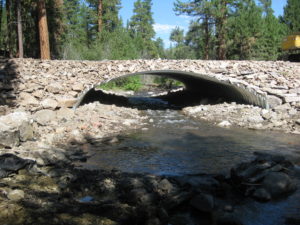
There are also many cases where buried bridges can carry heavier loads than traditional bridges because of the benefits of spreading vehicle loads through the fill. Buried bridges do not require abutments; and unless foundation soil conditions are poor, do not typically
require deep foundations.An additional benefit with buried bridges is that they can be tailored to site conditions and geometric requirements. The design includes inputs for site soils and backfill, meaning that locally available materials can often be used in construction and the structure can be tailored to fit the needs of the site and the owner’s requirements.
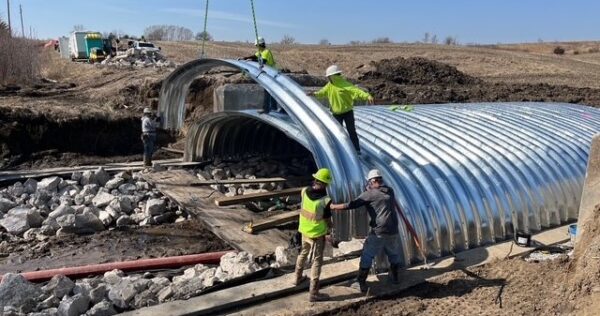 Buried Bridge
Buried Steel Bridge Preserves Streambed While Supporting Heavy Loads
A new galvanized buried steel bridge in Riverside, Iowa, supplied by SSSBA member Lane Enterprises, replaced a weight-restricted structure and restored direct access for local farmers. Its open-bottom steel design preserves the natural streambed, enhances durability, and provides a cost-effective solution for rural infrastructure.
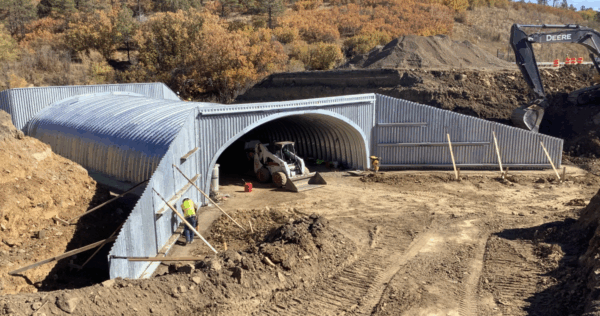 Buried Bridge
Buried Steel Bridge Protects Wildlife and Motorists in New Mexico DOT Project
The New Mexico DOT buried steel bridge project, featuring SSSBA member Contech’s custom structural plate design, was honored as the NCSPA Project of the Year for its innovative wildlife crossing solution on I-25 at Raton Pass.
 Case Study
Steel in Action: On-Demand Steel Bridge Video Series
Watch this four-part, on-demand video series featuring expert-led case studies on cost-effective, resilient short span bridge projects—now available with downloadable presentation materials.
 News
News
NCSPA Announces 2025 Project of the Year Winners
The National Corrugated Steel Pipe Association announced the 2025 project of the year winners, including members of the Short Span Steel Bridge Alliance.
 Buried Bridge
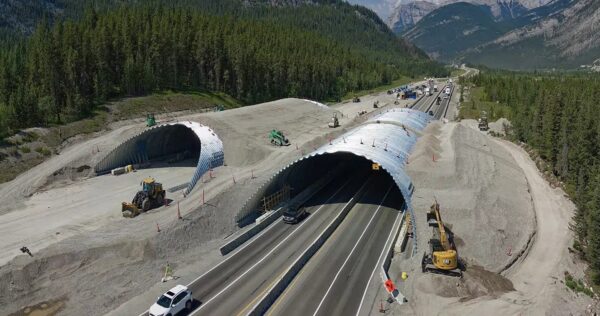
Corrugated Steel Animal Overpass Reduces Wildlife-Vehicle Collisions
The corrugated steel Stoney Nakoda Exshaw Wildlife Arch in Western Canada showcases the balance of engineering and environmental stewardship, setting a new standard for wildlife-friendly infrastructure.
 Buried Bridge
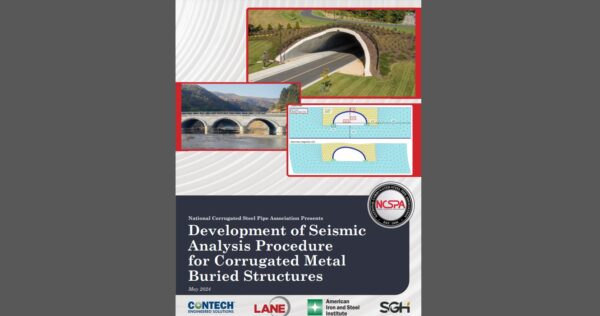
NCSPA Releases Report to Simplify the Seismic Design for Buried Structures
The National Corrugated Steel Pipe Association (NCSPA) released a groundbreaking report that simplifies the seismic design for buried structures including culverts, tunnels and buried steel bridges.