 Short Span Steel Bridges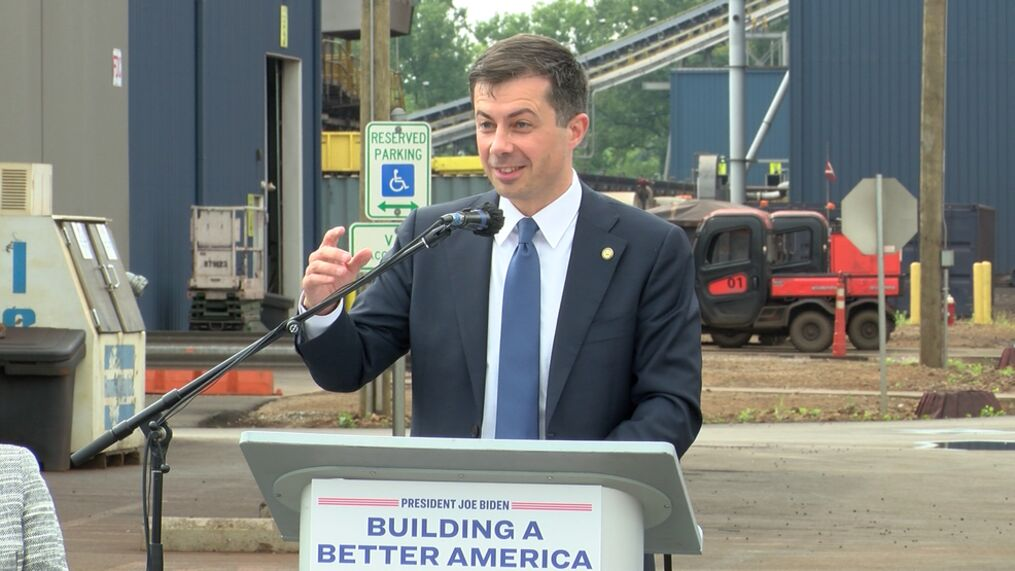
Steel Industry Comments on White House Buy Clean Announcement
Photo: U.S. Secretary of Transportation Pete Buttigieg Visits the Cleveland-Cliffs Toledo Direct Reduction Plant
The steel industry provided comment on the announcement by the White House that the federal government will prioritize the purchase of low-carbon construction materials for federal construction projects.
The announcement came as Transportation Secretary Pete Buttigieg, U.S. General Services Administration Administrator Robin Carnahan and Deputy National Climate Advisor Ali Zaidi, visited AISI-member Cleveland-Cliffs Direct Reduction plant, which produces high-quality hot-briquetted iron, in Toledo.
American Iron and Steel Institute
American Iron and Steel Institute President and CEO Kevin Dempsey applauded the announcement by the White House.
“We are pleased that the administration continues to recognize that the American steel industry is leading the way on decarbonization, as reflected in today’s announcement to prioritize the government’s purchase of lower-emissions construction materials for federally-funded projects,” Dempsey said. “Of the major steel-producing countries, the U.S. has the lowest CO₂ emissions per ton of steel produced.”
“Our entire industry continues to make key investments to further decrease carbon emissions and advance our leadership position on sustainability,” said Dempsey. “Today’s announcement recognizes the innovations and advancements being made by American steel producers, and we look forward to working with the government agencies to continue to incentivize the use of clean American-made steel as this initiative is implemented.”
Read AISI’s original press release.
American Institute of Steel Construction
The American Institute of Steel Construction also provided comment on the announcement.
“We applaud the Biden administration’s efforts to lower emissions in the construction sector, and we look forward to continued collaboration with the Federal Buy Clean Task Force,” said American Institute of Steel Construction Director of Government Relations and Sustainability Max Puchtel. “As America already leads the world in producing low-embodied-carbon fabricated structural steel and transparently disclosing environmental impacts–all while responsibly complying with environmental and labor regulations–the structural steel industry is uniquely positioned to continue its leadership role and deliver on the administration’s Buy Clean and Buy America priorities.”
“A clean, green future is critical and it’s already building in steel today. The hundreds of thousands of Americans in the structural steel industry have been working toward carbon neutrality for decades,” said AISC President Charles J. Carter.
Read AISC’s original press release.
Research Shows Steel Bridge Results in Lower Embodied CO2e Emissions than Concrete
A new research report issued by the University of Wyoming evaluates the life cycle sustainability (cradle to grave) of two functionally equivalent steel and concrete rural bridges. The study was conducted by Michael Barker, Ph.D., P.E., professor of civil and architectural engineering at the University of Wyoming, and research students Sarah Bridges, Ione Chandler and Peyton Smith. The outcome shows that, over the life cycles of the two bridges, the concrete bridge:
- Results in 26.3% more embodied CO2e (carbon dioxide equivalents) emissions
- Results in consumption of 8.7% more energy
- Results in recycling of 17.8% less material (at the end of its service life when compared with the steel bridge
Learn more and download the full report.
Does steel provide a sustainable option for bridges?
Steel is the most recycled material on the planet. Some of the sustainable advantages of steel include:
- Steel from a disassembled bridge can be used again for another project.
- Steel bridges can last 100 years or more, with minimal maintenance over their long service lives.
- The high strength of steel permits longer spans, which minimizes disruption to underlying habitats.
- Steel is highly resistant to extreme natural disasters such as earthquakes.
- The American steel industry has achieved a 31 percent reduction in energy intensity and a 36 percent reduction in greenhouse gas intensity since 1990.
 News
News
Missouri Steel Bridge Bundle Project Wins Prize Bridge Award
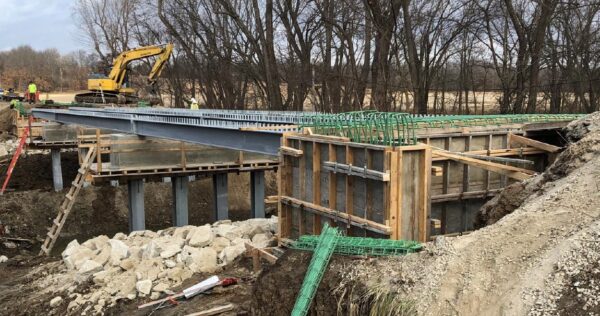
The National Steel Bridge Alliance (NSBA) named Missouri’s FARM Bridges Design/Build Bundle the 2026 Prize Bridge Award winner in the Short Span category. Fabricated by SSSBA member DeLong’s, the project delivered 31 rural bridges across 15 counties using galvanized steel and SDCL design for a 100-year service life.
 Design
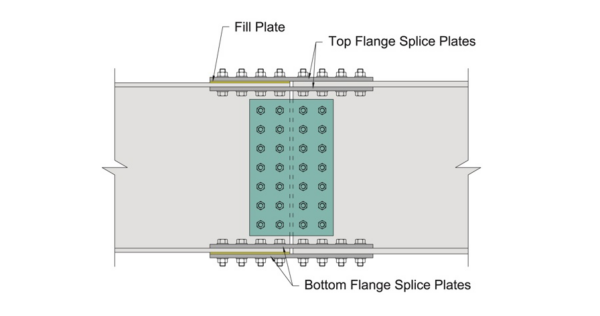
NSBA Releases Updated Bolted Splice Spreadsheet 4.01
NSBA’s Bolted Splice Spreadsheet 4.01 streamlines connection design with expanded options and updated AASHTO LRFD provisions for faster, more economical solutions.
 News
News
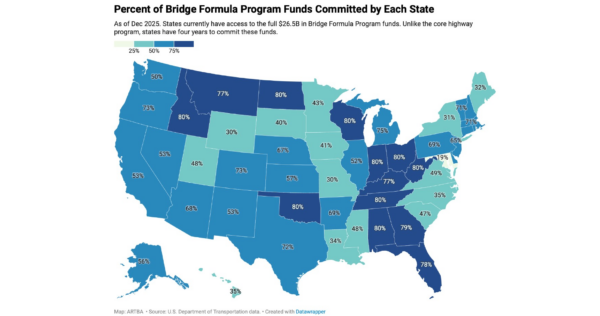
ARTBA Reports $15 Billion Committed Through Bridge Formula Program as Needs Remain
According to an ARTBA analysis, states have committed $15 billion through the bridge formula program, yet one in three bridges still needs work.