 Short Span Steel Bridges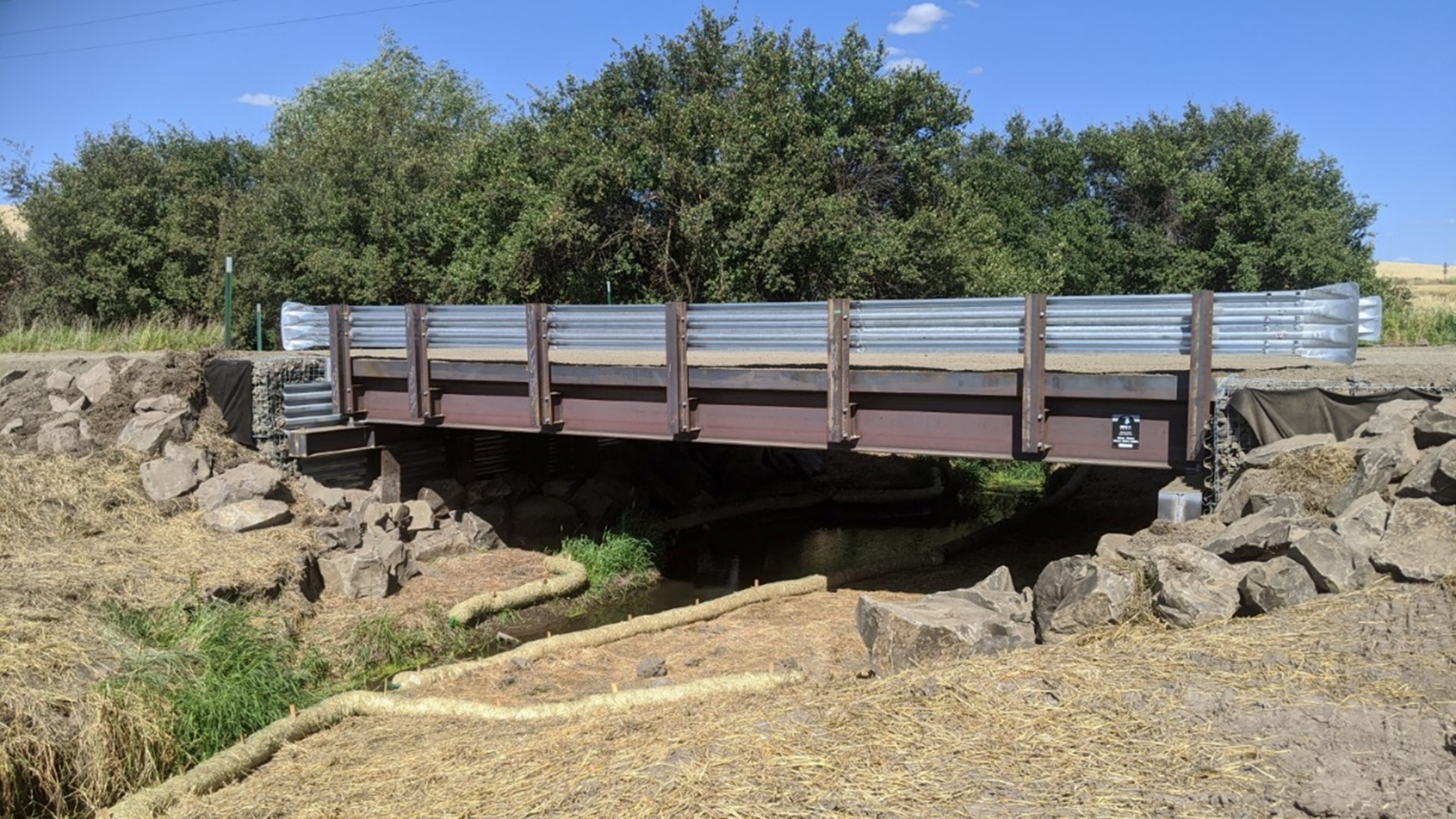
New Research Report Compares Sustainability of Rural Steel and Concrete Bridges
A new research report issued by the University of Wyoming evaluates the life cycle sustainability (cradle to grave) of two functionally equivalent steel and concrete rural bridges. The study was conducted by Michael Barker, Ph.D., P.E., professor of civil and architectural engineering at the University of Wyoming, and research students Sarah Bridges, Ione Chandler and Peyton Smith.
The two functionally equivalent bridges used within the study are two-lane, approximately 35-ft.-long simple spans, located in Whitman County, Washington, and built with local crews. Only the superstructures of the bridges were considered in the analysis. Four criteria were developed to evaluate and compare the sustainability of the two bridges:
- Embodied carbon emissions of materials, and emissions from equipment
- Embodied energy of materials, and energy consumption from equipment
- Waste management and recyclability
- Life cycle cost
Research Results
The outcome shows that, over the life cycles of the two bridges, the concrete bridge:
- Results in 26.3% more embodied CO2e (carbon dioxide equivalents) emissions
- Results in consumption of 8.7% more energy
- Results in recycling of 17.8% less material (at the end of its service life when compared with the steel bridge
The concrete bridge also has a life cycle cost that is 23% higher than the steel bridge.
First Step Toward Analyzing Sustainability of Bridges
Dan Snyder, director of business development for the American Iron and Steel Institute and director of the Short Span Steel Bridge Alliance, said: “The potential environmental impact of bridges has become an important consideration when selecting materials for a crossing, but there is limited information available on how to evaluate and compare the life-cycle sustainability of materials used for the superstructure of a bridge. To address this inadequacy, we asked Dr. Barker and his team to take a close look at these two functionally equivalent bridges.”
Snyder noted: “This is a first attempt to analyze a steel and concrete bridge in a life-cycle sustainability study, and the results may vary when making other bridge comparisons. However, this study provides a positive first step toward developing a methodology to analyze future bridges, which could become an important tool for bridge owners seeking to make sustainable choices for their projects, especially as funding for rural bridge projects becomes available through the Bipartisan Infrastructure Law.”
Download Summary and Full Report
Download Full Report (2 mb): Sustainability of Rural Steel and Concrete Bridges
Download Summary Report (320 kb): Sustainability of Rural Steel and Concrete Bridges
The opinions and conclusions in this report are not necessarily those of the American Iron and Steel Institute or the Short Span Steel Bridge Alliance
Contact Information
Michael G. Barker, Ph.D.
Director, SSSBA Bridge Education Center
Professor, Civil & Architectural Engineering, University of Wyoming
Email: barker@uwyo.edu
Does the SSSBA offer educational opportunities?
Yes! The SSSBA offers educational opportunities to students and professionals:
Professionals: The SSSBA provides complimentary half-day or full-day workshops on short span steel bridge design to states, counties, and design firms. Topics covered include practical and cost-effective steel bridge design and fabrication with eSPAN140, press-brake-formed steel tub girders, steel buried bridge design, galvanized coating solutions, and economical design with case studies, and more. The workshops can take place virtually or in-person, compliments of the steel industry. Learn more.
Students: The University of Wyoming and the Short Span Steel Bridge Alliance created a free 6-part live-lecture educational series to cover the many aspects of designing, fabricating, and constructing steel bridges. All students who successfully complete the education series will receive a Certificate of Completion from the University of Wyoming. Learn more.
Speakers: The SSSBA provides expert speakers to present topics of interest on the cost-effective design and construction of short span steel bridges. If you need a speaker for your next event, contact the SSSBA.
 News
News
Steel Bridge Task Force Honors Thomas Murphy with 2026 Richard S. Fountain Award
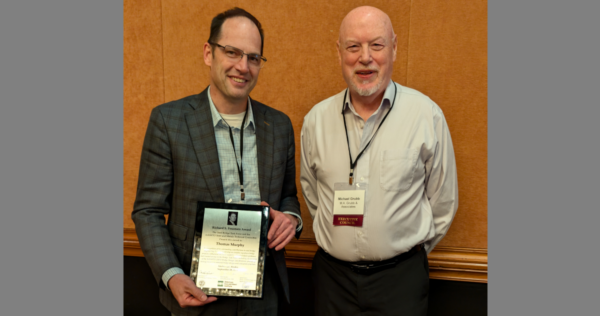
The Steel Bridge Task Force honored Thomas P. Murphy of Modjeski and Masters with the 2026 Richard S. Fountain Award during its September 28 meeting in Anchorage, Alaska. The award recognizes Murphy’s outstanding leadership and contributions to advancing steel bridge design, research and AASHTO specifications.
 News
News
SSSBA Semi-Annual Meeting in Omaha Highlights Innovation and Industry Collaboration
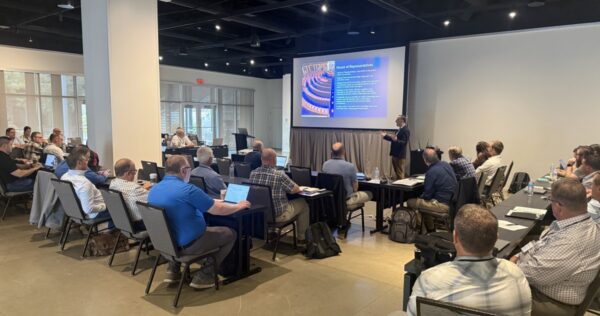
Steel bridge industry leaders gathered in Omaha, Nebraska, for the SSSBA Semi-Annual Meeting. The meeting featured technical presentations, industry updates, facility tours and discussions on advancing short span steel bridges. The next meeting is scheduled for March 17, 2027, in Washington, D.C.
 Events
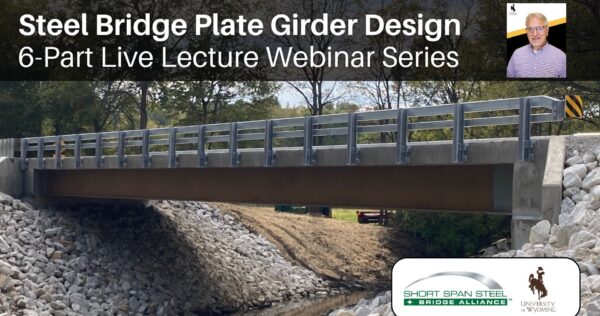
Free Steel Bridge Plate Girder Design Course: 6-Part Live Webinar Series (Starts Nov. 3)
Take your bridge design skills to the next level in this free six-part webinar series led by Dr. Michael Barker, University of Wyoming. Learn step-by-step how to design a composite plate girder bridge and earn a certificate of completion in this course from the SSSBA.