 Short Span Steel Bridges
Still Strong: Revisiting the First Galvanized Bridge in North America
The following information and images were provided by the American Galvanizers Association.
A plaque on the site commemorates this as the first fully hot-dip galvanized bridge in the United States. In 1966, then Ottawa County Engineer Frank Brechting, Jr. decided to “break the mold” and try hot-dip galvanized steel, not to make history, but simply because it was the most economical decision for the future.
Thanks to Brechting’s foresight, the residents of Ottawa County are still reaping the rewards. The county bridge is constructed of eight spans of hot-dip galvanized steel sections. In addition to the superstructure, Brechting also chose to galvanize all fasteners, handrails, diaphragms, shear connectors, and fittings.
‘Excellent Shape’ After 51+ Years
When hot-dip galvanized steel was chosen based on it’s low life-cycle cost, Brechting had only considered a 25-year life. However, that economic payoff is still being realized today after more than 50 years of service.
The bridge was inspected both in 1991, after 25 years of life and in 2017, after 51 years. Both inspections showed the bridge was in excellent shape with no signs of rusting or staining on the superstructure.
The handrail does have some signs of staining, but mil readings still show plenty of zinc coating (3.31 mils) present. Based on the readings in 2017, the galvanized steel components on the bridge are not expected to require any maintenance for at least another 70 years – easily surpassing the 100-year bridge life desired today.
Does steel provide an economical solution for bridge construction?

- Due to the light weight of steel, cost savings can be significant
- Studies show that weathering, A1010 (A709-50CR), and galvanized steel reduces both initial and life cycle costs.
- Steel can compete and even save costs when compared with nearly identical concrete structures. re.
- Steel bridges also have long lives, decreasing the need for replacement.
- Steel’s high strength permits longer spans, minimizing disruption to underlying habitats.
- Steel is highly resistant to extreme natural disasters such as earthquakes.
- Steel is the world’s most recycled material and is infinitely recyclable.
- Short span steel bridges can be designed with prefabricated elements which provide a simpler installation and cost savings.
 Durability & Coatings
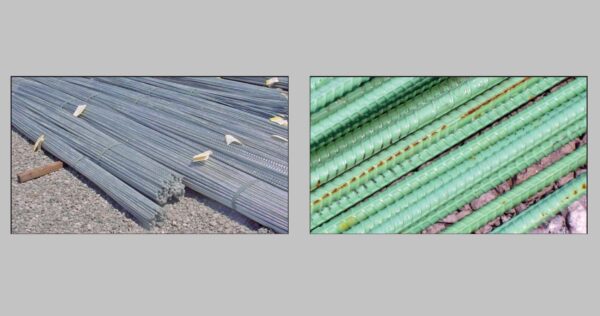
HDG Rebar vs. Epoxy-Coated Rebar
A new publication by the American Galvanizers Association compares the performance of hot-dip galvanized (HDG) rebar and epoxy-coated rebar in reinforced structures.
 Durability & Coatings
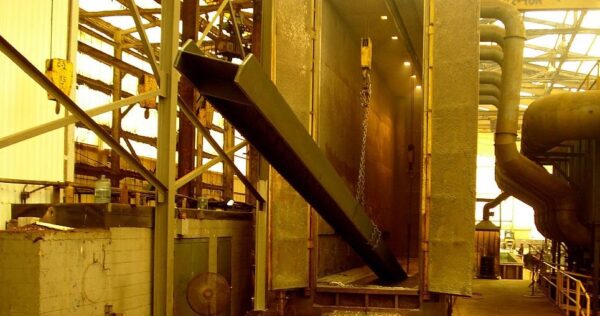
Determining and Overcoming the Size Limitations of Hot-Dip Galvanizing
The American Galvanizers Association explains how kettle size limits can be overcome with strategies like modular design, progressive dipping, and other creative solutions.
 News
News
SSSBA to Host Session on Corrosion Protection Systems at International Bridge Conference (July 15)
The SSSBA will host a session at the International Bridge Conference in Pittsburgh, PA, focused on corrosion protection systems for steel bridges, featuring expert presentations on weathering steel, galvanizing, metallizing and painting.