 Short Span Steel Bridges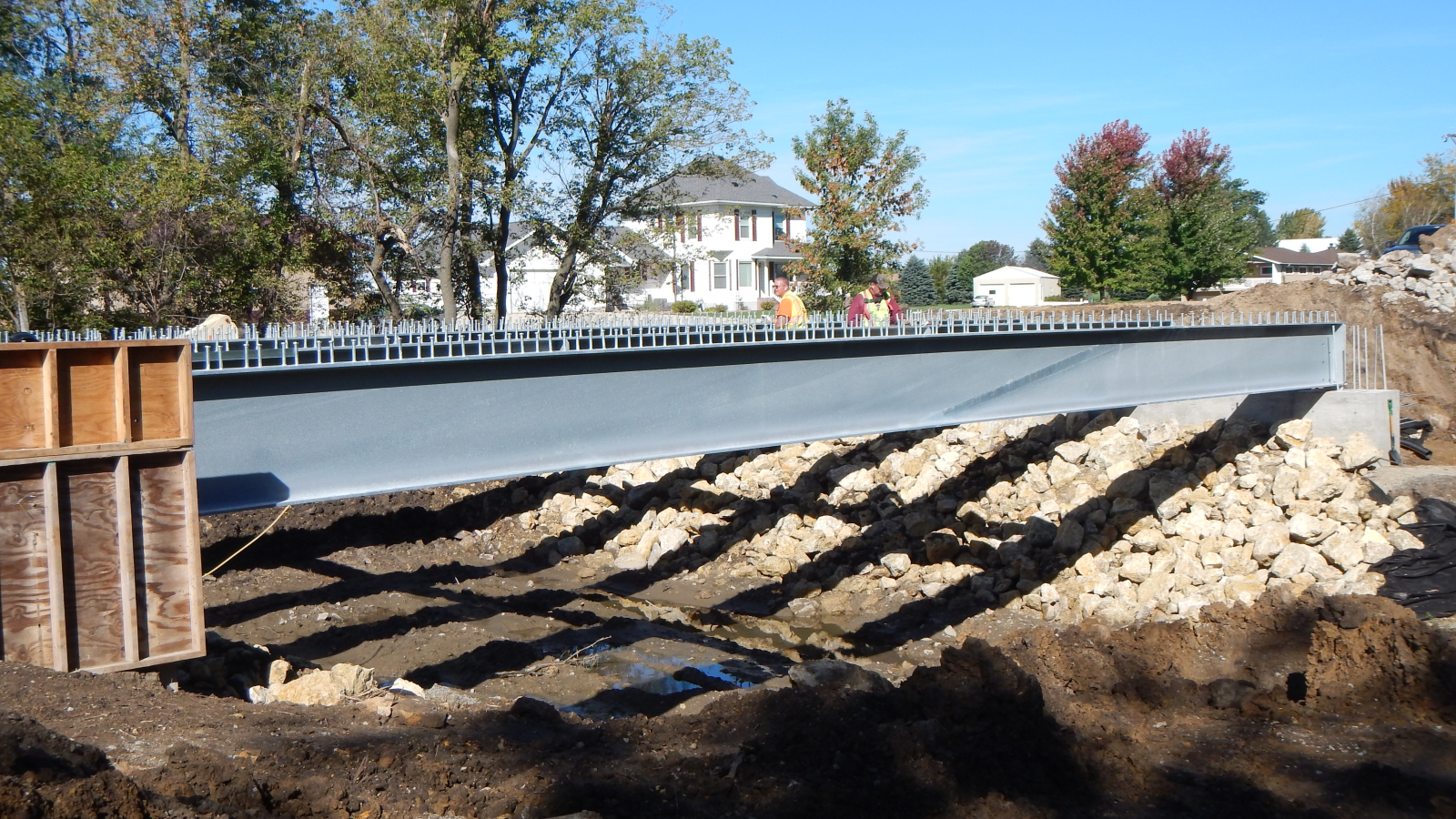
AGA Provides Tools and Resources to Inspect Hot-Dip Galvanized Steel
The following information and images provided by the American Galvanizers Association (AGA).
Similar to any manufacturing process, hot-dip galvanized (HDG) steel requires an inspection of the finished product to ensure compliance with applicable specifications. The inspection process requires a clear understanding of galvanizing specification requirements and measurement techniques to make an accurate assessment.
A key feature of hot-dip galvanized products is longevity and decades of maintenance-free performance. The time to first maintenance for galvanizing is directly proportional to the zinc coating thickness.
Therefore, the coating thickness is the most important component in determining a galvanized coating’s quality. However, the coating thickness is only one inspection criteria. Other key requirements include adherence, appearance, and finish.
Inspection of hot-dip galvanized steel is fairly simple, as any uncoated areas are easily identifiable. The requirements for hot-dip galvanized coatings are found in three ASTM specifications A123, A153, and A767.
Differences in appearance, as well as surface imperfections, can occur, however, in most instances, this is not cause for rejection of the material and does not affect the long-term protection. Inspection is most effectively and efficiently conducted at the galvanizing facility where questions can be asked and answered quickly.
Inspection of Galvanized Steel App
The American Galvanizers Association (AGA) has created a comprehensive app to aid in the inspection of hot-dip galvanized steel. The app is a visual guide to identifying various surface conditions present after hot-dip galvanizing.
Each image in the app is accompanied by text identifying the industry term for the surface appearance and detailing how and why it occurs, and whether or not it is accepted according to the specification. In addition to the visual interpretation of surface conditions, the app also contains critical specification (ASTM, ISO, AASHTO) information to assess compliance with coating thickness requirements as well as how to conduct repairs.
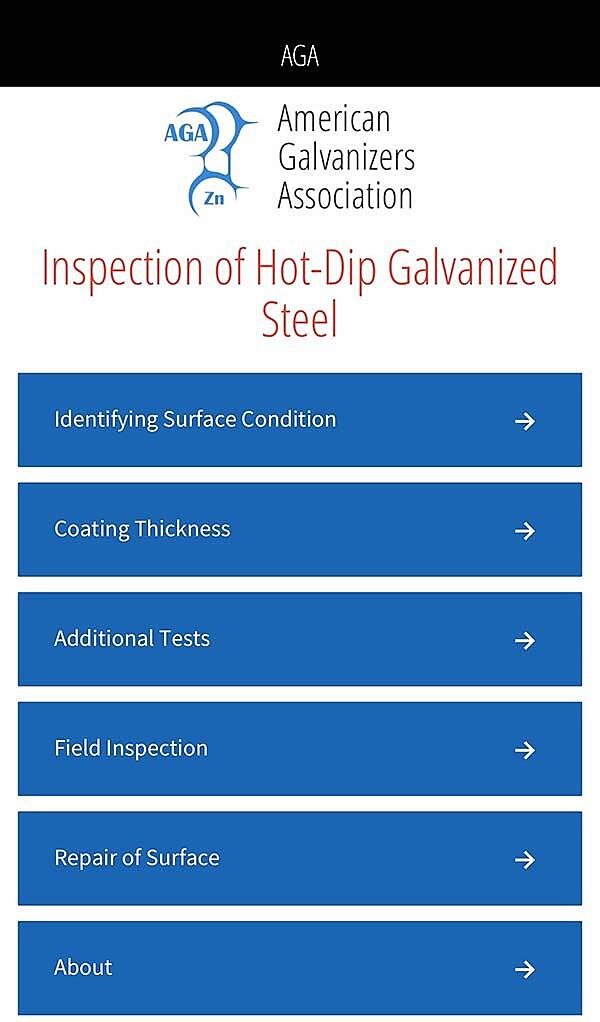
AGA created an app to aid in the inspection of hot-dip galvanized steel.
The app is available for free in both the Apple and Google Play stores. Once downloaded, the app will work offline without internet or phone service, perfect for any jobsite!
*Note: The Spanish version will be available by the end of quarter one of 2023! Our inspection guide is available now in Spanish.
Inspection Course
The AGA has created an inspection course that course is intended to train individuals on the proper inspection techniques and requirements for hot-dip galvanized steel products. There are four sections in this course:
- Hot-Dip Galvanizing Process
- Galvanizing Standards
- Types of Inspection
- Repair
Upon completion of this course, you should be able to recognize specification requirements and perform all inspection steps to ensure conformance with the requirements. Additionally, any inspector who completes the course, and passes the test (80% or better) will receive a printable Certificate of Completion and will be listed on the AGA website as an inspector. Take the online Inspection Course.
Inspection Guide
The AGA has created an instructional guide that covers the inspection procedures for hot-dip galvanized steel including visual inspection guide with photo examples, sampling techniques, thickness and uniformity measurement, adherence and appearance.

The AGA instructional guide that covers the inspection procedures for hot-dip galvanized steel.
This publication is available in English, Spanish, and Canadian French.
Read the original article from the American Galvanizers Association.
Does steel provide a sustainable option for bridges?
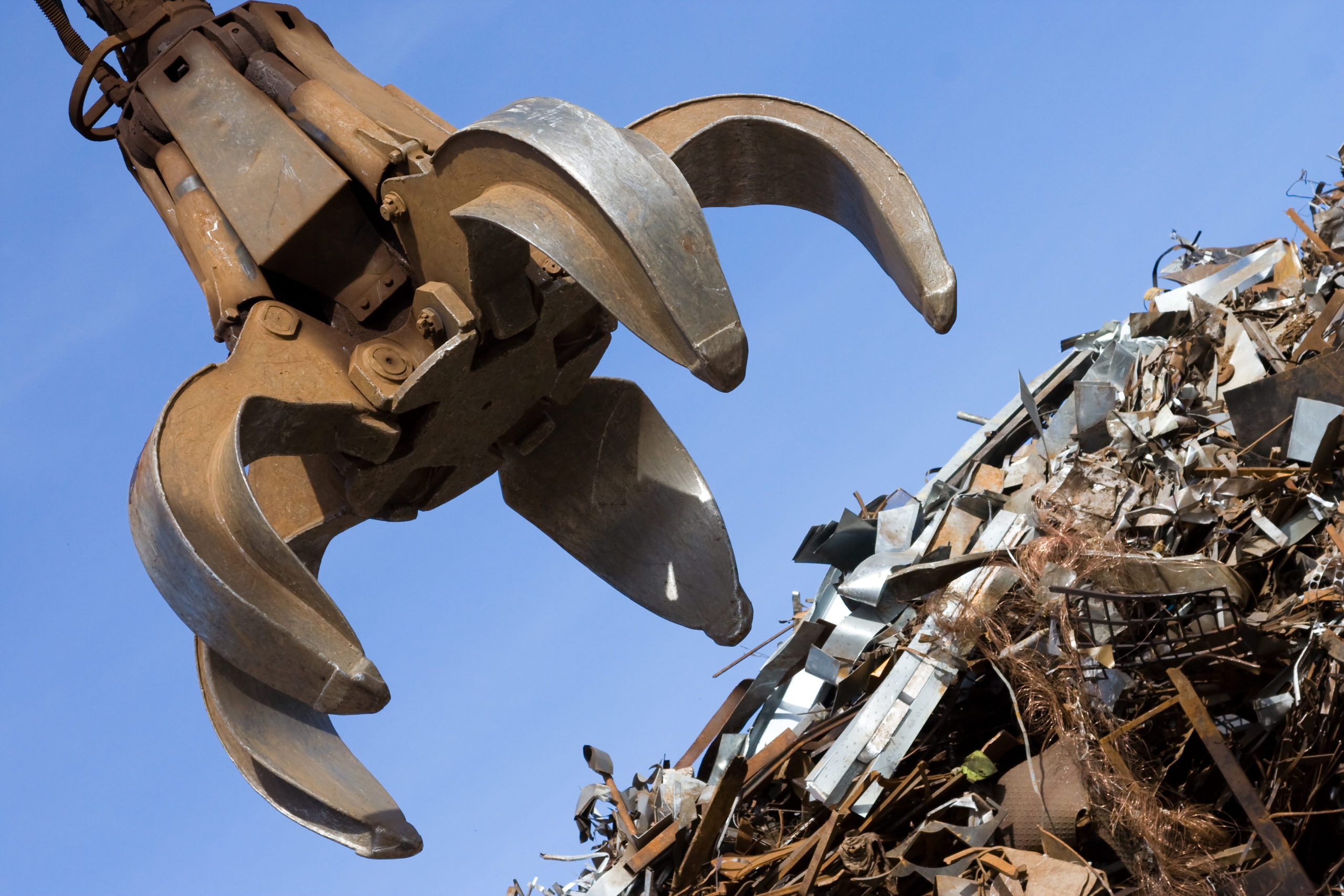
Steel is the most recycled material on the planet. Some of the sustainable advantages of steel include:
- Steel from a disassembled bridge can be used again for another project.
- Steel bridges can last 100 years or more, with minimal maintenance over their long service lives.
- The high strength of steel permits longer spans, which minimizes disruption to underlying habitats.
- Steel is highly resistant to extreme natural disasters such as earthquakes.
- The American steel industry has achieved a 31 percent reduction in energy intensity and a 36 percent reduction in greenhouse gas intensity since 1990.
 News
News
Missouri Steel Bridge Bundle Project Wins Prize Bridge Award
The National Steel Bridge Alliance (NSBA) named Missouri’s FARM Bridges Design/Build Bundle the 2026 Prize Bridge Award winner in the Short Span category. Fabricated by SSSBA member DeLong’s, the project delivered 31 rural bridges across 15 counties using galvanized steel and SDCL design for a 100-year service life.
 Durability & Coatings
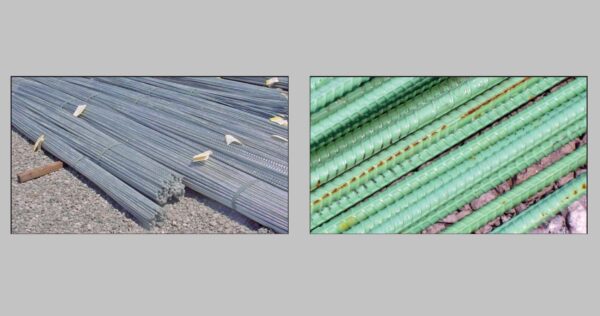
HDG Rebar vs. Epoxy-Coated Rebar
A new publication by the American Galvanizers Association compares the performance of hot-dip galvanized (HDG) rebar and epoxy-coated rebar in reinforced structures.
 Durability & Coatings
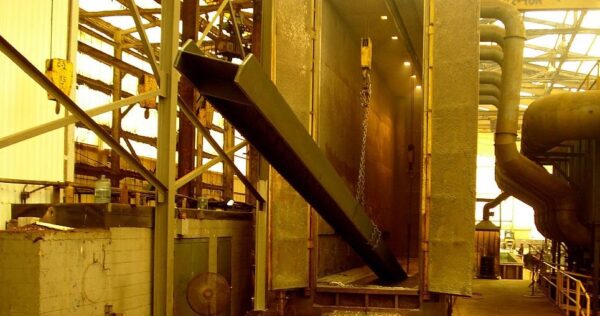
Determining and Overcoming the Size Limitations of Hot-Dip Galvanizing
The American Galvanizers Association explains how kettle size limits can be overcome with strategies like modular design, progressive dipping, and other creative solutions.