 Short Span Steel Bridges
 What is a Sustainable Bridge?
This blog is the introduction to a new monthly series on the sustainability of steel bridges.
When most people think of sustainability, they often refer to the design and construction of buildings. The modern practice of green building emerged in 1990, with the formation of the Committee on the Environment within the American Institute of Architects, followed a few years later with the founding of the U.S. Green Building Council.
According to the Greenroads Foundation, for green building to significantly impact the environment, it must include sustainable roads and bridges. After all, there are over 4 million miles of roads and 600,000 bridges in the United States. Building a one-mile long single road lane requires as much energy as powering 50 American households in a single year. Therefore, it makes sense to include roads and bridges in the sustainability conversation.
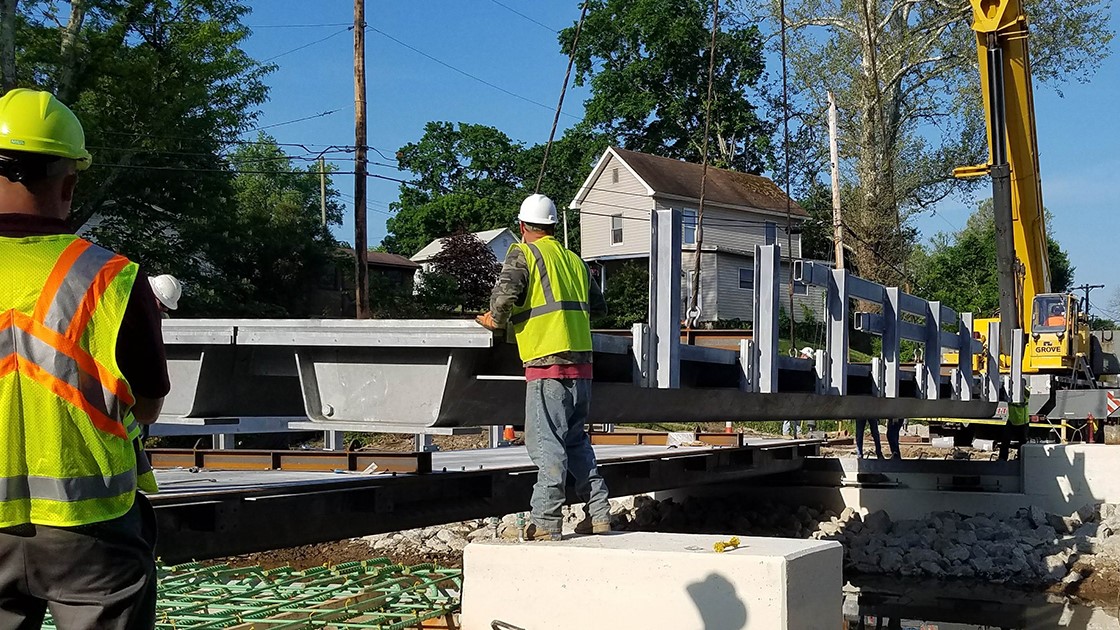
Press-brake-formed steel tub girder bridges can last 100 years or more, with minimal maintenance over their long service lives.
Sustainability Rating Systems
Similar to LEED certification for buildings, emerging sustainability initiatives for roads and bridges are slowly picking up speed across the nation. Yet, there is no current widely accepted standard or practice for rating green roads. Still, bridge owners and designers are beginning to consider sustainable design details and construction options when updating our nation’s infrastructure.
The Federal Highway Administration (FHWA) is committed to developing a more sustainable infrastructure. In 2012, FHWA launched INVEST (Infrastructure Voluntary Evaluation Sustainability Tool). INVEST is a web-based self-evaluation tool which covers the full life cycle of transportation services, including system planning, project planning, design and construction, and continuing through operations and maintenance.
FHWA has also spearheaded numerous efforts to address and advance sustainability ranging from projects to mitigate climate change impacts, to initiatives that promote sustainable pavements and improve safety, to developing tools to better assess the benefits and costs of transportation investments.
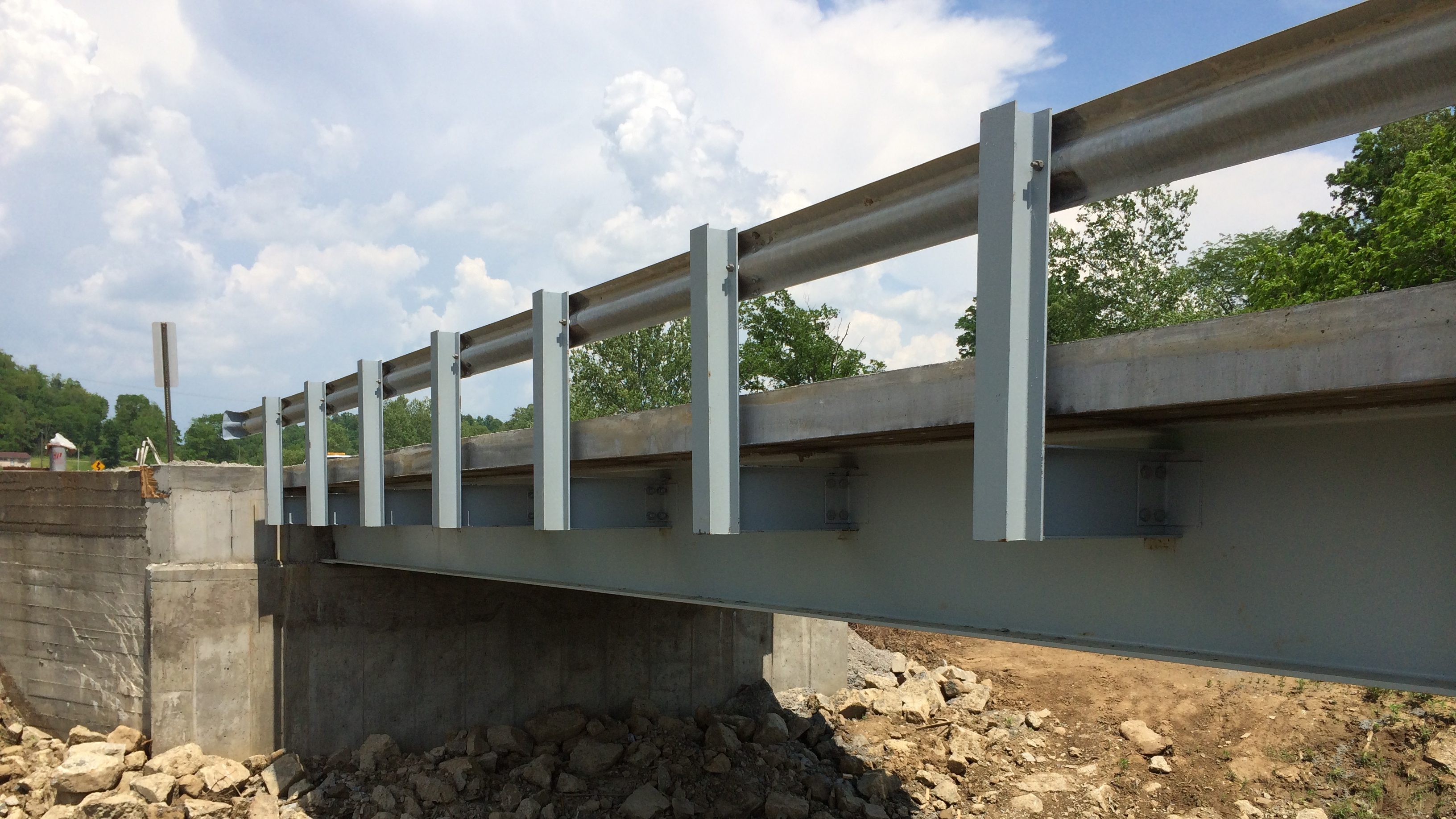
Muskingum County Ohio fabricated the Green Valley Road Bridge superstructure with repurposed W33x141 beams salvaged from a previous bridge replacement – saving $51,000.
Sustainable Priorities for Bridges
Similar to buildings, sustainable development requires a balancing of environmental, social and economic demands for bridges. Bridges can satisfy these three sustainability priorities by:
- Being economical in terms of their entire lifetime, including decommissioning, and also considering the effects of user disruption during construction and maintenance.
- Meeting social priorities, considering both the construction workers, and the people living near to and using the bridge.
- Minimizing environmental impact in terms of carbon dioxide emissions and embodied energy during fabrication and construction and ensuring as many bridge components as possible are recyclable and preferably reusable at the end of the bridge’s life.
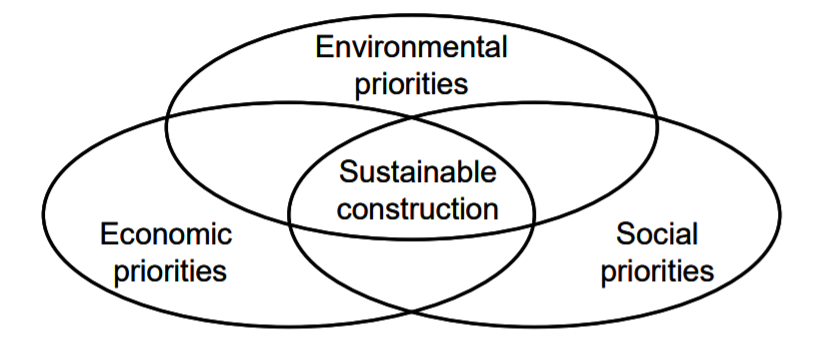
Sustainable construction – meeting three priorities
The Steel Bridge Advantage
Steel is widely used around the world for the construction of bridges from the very large to the very small. It is a versatile and effective material that provides efficient and sustainable solutions. Steel scores well on all the sustainability priorities, including:
- Economics: Due to the light weight of steel, cost savings can be significant: smaller abutments, use of local crews, fast installation, lighter equipment – when you add them all up, steel provides significant cost savings. Furthermore, steel causes little disruption during construction with prefabricated options.
- Environmental: Steel is the most recycled material in the world. More steel is recycled every year than paper, glass, aluminum and plastic combined. Plus, steel from a disassembled bridge can be used again for another project. Steel’s high strength-to-weight ratio coupled with a low carbon footprint results in an overall reduction of the embodied carbon of a typical structure compared to other framing materials. Simply stated, waste and environmental impacts are minimized when steel is used.
- Social: Every bridge project needs to be designed for the society is it serving. A bridge must not only serve the current population, but should be built with a material that can serve future generations. Steel bridges can be strengthened and adapted if the need arises in the future to address increased live loadings, new live loadings, roadway widenings, or other changes in configuration. Other materials do not have the same adaptability and often require replacement for new loadings or changes in configuration.
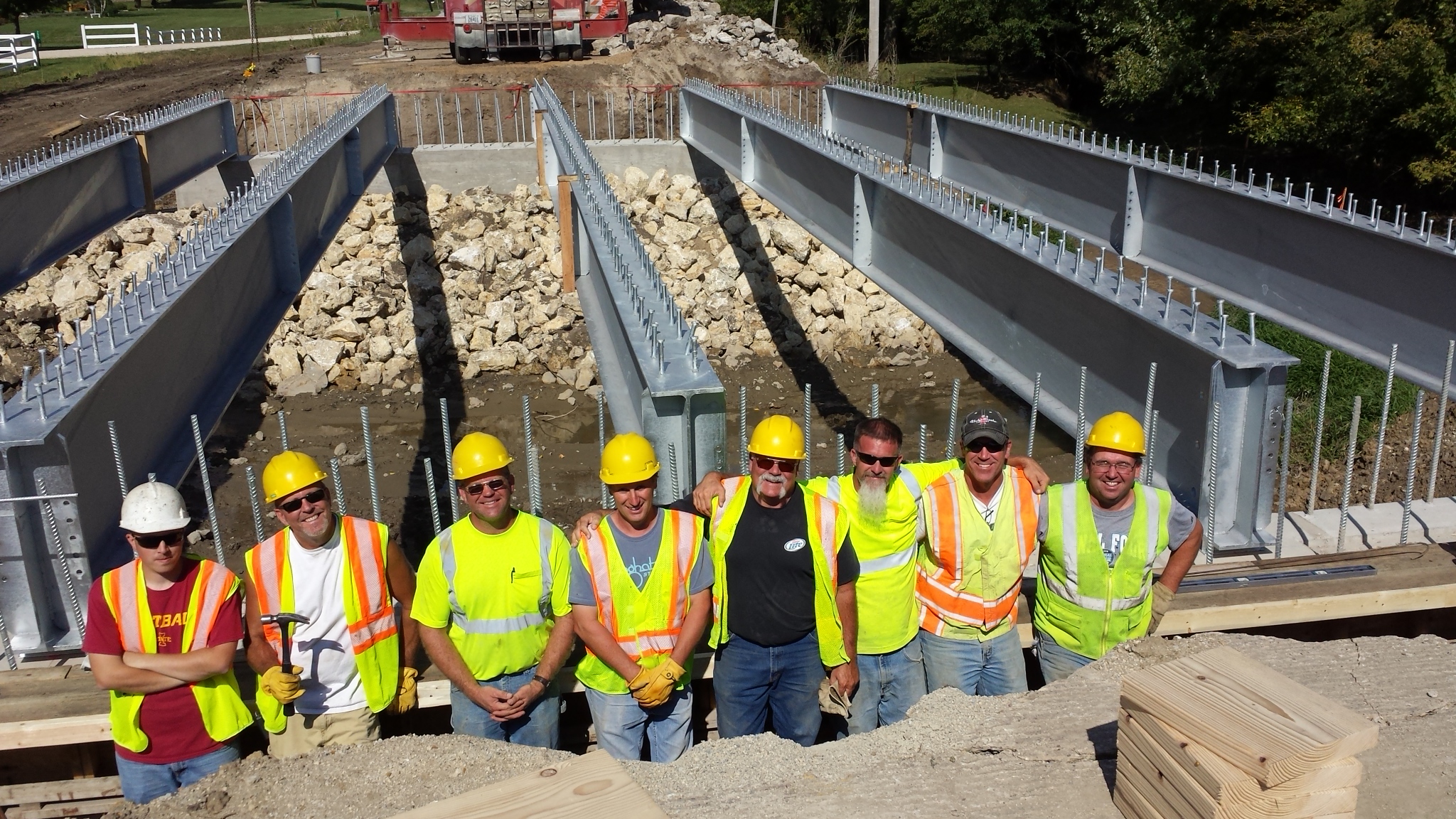
This local crew from Buchanan County, Iowa, replaced the Jesup South bridge with steel.
Life Cycle and Sustainability
Sustainability experts suggest that the best way to optimize bridge fabrication and construction is through extending the life span of a bridge. Man-Chung Tang, a bridge engineer who writes extensively on sustainability, said, “A bridge that lasts 300 years instead of 100 years is equivalent to a reduction in environmental impacts by 66 percent.”
Steel bridges have long service lives, decreasing the need for replacement. There are thousands of 100-year-old steel bridges still in service across the nation. To illustrate this point, the National Steel Bridge Alliance created a visual timeline of American steel bridges in service, built between 1838-1938.
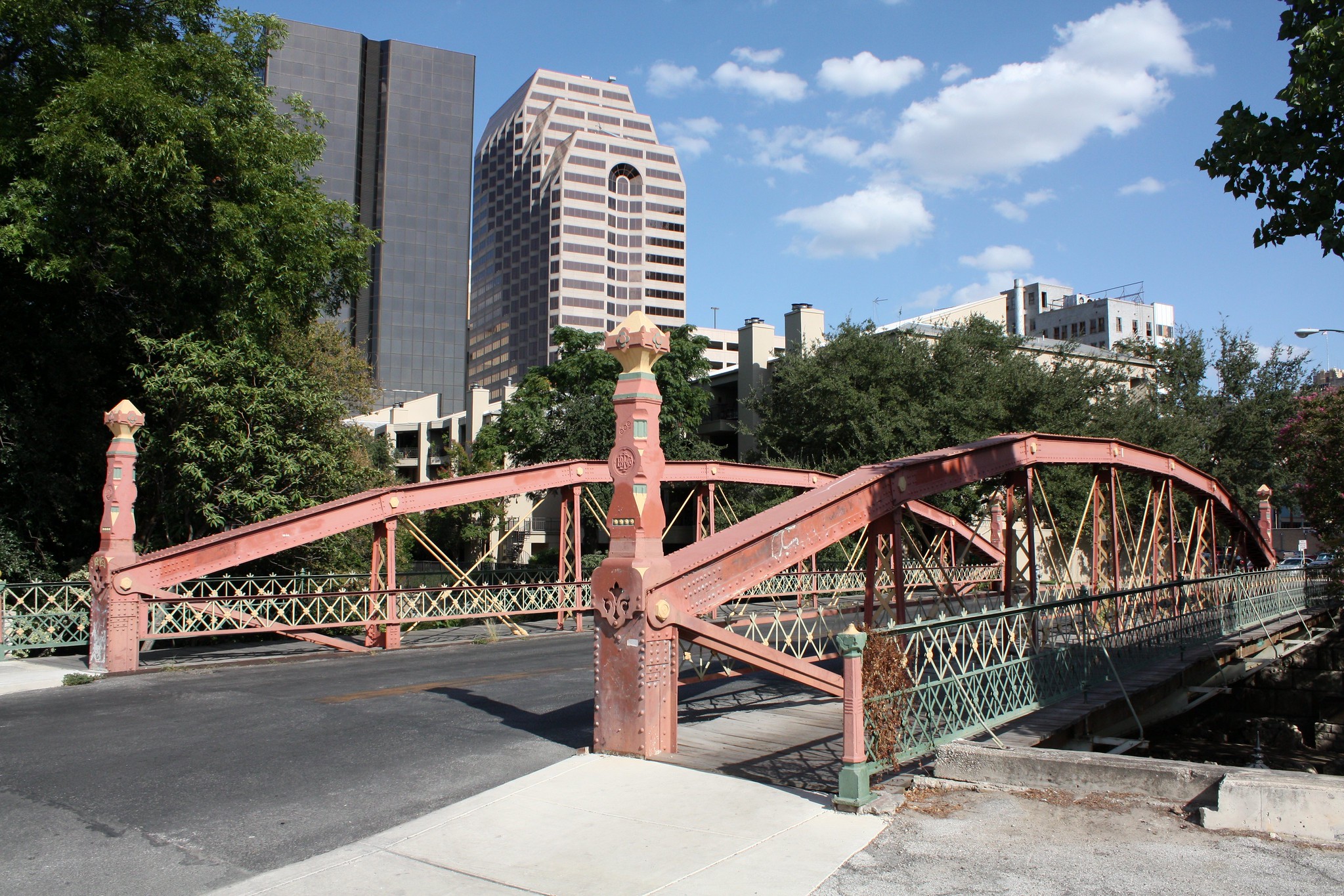
The Augusta Street Bridge over the San Antonio River was built in 1890 and is still in service.
In addition, new steel grades and innovative designs are constantly being developed to further extend the life of a steel bridge:
- Steel press-brake tub girders were introduced several years ago to simplify and speed the construction of a short span bridge. Experts have placed a life expectancy of 100 years or more for this innovative bridge system.
- Galvanized steel bridges can protect against corrosion for up to 100 years. According to one study, the future maintenance of bridges can be reduced by 50 percent with galvanizing. The American Galvanizers Association developed a Time to First Maintenance Chart to provide a visual representation of the approximate time to first maintenance in years for batch hot-dip galvanized steel.
- Weathering steel is a high-strength, low-maintenance, and cost-effective solution to extend the life of a steel bridge – up to 120 years. It is a widely used corrosion protection system and performs well when detailed properly and used in the proper location and environment.
- ASTM A709 Grade 50CR is highly corrosion-resistant steel which performs extremely well in corrosive environments. A research report sponsored by the U.S. Department of Transportation indicates that using A709-50CR can achieve considerable economic and sustainability benefits. A709-50CR has the ability to positively impact the current practice of bridge maintenance and significantly extend the service lives of steel bridges.
- Two and Three-coat paint systems are available to extend the life of a steel bridge. High-performance zinc-rich primers and high-solids coatings feature fast dry times and recoat times. In the field, innovative two-coat systems are now available to eliminate an entire application step and speed up the process.
For more information on corrosion protection systems for steel bridges, please see Volume 19 of The FHWA Steel Bridge Design Handbook.
The Future of Sustainability
According to estimates by the New Climate Economy, the world will have to invest $90 trillion in sustainable infrastructure by 2030. These demands are driven by aging infrastructure in advanced economies and higher growth and structural change in emerging markets and developing countries. Steel bridges are positioned to provide the most sustainable solutions to meet these demands.
With advances in steelmaking technology, innovative design, and corrosion protection systems, steel bridges can improve our nation’s infrastructure with sustainable solutions that will last well into the next century.
Additional Sustainability Blog Posts:
- What is a Sustainable Bridge? (read now)
- Extending the Life of a Steel Bridge: 100 Years and Beyond (read now)
- Overview of Green Bridge Rating Systems (read now)
- The Rehabilitation and Repair of Steel Bridges (read now)
- The American Steel Industry: Meeting the Global Demand for a Sustainable Infrastructure and Educated Workforce (read now)
- Steel Bridges: Impact on the Community and Surrounding Environment (coming soon)
- Climate Change, Steel Bridges (coming soon)
- Economics: Affordable Sustainable Steel Bridges (coming soon)
- Sustainability: Material Selection and Bridge Configuration (coming soon)
- Advanced Grades of Steel for Sustainable Bridges Solutions (coming soon)
 News
News
WV DOT Completes Fast-Track Bridge Project with Steel
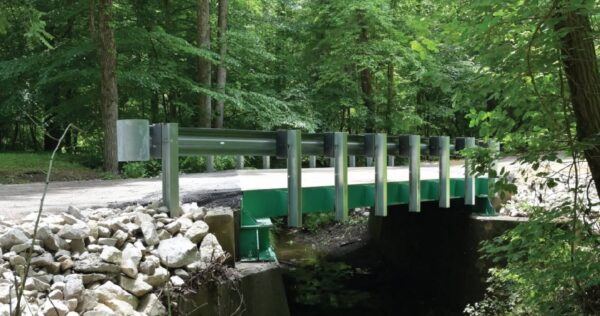
WV DOT completed a fast-track bridge project using salvaged steel beams from a nearby overpass to restore a 20-foot bridge in West Virginia.
 Buried Bridge
Corrugated Steel Animal Overpass Reduces Wildlife-Vehicle Collisions
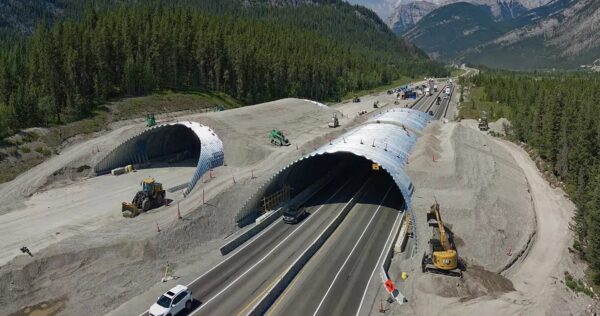
The corrugated steel Stoney Nakoda Exshaw Wildlife Arch in Western Canada showcases the balance of engineering and environmental stewardship, setting a new standard for wildlife-friendly infrastructure.
 Sustainability
Steel Bridge Restores Fish Migration in Olympic National Forest
A new 70-foot steel bridge in the Olympic National Forest restores a vital fish passage, demonstrating steel’s durability and adaptability for environmentally sustainable infrastructure.