 Short Span Steel Bridges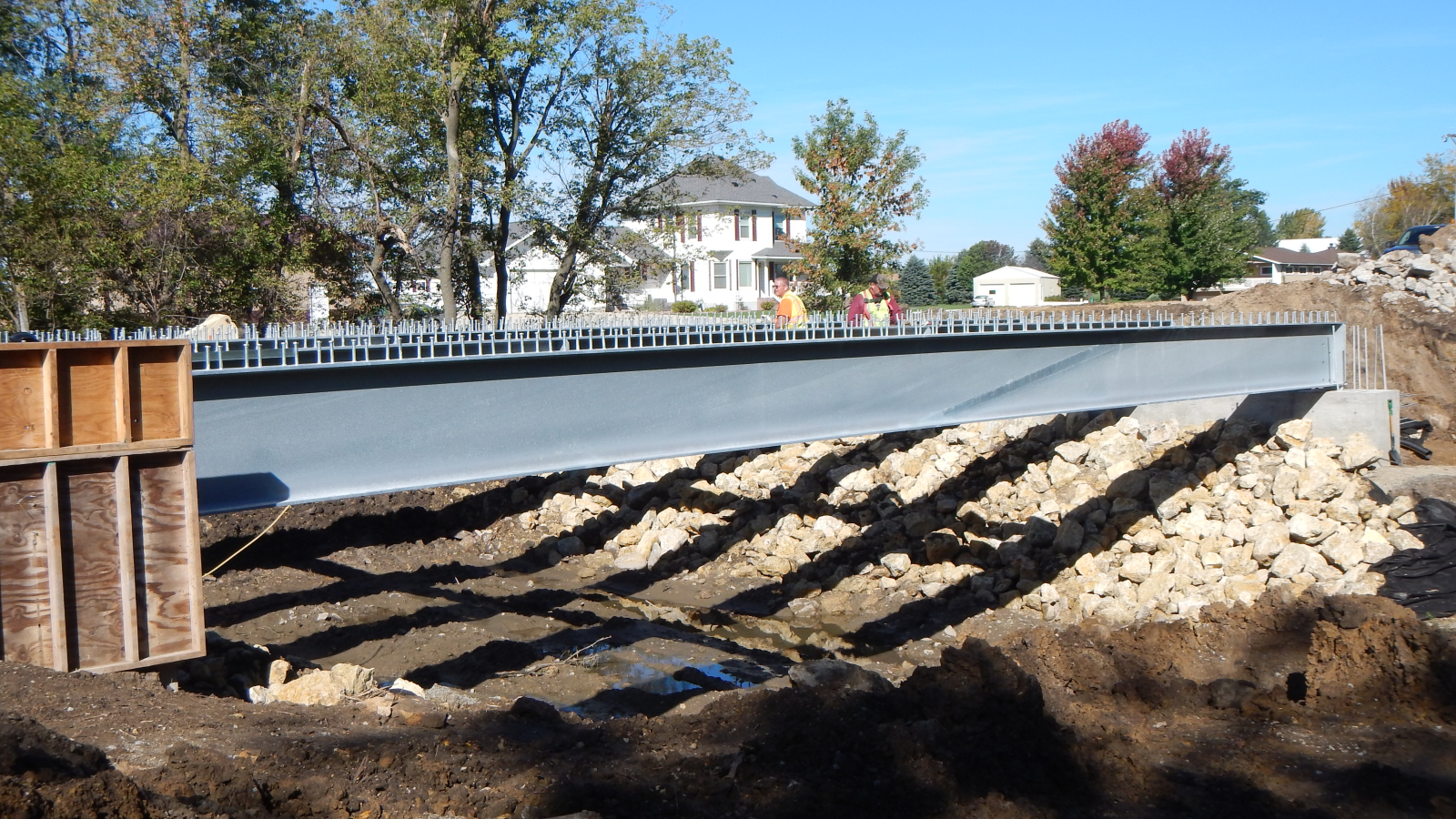
What Span Lengths Can Be Hot-dip Galvanized?
Guest Blog by the American Galvanizers Association
Hot-dip galvanizing is a complete immersion process, which means parts must fit in the galvanizing bath to be fully coated. Size limitations are governed by the galvanizing kettle dimensions, but the average kettle length in North America is 40 ft (12 m) and 50-60 ft (16-18 m) kettles are common.
If a bridge girder is too large for total immersion in the kettle, progressive dipping can be utilized to immerse each end sequentially to coat the entire girder. If at least half of a steel article can be submerged in the galvanizing bath, the part can be partially galvanized at an angle, flipped and rehung, then dipped on the remaining surface to fully coat the entire part with a small overlap area (Figure 1). In theory, this nearly doubles the size of parts that can be hot-dip galvanized.
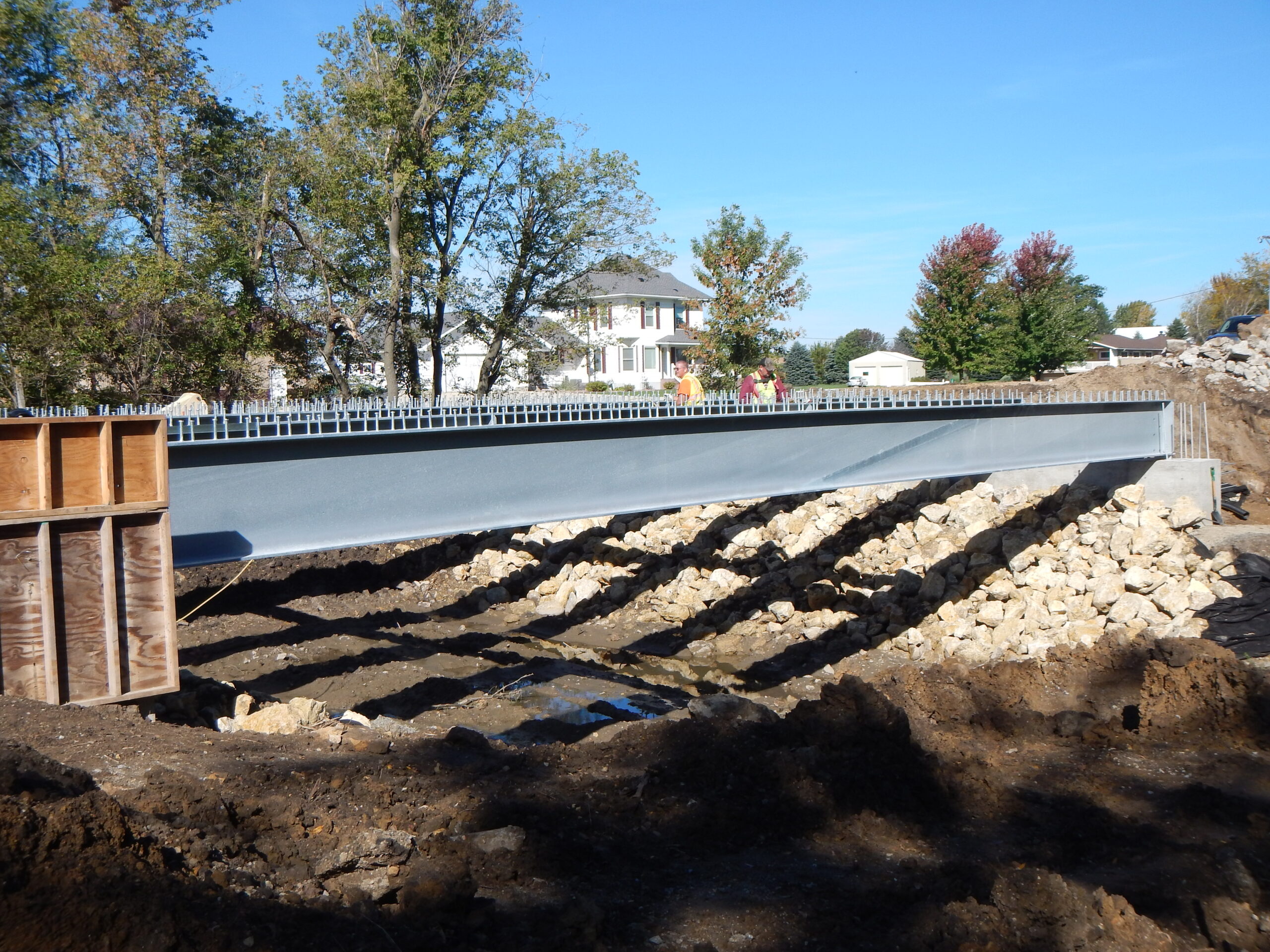
Figure 1: Progressively dipped bridge 63 ft bridge girder used on Jesup South Bridge in Buchanan County, Iowa (2013).
In practice, the ability to hot-dip galvanize by progressive dipping depends on many variables: part dimensions (length, width, height), kettle dimensions (length, width, height), material handling capabilities at the galvanizing plant, the distance between the top of the zinc and the top of the kettle, and more.
If the article can be progressive dip galvanized, additional considerations may be relevant on a project by project basis such as lifting orientation, handling limitations at the galvanizer, aesthetics, and the galvanizing process temperature.
It is important to note that progressive dipping typically produces an overlap line surface condition which thicker and darker in appearance than the surrounding coating but can be smoothed if required. The line or darker area is purely cosmetic and will fade over time as the coating weathers naturally.
As the overlap area will most likely develop a thicker coating, it is important to consider if the excess zinc will impact a connection point with other pieces. If required, the excess coating thickness can be buffed or ground down to match the surrounding coating.
The AGA publishes two resources to assist with calculations for maximum article size when hot-dip galvanizing:
AGA Progressive Dip Charts
The AGA Progressive Dip Charts estimate the maximum article length which can be galvanized if the article height and galvanizing kettle dimensions are known. There are four charts which provide the output of maximum article length for articles of 1 ft, 2 ft, 3 ft, or 4 ft in height when considering a range of typical galvanizing kettle lengths and depths.
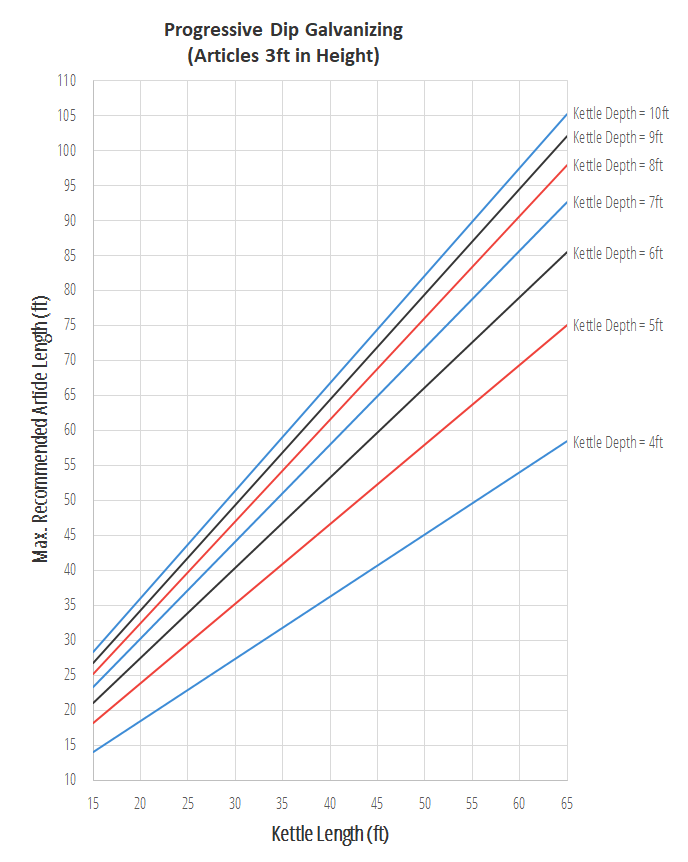
Click on chart to enlarge
AGA Progressive Dip Calculator
The AGA Progressive Dip Calculator determines whether an article of specific dimensions can be hot-dip galvanized within a known galvanizing kettle size. The calculator also provides a visual 2D model of the progressive dip method, the minimum and maximum rigging angles for successful galvanizing, and whether rotating the article (W and H) affects the ability to galvanize.
AGA PROGRESSIVE DIP CALCULATOR
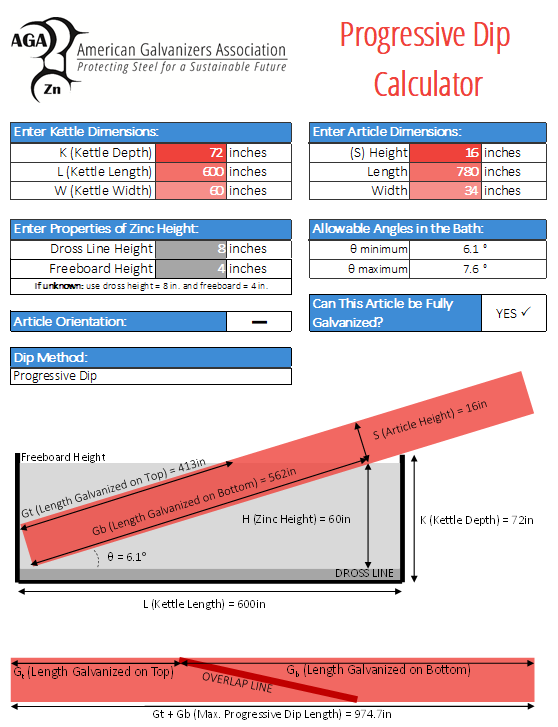
Click on chart to enlarge
Finding HDG Kettle Dimensions
Kettle dimensions for all galvanizing members of the American Galvanizers Association (AGA) can be obtained from the AGA’s online directory (galvanizeit.org/galvanizers). However, even if a bridge girder can be progressive dipped, the maximum height of articles above the bath, available rigging height, and maximum crane capacity varies widely by galvanizing plant and should be confirmed directly with the galvanizer ahead of time.
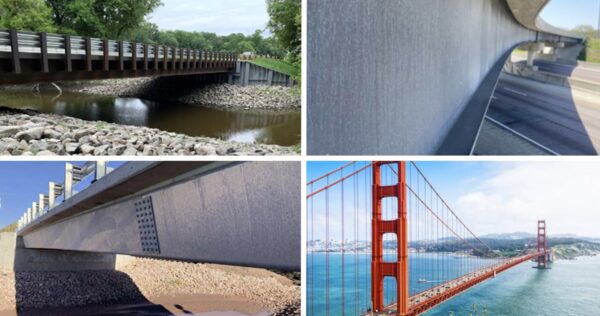 News
News
AISI Corrosion Advisory Group to Meet October 27 in Ohio
The AISI Corrosion Advisory Group (CAG) will meet October 27 at the Sherwin-Williams Research & Development Center in Ohio. Discussions will focus on corrosion research, coatings, steel durability and related industry needs.
 Events
Free Webinar: Galvanize It! Core Webinar (Aug. 26)
SSSBA member American Galvanizers Association’s Core Galvanize It! webinar provides an introduction to hot-dip galvanizing, covering the galvanizing process, zinc coatings, and key benefits such as corrosion resistance, durability, longevity, sustainability and life-cycle cost. The seminar is AIA and RCEP accredited for 1.0 LU/PDH.
 Durability & Coatings
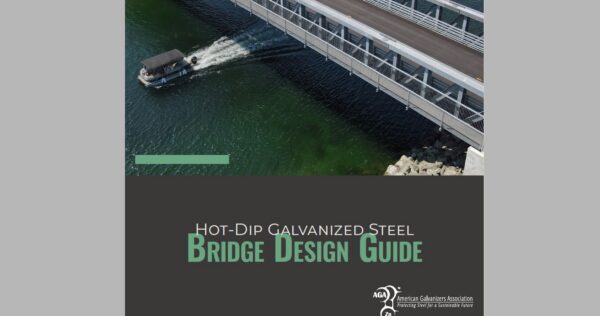
AGA Releases Guide for Hot-Dip Galvanized Steel Bridge Design
SSSBA member the American Galvanizers Association has released a new resource on hot-dip galvanized steel bridges, highlighting durable, low-maintenance solutions that support long service life.