 Short Span Steel Bridges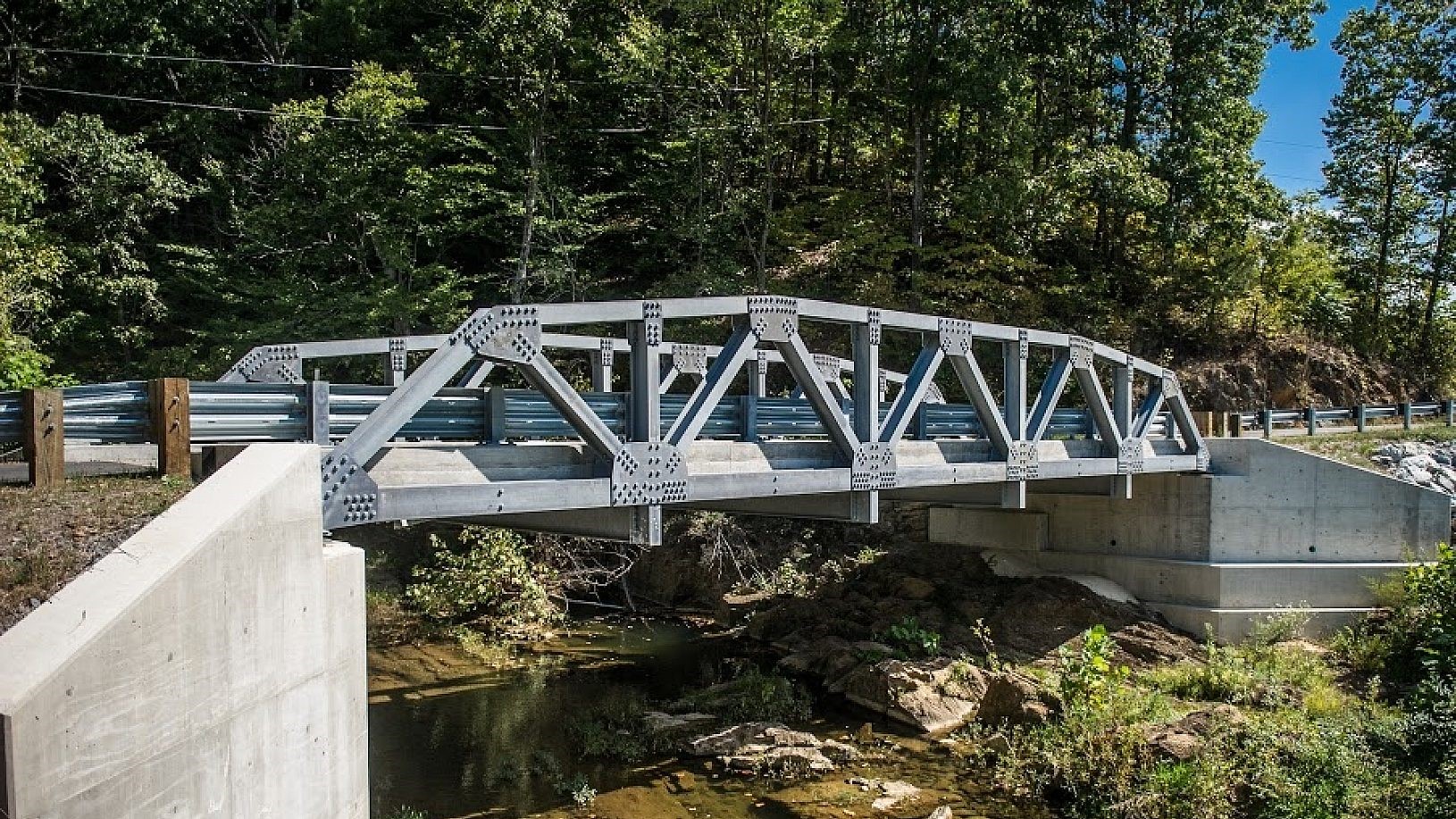
Steel Provides Answer for 224,000 Bridges In Need of Repair
Photo Credit: U.S. Bridge
Nearly 224,000 U.S. bridges need major repair work or should be replaced, according to the American Road & Transportation Builders Association’s (ARTBA) analysis of the recently released U.S. Department of Transportation 2021 National Bridge Inventory database (view report). That figure represents 36 percent of all U.S. bridges.
According to an article by Informed Infrastructure, if placed end-to-end, these bridges would stretch over 6,100 miles—long enough to crisscross the country from Los Angeles to Portland, Maine and back again.
$260 Billion Required to Repair All Bridges
Based on average repair and replacement cost data published by the Federal Highway Administration and submitted by bridge owners (typically state DOTs), ARTBA estimates the cost of identified repairs for all 224,000 bridges, including the 43,578 structurally deficient, is $260 billion.
Informed Infrastructure summarized other findings in the report:
- 78,800 bridges should be replaced
- The number of structurally deficient bridges was down by 1,445 compared to 2020. At current pace, it would take 30 years to repair them all.
- Almost half of the 619,588 U.S. bridges—48 percent—are rated in fair condition. This means that the bridge shows evidence of minor deterioration or minor cracks. The number of bridges in fair condition grew by 2,916 in 2021, reaching 297,888 structures.
- States with the largest number of bridges in poor condition: Iowa (4,504), Pennsylvania (3,198), Illinois (2,405), Oklahoma (2,296), Missouri (2,218), New York (1,672), Louisiana (1,631), California (1,493), West Virginia (1,490), and Ohio (1,334)
- States and territories with the most bridges in poor condition as a percentage of their total bridge inventory: West Virginia (20 percent), Iowa (19 percent), Rhode Island (17.5 percent), South Dakota (17.3 percent), Pennsylvania (13.8 percent), Louisiana (12.7 percent), Maine (12.6 percent), Puerto Rico (12.1 percent), North Dakota (11.2 percent), and Michigan (11 percent).
Watch this short video summary 2022 of the ARTBA Bridge Report with Dr Alison Black.
Bridge Owners Look to Steel for Answers
To address the high number of structurally deficient structures, bridge owners and designers are looking to steel to fix our nation’s infrastructures. Why steel?
- Due to the light weight of steel, cost savings can be significant by using smaller abutments, local crews, and lighter equipment.
- Learn how Whitman County, Washington saved 32 percent by using steel for a bridge replacement project.
- Steel can compete and save costs when compared with nearly identical concrete structures.
- Learn how Audrain County, Missouri saved 19 percent by using steel in a side-by-side comparison of a steel versus concrete bridge.
- Steel bridges also have long lives, decreasing the need for replacement.
- Learn about the innovative press-brake tub girder system – it has a life expediency of over 100 years, with the first 60 of those years being maintenance-free.
- Steel bridges can be designed with prefabricated elements which provide a simpler installation and time savings.
- Learn how a prefabricated steel truss bridge was quickly erected to reconnect a community decimated after the Woolsey fire that swept through the Santa Monica Mountains.
- Habitat protection and environmental enhancements are major benefits of using buried steel bridges.
- Learn how a buried steel bridge provided a natural pathway for fish to spawn in Idaho.
- Steel is the world’s most recycled material and is infinitely recyclable, so it can be repurposed from one bridge project to another.
- Learn how Muskingum County, Ohio saved $51,000 in superstructure costs by repurposing steel beam for the replacement of the Green Valley Road Bridge.
Want to Learn How You Can Save With Steel?
The SSSBA is offering complimentary customized educational guest speakers/webinars and workshops (on-site or virtual) specifically for county engineers, state DOTs, and design firms. The webinars/workshops are taught by industry experts with decades of experience in the cost-effective design and construction of short span bridges.
For more information or to customize a workshop for your organization, please contact:
- Dan Snyder (Director of the SSSBA) at dsnyder@steel.org or 301-367-6179.
- Michael Barker (University of Wyoming & SSSBA Director of Education) at barker@uwyo.edu
 News
News
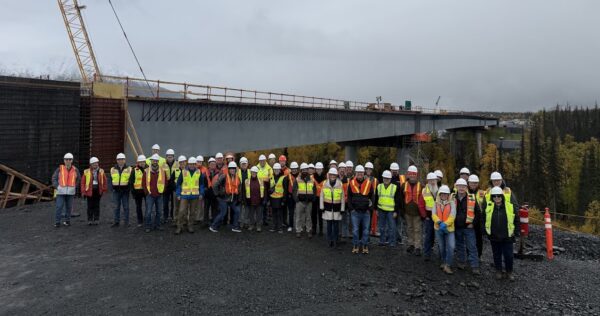
Bridge Task Force and AASHTO Steel Leaders Meet in Alaska
The Steel Bridge Task Force and AASHTO Steel and Metals Technical Committee met in Anchorage for technical presentations, project updates and industry recognition. The meetings concluded with an Alaska DOT hosted tour of the Juneau Creek Bridge and surrounding Sterling Highway construction.
 News
News
SSSBA to Present at North Central States Consortium in Omaha, NE (Sept. 28-30)
Dr. Michael Barker, University of Wyoming, will represent SSSBA at the North Central States Consortium (NCSC) in Omaha, Nebraska. His presentation (Tuesday, September 29, 1:30–2:15 p.m.) will explore how optimized plate girders can expand the range of steel solutions for bridges with spans of 60 to 100 feet.
 News
News
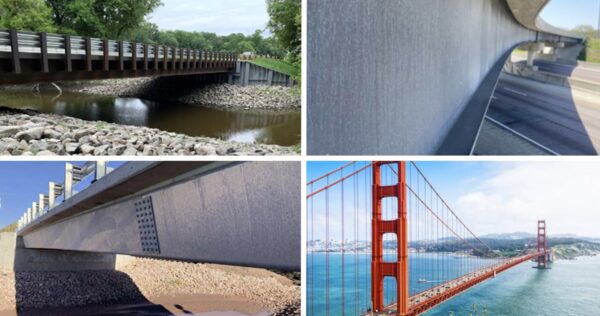
AISI Corrosion Advisory Group to Meet October 27 in Ohio
The AISI Corrosion Advisory Group (CAG) will meet October 27 at the Sherwin-Williams Research & Development Center in Ohio. Discussions will focus on corrosion research, coatings, steel durability and related industry needs.