 Short Span Steel Bridges
American Steel Can Be Onsite for Bridge Projects Faster than Other Materials
Article provided the American Institute of Steel Construction and the National Steel Bridge Alliance.
Recent media reports have bemoaned extended delivery schedules for raw steel. But is this accurate–and is it impacting steel bridge projects?
“Steel projects are still being delivered on schedule,” according to Charles J. Carter, SE, PE, PhD, executive director of the National Steel Bridge Alliance (NSBA).
Carter added that during the past year lead times have become extended for all construction materials. “Typical lead times for steel plate are in the 8-10 week range, while lately we’re more likely to see 10-12 weeks. However, this shouldn’t have a substantial impact on bridge projects, which are usually planned months and even years in advance. In addition, the longer lead times reflect when steel is available directly from mills, but some steel, especially on smaller projects, is actually purchased from steel service centers, which are large warehouses throughout the nation that often stock more than 10,000 tons each and that together stock millions of tons of product and can deliver steel quickly.”
Mill sources report that lead times are rapidly returning to pre-pandemic levels, with various mills now quoting lead times between 6 and 10 weeks depending on the specific product needed.
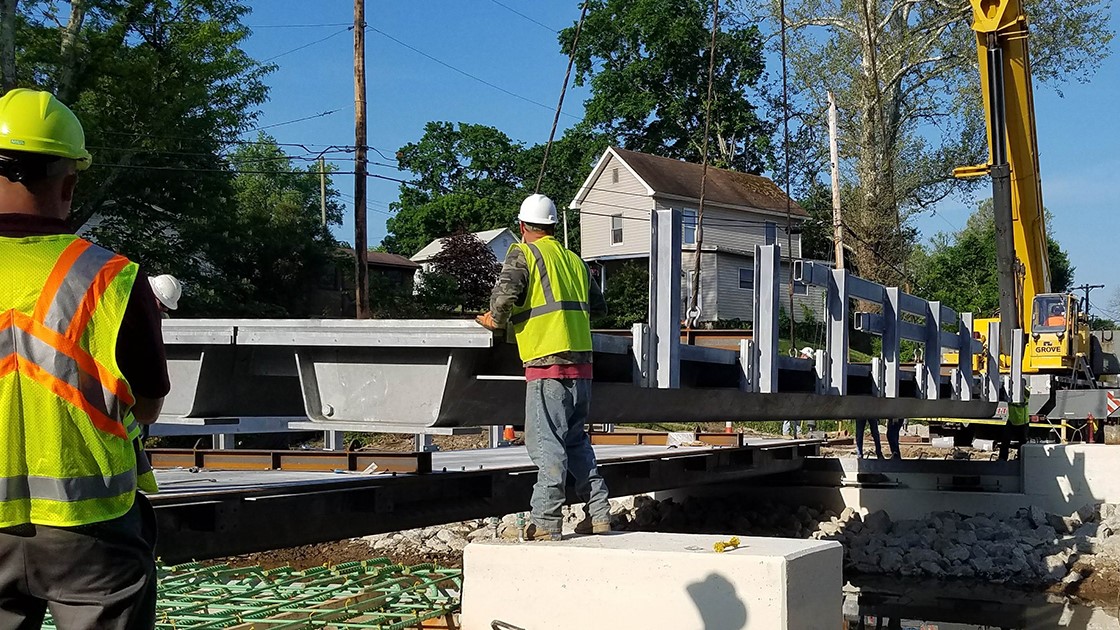
The press-brake tub girder modules for the Cannelville Road Bridge (Muskingum County, Ohio) were erected and positioned on their abutments in just 22 minutes.
Recent cases amplify the speed at which the steel industry can respond. For example, when a truck accident and resulting fire damaged the Brent Spence Bridge between Ohio and Kentucky last year, many feared the bridge would be closed for months if not permanently. But service centers were able to deliver steel to the fabricator in just six days to help get the bridge back in service in just seven weeks.
In another well-publicized example, steel was quickly obtained to enable a fast repair on the Hernando de Soto Bridge this year.
Similar extended schedules for concrete and rebar have been reported. Fortunately, thanks to Buy America provisions, steel plate and other structural steel for bridges is widely available from domestic steel mills, so it’s not subject to the current delays at ports.
And to accommodate the expected increased demand from the recently passed infrastructure bill, the steel industry is rapidly adding capacity, such as the 1.2 million ton plate mill now under construction in Kentucky and additional upgrades from multiple steel producers.
According to steel mill representatives, the industry has sufficient capacity to support both the current and expected future demand for steel.
The American Institute of Steel Construction, and its bridge subsidiary, NSBA, recommend talking directly with your regional fabricator. Proper pre-planning and project coordination will often mitigate any supply chain issues and fabricators can provide reliable timetables for how long a bridge project will take to complete.
Visit aisc.org/economics and aisc.org/nsba for more information about current economic conditions or talk with your AISC or NSBA steel specialists.
Does steel provide a sustainable option for bridges?
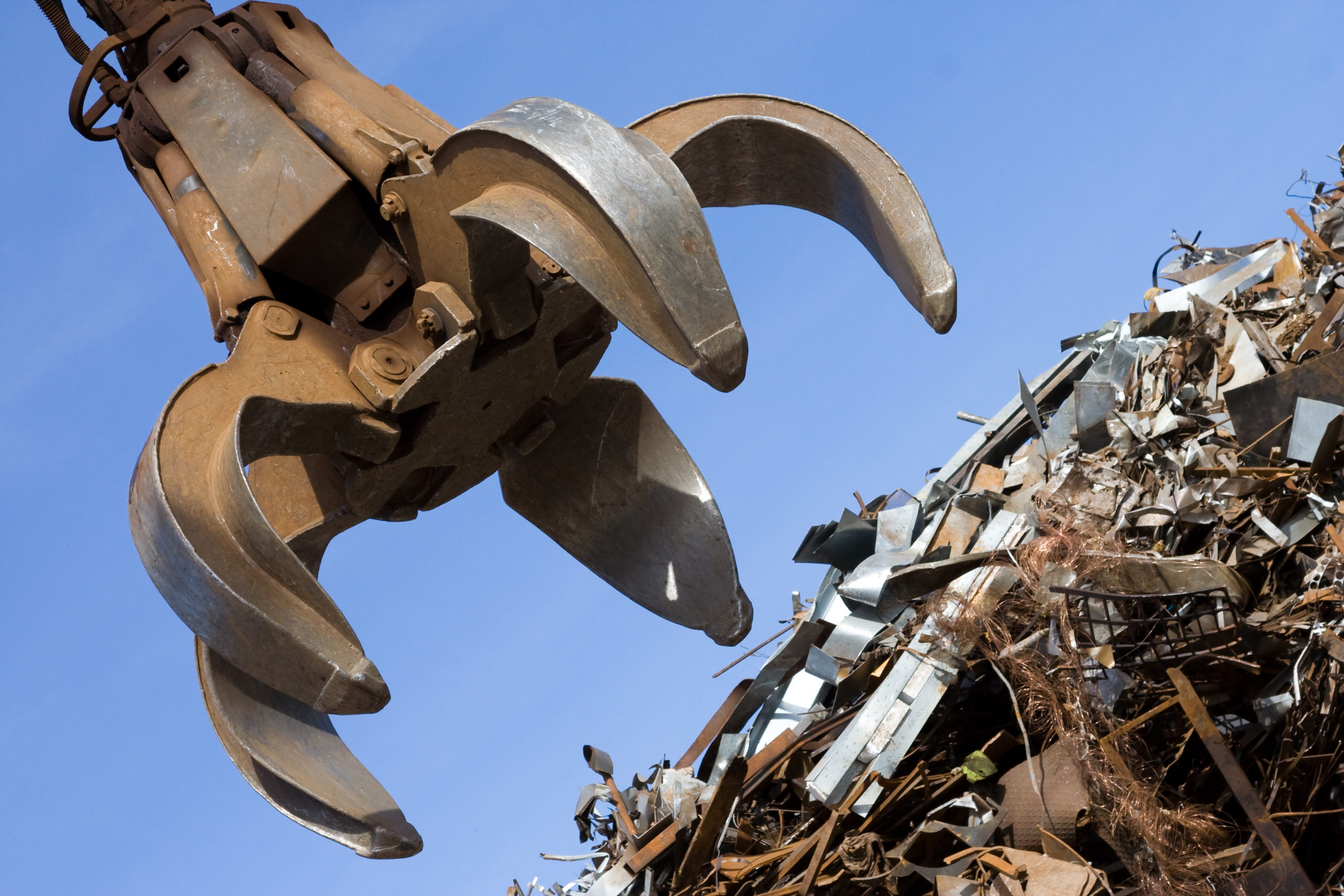
Steel is the most recycled material on the planet. Some of the sustainable advantages of steel include:
- Steel from a disassembled bridge can be used again for another project.
- Steel bridges can last 100 years or more, with minimal maintenance over their long service lives.
- The high strength of steel permits longer spans, which minimizes disruption to underlying habitats.
- Steel is highly resistant to extreme natural disasters such as earthquakes.
- The American steel industry has achieved a 31 percent reduction in energy intensity and a 36 percent reduction in greenhouse gas intensity since 1990.
 News
News
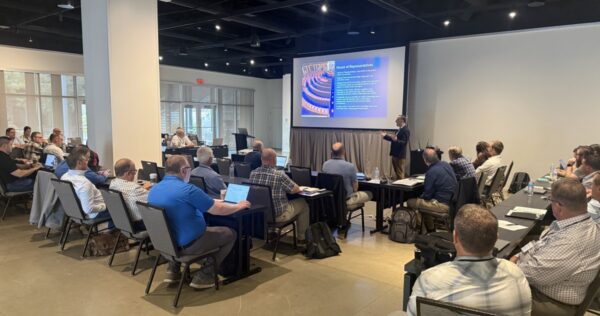
SSSBA Semi-Annual Meeting in Omaha Highlights Innovation and Industry Collaboration
Steel bridge industry leaders gathered in Omaha, Nebraska, for the SSSBA Semi-Annual Meeting. The meeting featured technical presentations, industry updates, facility tours and discussions on advancing short span steel bridges. The next meeting is scheduled for March 17, 2027, in Washington, D.C.
 Events
Free Steel Bridge Plate Girder Design Course: 6-Part Live Webinar Series (Starts Nov. 3)
Take your bridge design skills to the next level in this free six-part webinar series led by Dr. Michael Barker, University of Wyoming. Learn step-by-step how to design a composite plate girder bridge and earn a certificate of completion in this course from the SSSBA.
 News
News
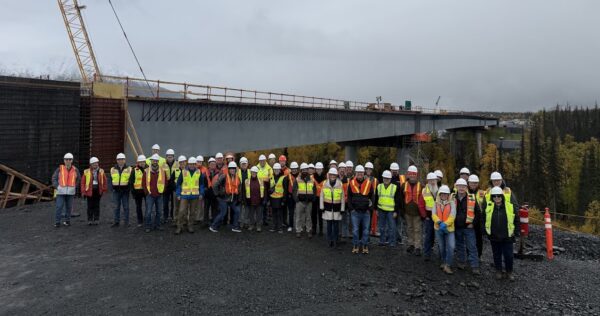
Bridge Task Force and AASHTO Steel Leaders Meet in Alaska
The Steel Bridge Task Force and AASHTO Steel and Metals Technical Committee met in Anchorage for technical presentations, project updates and industry recognition. The meetings concluded with an Alaska DOT hosted tour of the Juneau Creek Bridge and surrounding Sterling Highway construction.