 Short Span Steel Bridges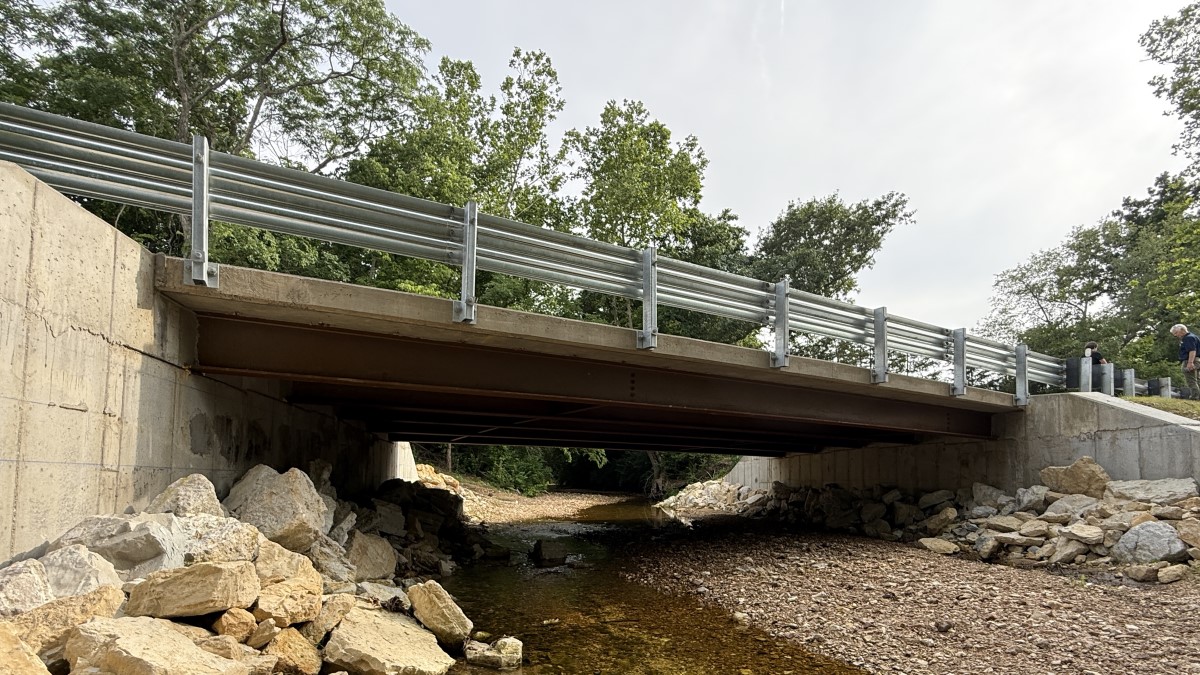
Bridges of Franklin County: Why Missouri is Turning to Steel
For many years, Missouri – like many states – relied on established assumptions that prestressed concrete offered the most economical solution for short-span bridges. MoDOT’s rural design guidance used cost figures of $120/ft² for steel and $95/ft² for prestressed concrete, which naturally made concrete appear more cost-effective on a first-cost basis.
Within that framework, it was reasonable that from 2009 to 2018 MoDOT delivered 378 typical concrete bridges and 16 typical steel bridges – approximately 4% steel for standard spans (excluding major river crossings and other special projects). The program operated efficiently and reflected the best information available at the time.
“MoDOT had a solid program in place; they just needed refreshed cost information to see how today’s steel solutions compare,” said Gary Wisch, P.E., engineering and business development advisor for DeLong’s Inc.
In 2018, DeLong’s, Inc., the Short Span Steel Bridge Alliance (SSSBA), and MoDOT partnered to take a fresh, data-driven look at current costs and construction practices for typical Missouri spans. The resulting study – presented in Learn & Earn workshops in Kansas City and St. Louis – demonstrated that short-span steel and concrete bridges are competitive on first cost when evaluated on equal footing.
“When we updated the cost data, it became clear that steel could compete directly with concrete on these spans,” said Michael Barker, Ph.D., P.E., director of education for the SSSBA and professor at the University of Wyoming.
MoDOT responded constructively to this new information by removing the prescriptive cost guidance in late 2018 and committing to a side-by-side evaluation of steel and concrete alternates for typical bridges statewide. This updated, more flexible approach continues to support Missouri in delivering the most effective and economical bridge solutions for its communities.
“MoDOT’s decision to let both materials compete was a significant step forward—it opened the door to real cost transparency,” said Barker.
Statewide Results: More Steel, Lower Costs
Since MoDOT updated its program, steel usage has increased:
- 2009–2018: 378 concrete vs. 16 typical steel bridges
- 2021–2025: 230 concrete vs. 24 typical steel bridges – steel’s share more than doubled to 10% (not including additional steel bridges delivered through bundling programs like Fixing Access to Rural Missouri (FARM), Northwest Missouri, Southwest Missouri, and Kaysinger Basin).
At the same time, competitive bidding between steel and concrete has been saving money for Missouri owners, as demonstrated in Scott County (a 45-ft galvanized steel bridge that beat the closest concrete bid by about $290,000) and in large design-build bundling programs like the 31-bridge FARM program.
In this video, MoDOT and project partners discuss the FARM Bridge Program, showcasing how SDCL designs are used to replace 31 deteriorating rural bridges in Missouri with innovative, cost-effective, and long-lasting solutions.
Franklin County Program: Five Bridges, Real Competition
Franklin County, Missouri, became a showcase for this new approach by replacing five rural bridges between 2023 and 2025, designing both steel and concrete options for each site, then letting contractors bid both alternates.
Franklin County Bridges (2023–2025)
| Bridge | Low-Bid Material | Low Bid | Lowest Alternate | % Higher Alternate |
| Hendrix Road | Steel | $549,202 | $748,163 (Concrete) | 36.2% |
| Little Indian Creek | Steel | $494,630 | $518,490 (Concrete) | 4.8% |
| Huff Road | Steel | $638,787 | $685,604 (Concrete) | 7.3% |
| Little Boone Creek | Concrete | $651,130 | $722,735 (Steel) | 11.0% |
| Lockhart Road | Steel | $564,806 | $577,939 (Concrete) | 2.3% |
Key outcomes:
- Steel won 4 of 5 bids.
- On the four steel bridges, the lowest concrete alternate was higher by:
- Hendrix Road: +$198,961
- Little Indian Creek: +$23,860
- Huff Road: +$46,817
- Lockhart Road: +$13,133
- Total savings from choosing steel on those four projects: $282,771.
- On Little Boone Creek, the concrete option was about $71,605 lower than steel, and concrete correctly won the bid.
For Franklin County taxpayers, this is exactly how competition is supposed to work:
- Steel is selected when it delivers the best value.
- Concrete is selected when it comes in lower.
- The overall program cost is reduced, despite the county paying designers to create both alternates.
In this video from the Steel in Action: On-Demand Steel Bridge Video Series, Dr. Michael Barker and Gary Wisch present an overview of the Franklin County, Missouri, bridge replacement project.
DeLong’s, Inc: Fabricating Simple, Cost-Effective Steel Solutions
DeLong’s, Inc. of Jefferson City, Missouri fabricated the steel girders for two of the four steel bridges: the Hendrix Road and Lockhart Road bridges. From a fabricator’s perspective, these bridges illustrate why well-detailed short-span steel solutions are so economical:
Hendrix Road Bridge
The Hendrix Road Bridge is a 45-ft span with a 24-ft roadway, supported by four W21×101 weathering steel girders.
- Span / Width: 45-ft span with 24-ft roadway width
- Girders: Four W21×101 weathering steel girders at 6-ft 6-in spacing
- Configuration: No skew, integral abutments, channel diaphragms, SIP form deck, simple bridge railing, one interior diaphragm
- View Plans
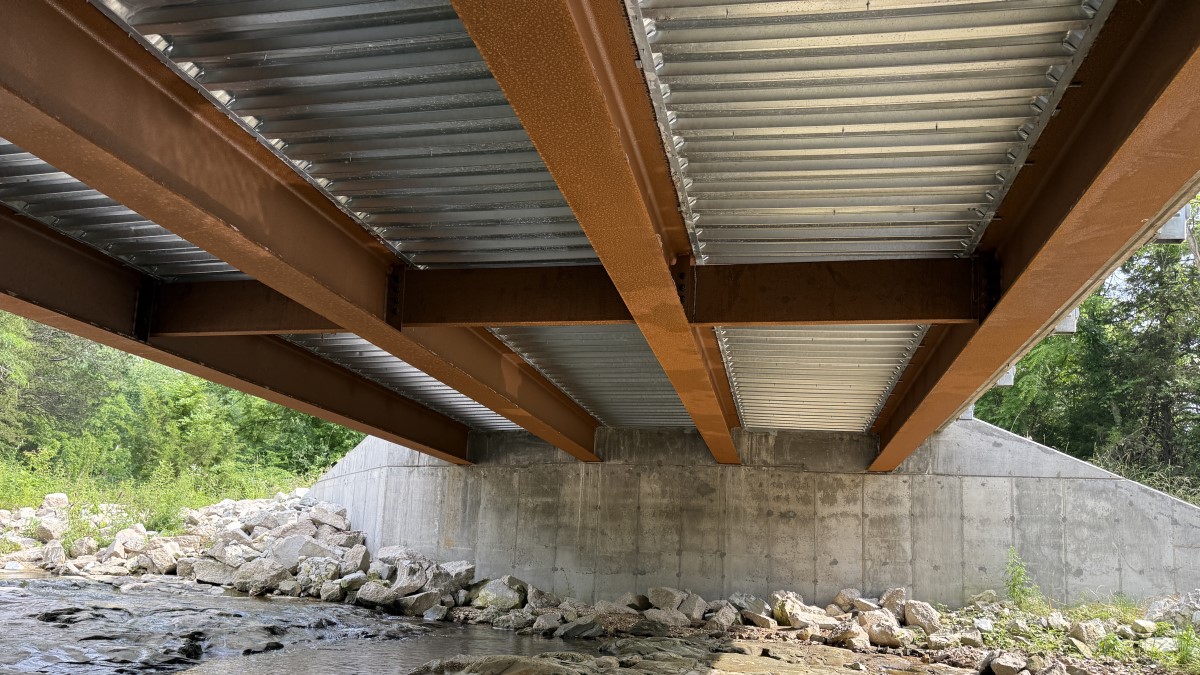
The Hendrix Road Bridge includes integral abutments, channel diaphragms, an SIP form deck, and a straight (no skew) alignment.
Fabrication advantages:
- Lightweight members: Each girder weighed under 5,000 lb, allowing the use of lighter shop cranes and erection equipment.
- Efficient shipping: The entire superstructure could be shipped on a single truckload, simplifying logistics and reducing freight costs.
- Minimal detailing: Only four stiffeners per beam, standard diaphragm connection plates, and shop-welded shear studs for composite action kept fabrication straightforward.
- Weathering steel: A quick SP6 commercial blast provided a uniform surface; no paint system was required, reducing initial cost and future maintenance
Lockhart Road Bridge
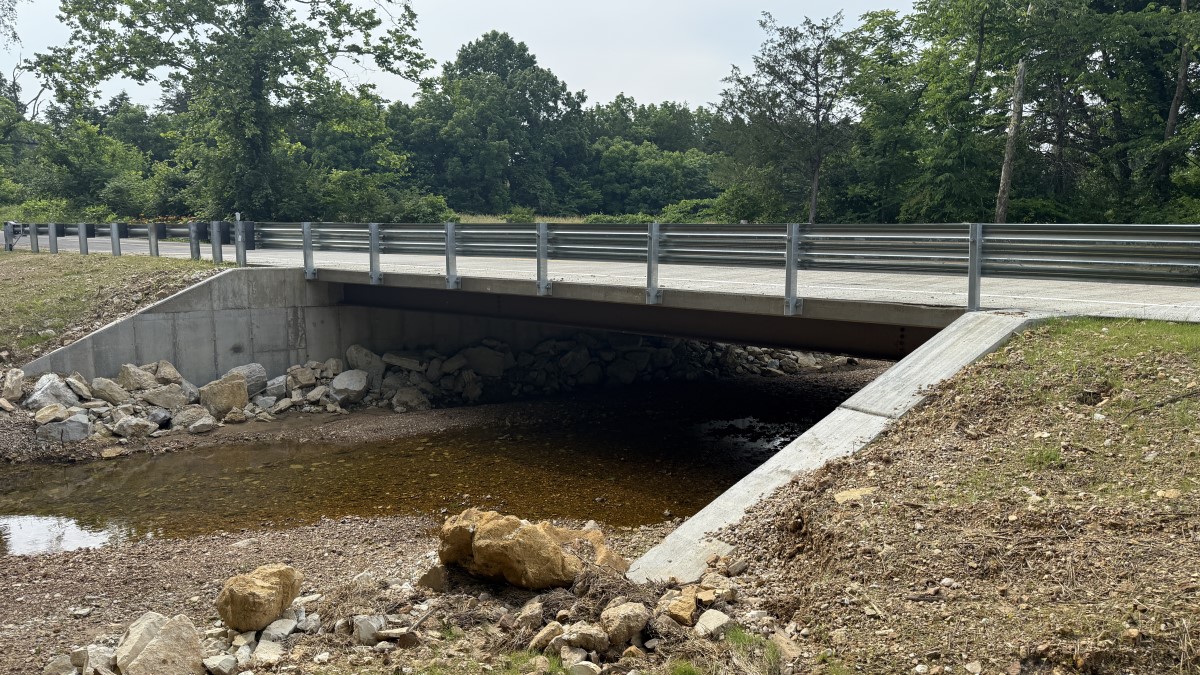
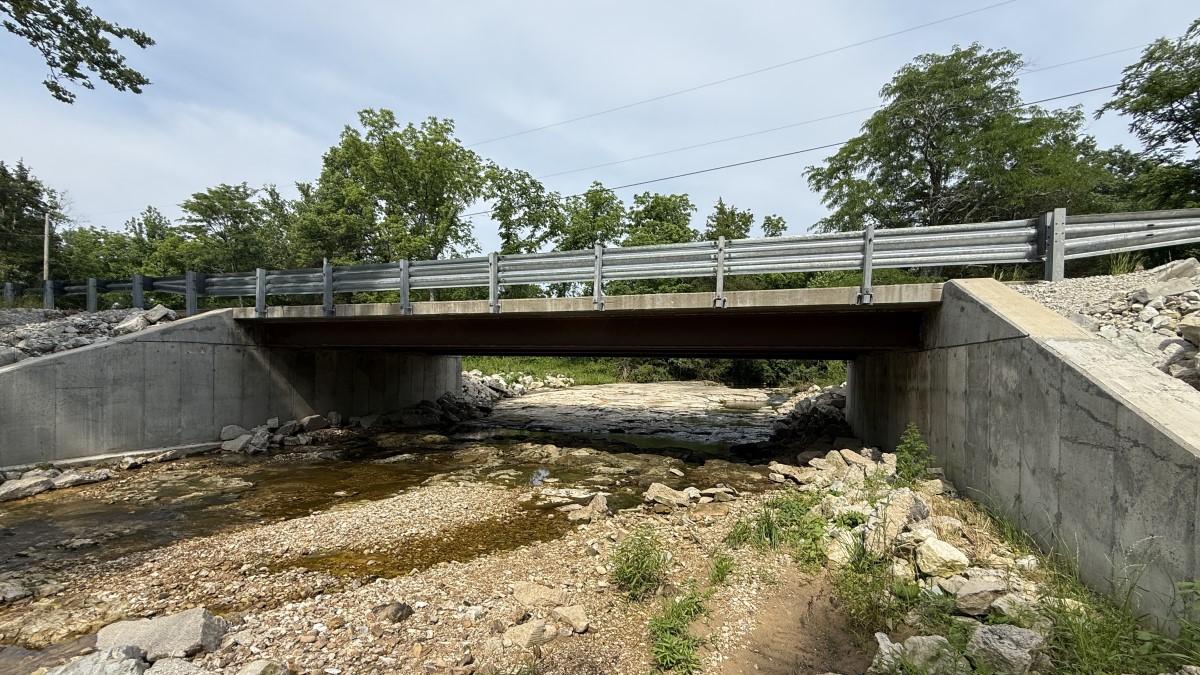
The Lockhart Road Bridge is a 41-ft 6-in span with a 28-ft roadway, supported by five W18×86 weathering steel girders spaced at 6 ft 2 in.
- Span / Width: 41-ft 6 in span with 28-ft roadway width
- Girders: Five W18×86 weathering steel girders at 6-ft 2-in spacing
- Geometry: 20° skew, integral abutments, conventional diaphragms, solid deck, simple railing, two interior diaphragms with staggered spacing for variable unbraced lengths
- View Plans
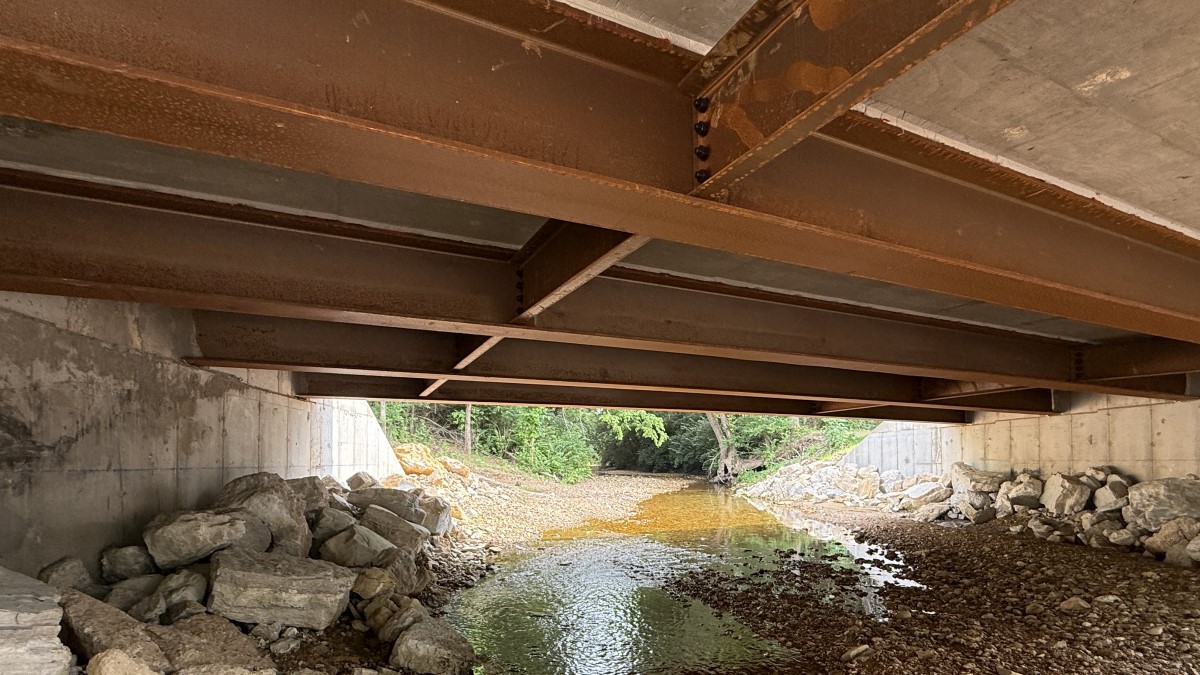
The Lockhart Road Bridge features a 20° skew, integral abutments, conventional diaphragms, a solid deck, and two interior diaphragms with staggered spacing to accommodate variable unbraced lengths.
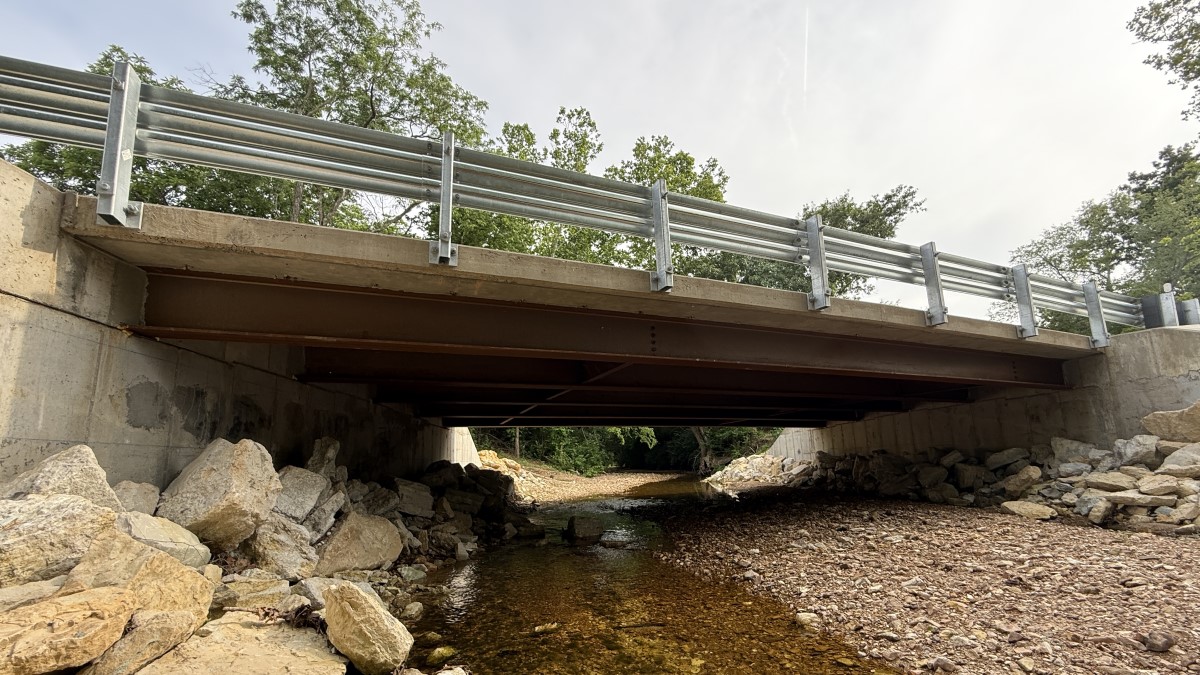
A simple guard railing was used for the Lockhart Road Bridge to provide safety for vehicles.
Even with the skew, the bridge was designed so that diaphragms remained perpendicular to the girders, rather than being skewed – a detail that simplifies fabrication, drilling, and fit-up in the shop.
‘Good design doesn’t have to be complicated’
Both bridges also included alternate diaphragm connection details (welded plates versus bolted angles). DeLong’s selected welded diaphragm plates for Hendrix Road and bolted angle connections for Lockhart Road, taking advantage of the shop’s more automated hole-making capabilities on the latter to save time.
Finally, both projects required only routine cambering to account for dead-load deflection so the finished roadway matched the design profile – again, a standard, economical operation for short-span steel fabrication.
“Good design doesn’t have to be complicated,” said Wisch. “The Franklin County bridges prove that straightforward steel solutions can be extremely economical.”
Performance, Longevity, and Sustainability
The Franklin County bridges also reflect broader trends in modern short-span steel bridge performance:
- Cost effectiveness
- Simple, practical girder and diaphragm details
- Lighter superstructures leading to smaller abutments and foundations
- Ability to use lighter erection equipment, especially important for rural contractors
- Speed of construction
- Steel girders arrive ready for rapid placement.
- Modular, stay-in-place forming systems support accelerated bridge construction, minimizing road closures and user costs.
- Longevity and durability
- Weathering steel and galvanized systems (on other Missouri projects) provide a longe service life when paired with integral abutments and jointless decks that eliminate deck joints – a common source of deterioration.
- Resilience and sustainability
- Steel bridges are inspectable and repairable, redundant, and adaptable to changing loads and hazards.
- Steel is North America’s #1 recycled material. Modern steelmaking uses significantly less energy and produces lower greenhouse gas emissions than in past decades.
- The high strength-to-weight ratio of steel allows optimized sections that reduce material usage while maintaining safety and durability.
Lessons for Owners and Designers
The Franklin County program reinforces several key lessons for agencies considering short-span bridge replacements:
- Remove artificial cost assumptions. When designers and bidders are free to evaluate both materials, steel and concrete prove to be competitive on both first cost and life-cycle cost.
- Design both alternates where practical. Even though Franklin County paid for both steel and concrete designs at each site, the bid savings – particularly from the steel solutions – more than offset the additional design effort.
- Keep steel details simple. Weathering steel girders, integral abutments, straightforward diaphragm layouts, and standard composite decks make short-span steel easy to fabricate, ship, and erect, helping fabricators like DeLong’s offer very competitive pricing.
- Expect a mix of winners. In Franklin County, steel won four bridges and concrete won one, demonstrating that a neutral, competitive process can deliver the right material at the right site – and the best value to taxpayers overall.
Conclusion
The Bridges of Franklin County demonstrate how one Missouri county used MoDOT’s updated policies and the expertise of partners such as DeLong’s, Inc. and the Short Span Steel Bridge Alliance to deliver a program of rural bridge replacements that are cost-effective, durable, and sustainable by:
- Designing both steel and concrete options
- Allowing open competition
- Employing simple, fabricator-friendly short-span steel details
Franklin County saved nearly $283,000 on four steel bridges alone, while still selecting concrete where it offered the lowest cost.
“When owners evaluate a complete design for each material, they consistently find that steel is highly competitive on both first cost and life-cycle cost,” said Dan Snyder, American Iron and Steel Institute (AISI) vice president of construction and SSSBA director.
For counties and DOTs nationwide, the Franklin County case demonstrates that when steel is allowed to compete fairly, short-span steel bridges can deliver exceptional value, performance, and long-term resilience.
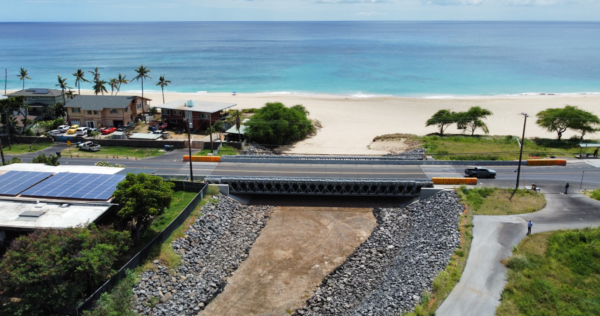 Case Study
Hawaii DOT Installs Prefabricated Steel Bridges to Lower Costs and Improve Climate Resilience
SSSBA member Acrow supplied prefabricated steel bridges for Hawaii DOT’s Makaha replacement project, cutting costs, speeding installation and enhancing long-term climate resilience.
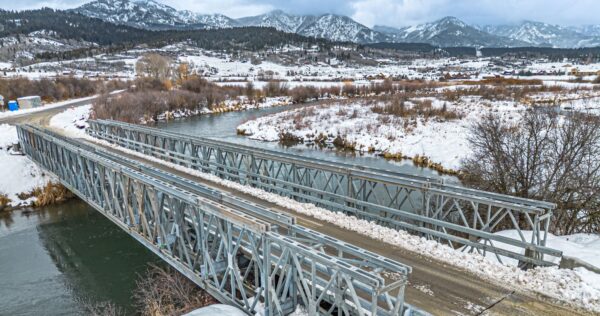 Case Study
Modular Steel Bridge Keeps Rural Wyoming Connected
Acrow’s modular steel detour bridge in Alpine, Wyoming, ensures safe traffic flow while the Salt River bridge undergoes repairs.
 Buried Bridge
Buried Steel Bridge Preserves Streambed While Supporting Heavy Loads
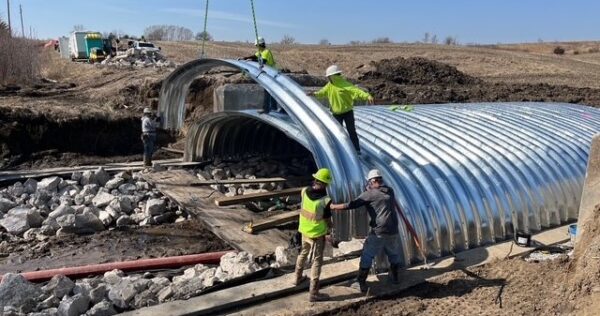
A new galvanized buried steel bridge in Riverside, Iowa, supplied by SSSBA member Lane Enterprises, replaced a weight-restricted structure and restored direct access for local farmers. Its open-bottom steel design preserves the natural streambed, enhances durability, and provides a cost-effective solution for rural infrastructure.