 Short Span Steel Bridges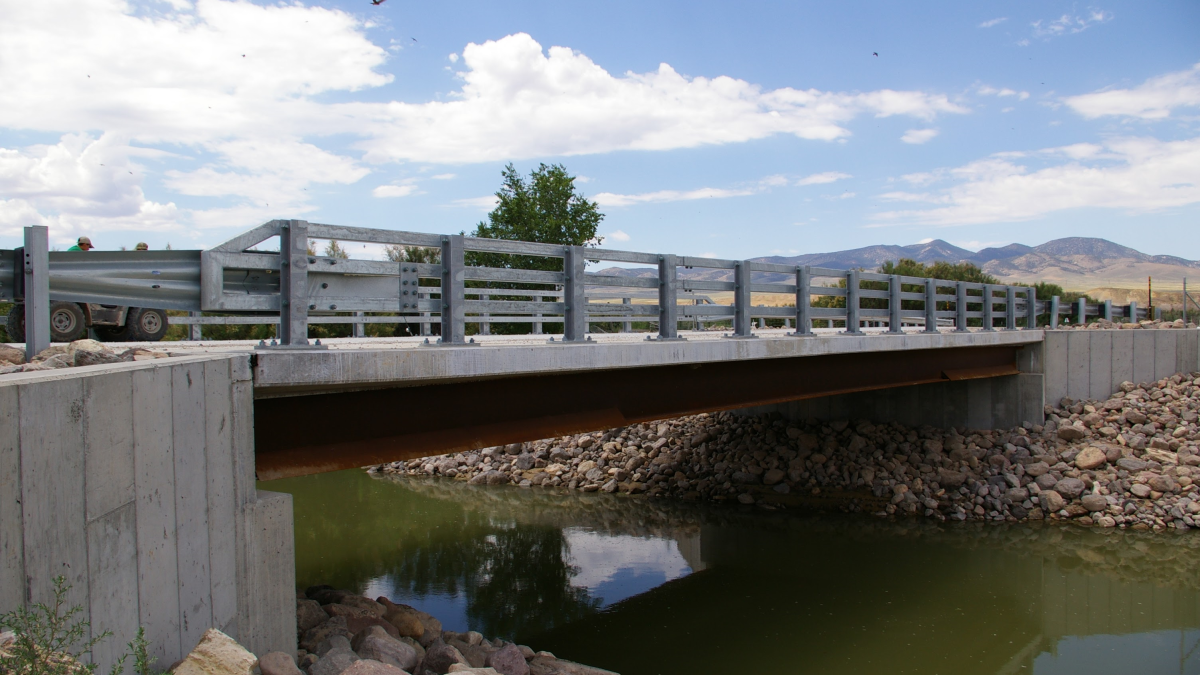
Durability Strategies for Steel Bridges
According to the National Steel Bridge Alliance, there are several proven ways to protect steel bridges from corrosion, and no single solution is best for all circumstances.
The first consideration when selecting one of these techniques is, of course, a bridge’s anticipated exposure to corrosive elements over its lifetime. In addition, teams must consider initial and life-cycle costs, fabrication, productivity, and long-term performance and maintenance when choosing a corrosion protection approach for a given bridge.
In the following video from the June 2021 Steel Bridge Essentials webinar series, Jeff Carlson, P.E., Director of Market Development, National Steel Bridge Alliance, and Jennifer McConnell, Associate Professor, University of Delaware, provide information on durability strategies for steel bridges.
For additional information, please download the Volume 19 of The FHWA Steel Bridge Design Handbook – this handbook covers a full range of topics and design examples intended to provide bridge engineers with the information needed to make knowledgeable decisions regarding the selection, design, fabrication, and construction of steel bridges.
Durability Strategies for Steel Bridges (Part 1)
- Presenter: Jeff Carlson, P.E. (email), Director of Market Development, National Steel Bridge Alliance
- Download Presentation Slides
Durability Strategies for Steel Bridges (Part 2)
 News
News
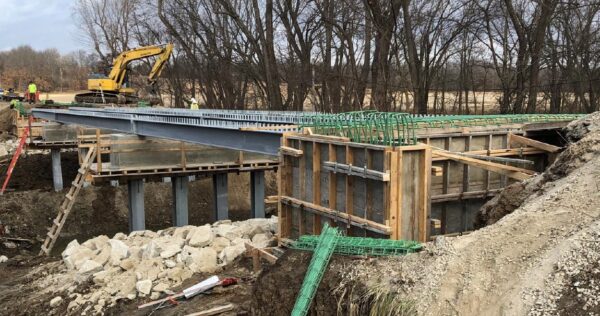
Missouri Steel Bridge Bundle Project Wins Prize Bridge Award
The National Steel Bridge Alliance (NSBA) named Missouri’s FARM Bridges Design/Build Bundle the 2026 Prize Bridge Award winner in the Short Span category. Fabricated by SSSBA member DeLong’s, the project delivered 31 rural bridges across 15 counties using galvanized steel and SDCL design for a 100-year service life.
 Durability & Coatings
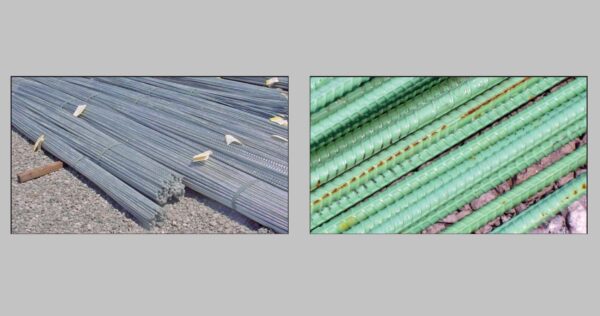
HDG Rebar vs. Epoxy-Coated Rebar
A new publication by the American Galvanizers Association compares the performance of hot-dip galvanized (HDG) rebar and epoxy-coated rebar in reinforced structures.
 Durability & Coatings
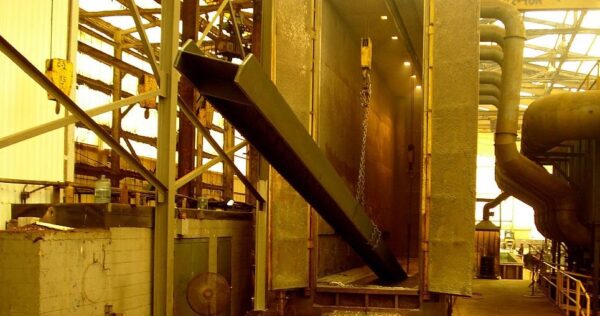
Determining and Overcoming the Size Limitations of Hot-Dip Galvanizing
The American Galvanizers Association explains how kettle size limits can be overcome with strategies like modular design, progressive dipping, and other creative solutions.