 Short Span Steel Bridges
Resilient Roads Names Keierleber to Inaugural Innovators and Influencers List
The Resilient Roads Roundtable named Brian Keierleber, Buchanan County, Iowa to its inaugural list of Resilient Roads Innovators and Influencers.
The list recognizes those whose advocacy is clear and effective amongst key transportation infrastructure decision-makers as well as those who create and adopt new materials, methods, and models to advance transportation infrastructure resilience. The program is intended to spur others to undertake similar leadership actions.
Keierleber Acknowledged for Enhancing Resiliency of Iowa Bridges

Brian Keierleber, Buchanan County, Iowa
According to Resilient Roads, Keierleber was acknowledged for his enthusiastic and ongoing efforts to incorporate proven innovations that enhance the resiliency of Iowa’s roads and bridges. The initiatives include early adoption of innovative bridge designs using materials and methods that enhance resiliency. This includes the installation of bridges built using retired railroad flatcars.
Keierleber has also spearheaded several additional projects using economical methods and innovative materials that enhance the resiliency of the structure:
- The Jesup South Bridge in Buchanan County, Iowa, was the first bridge to be designed and constructed using eSPAN140. The bridge was part of a demonstration project to develop a more economical manner of replacing bridges.
- The Amish Sawmill Bridge was the first press-brake tub girder bridge installed in the U.S. and considered by experts to be the future of short span steel bridge design. PBTG have a total service life of at least 100 years – the first 60 of those years are maintenance-free.
- The 200-foot Buffalo Creek Bridge, constructed in Buchanan County, was manufactured entirely of galvanized steel, including h-piles, girders (superstructure), rebar, guardrails and miscellaneous steel elements. Hot-dip galvanizing (HDG) is often used to protect steel from corrosion in some of the harshest environments imaginable, yet it provides maintenance-free longevity for decades.
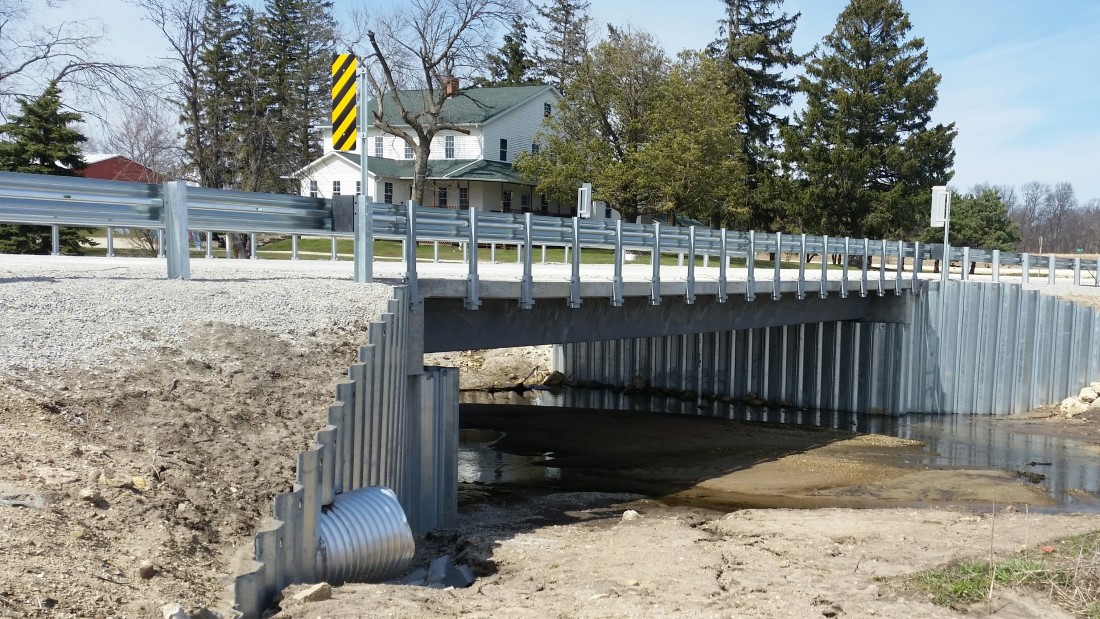
The Amish Sawmill Bridge was the first press-brake tub girder bridge installed in the U.S. and considered by experts to be the future of short span steel bridge design.
Keierleber’s influence on road resilience extends well beyond Iowa – he’s past Chair of the National Association of County Engineers (NACE) and has served on the Board of Advisors for the Civil and Environmental Engineering Departments at the University of Iowa.
Roundtable Promotes Best practices For Resiliency of North American Infrastructure
The resiliency of American roadways is an increasingly urgent issue as the size and frequency of climate-related disasters accelerates.
The Resilient Roads Roundtable, formed in 2020, is a gathering of organizations with a common interest in improving the resiliency and longevity of America’s roadways. The mission is to encourage the adoption of Life Cycle Cost Analysis and the setting of performance expectations for road building and maintenance initiatives to build more enduring roads for less cost – both upfront and over the long-term.
The Resilient Roads Roundtable encourages the use of a range of innovative materials and methods for road longevity and resilience with a one-size-fits-none viewpoint – that is, there are likely to be multiple solutions to the matter. Through the Roundtable, various companies and organizations are able to join forces to educate all stakeholders on products, processes and best practices that will save time, money, lives and the environment.
Does steel provide a sustainable option for bridges?
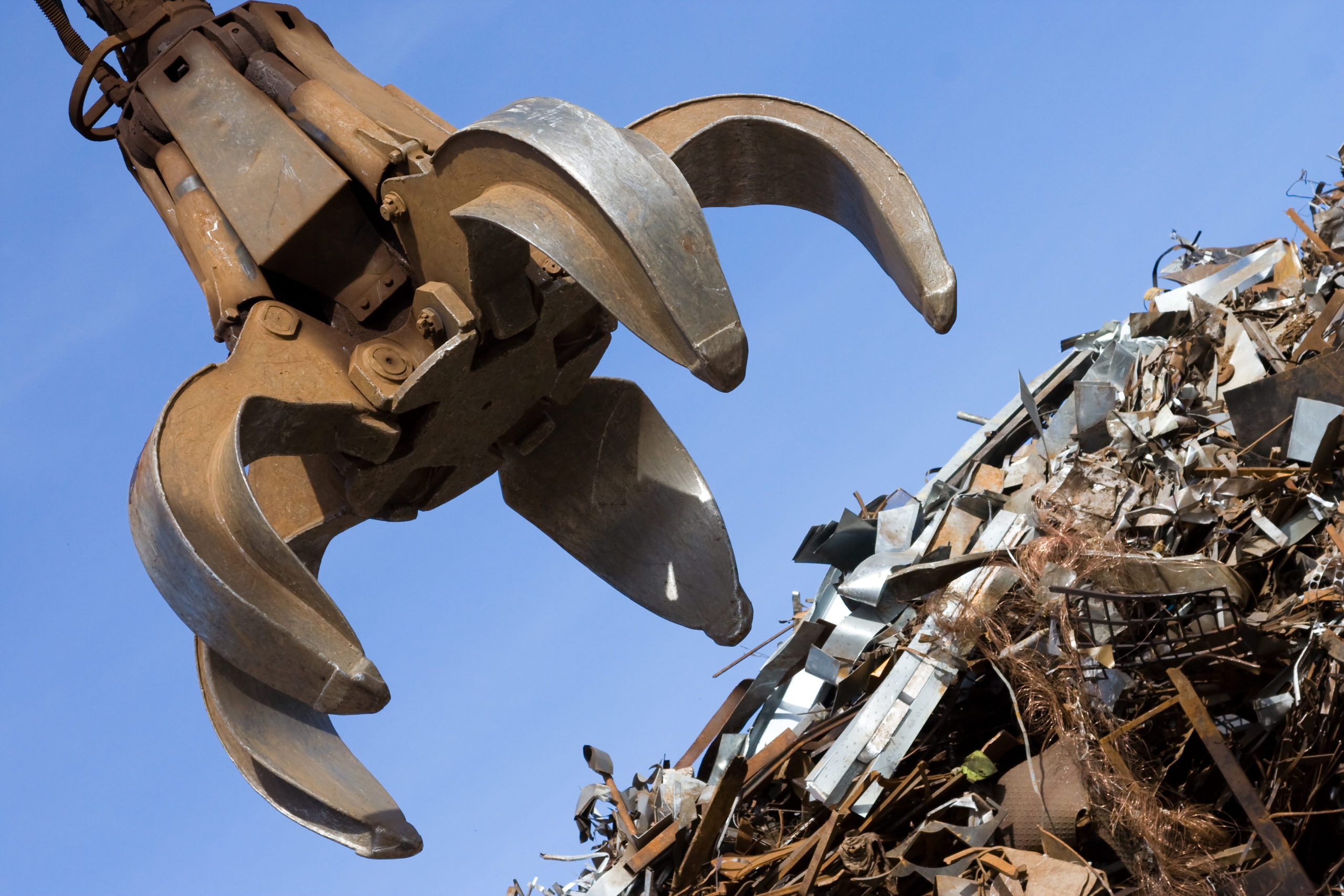
Steel is the most recycled material on the planet. Some of the sustainable advantages of steel include:
- Steel from a disassembled bridge can be used again for another project.
- Steel bridges can last 100 years or more, with minimal maintenance over their long service lives.
- The high strength of steel permits longer spans, which minimizes disruption to underlying habitats.
- Steel is highly resistant to extreme natural disasters such as earthquakes.
- The American steel industry has achieved a 31 percent reduction in energy intensity and a 36 percent reduction in greenhouse gas intensity since 1990.
 Durability & Coatings
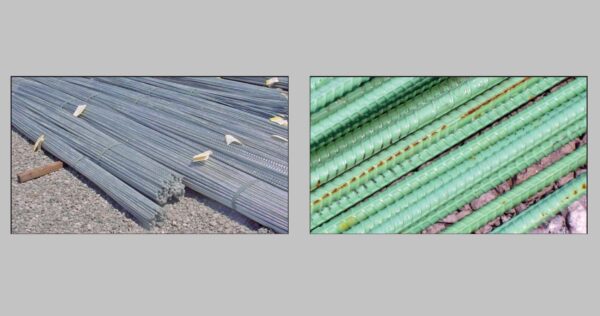
HDG Rebar vs. Epoxy-Coated Rebar
A new publication by the American Galvanizers Association compares the performance of hot-dip galvanized (HDG) rebar and epoxy-coated rebar in reinforced structures.
 Durability & Coatings
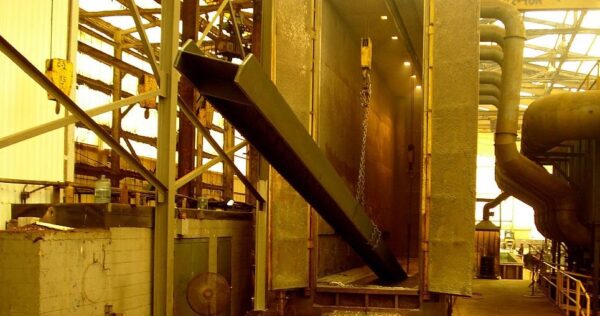
Determining and Overcoming the Size Limitations of Hot-Dip Galvanizing
The American Galvanizers Association explains how kettle size limits can be overcome with strategies like modular design, progressive dipping, and other creative solutions.
 News
News
SSSBA to Host Session on Corrosion Protection Systems at International Bridge Conference (July 15)
The SSSBA will host a session at the International Bridge Conference in Pittsburgh, PA, focused on corrosion protection systems for steel bridges, featuring expert presentations on weathering steel, galvanizing, metallizing and painting.