 Short Span Steel Bridges
The Rehabilitation and Repair of Steel Bridges
Steel bridge systems have the potential to achieve service lives well over 100 years. In fact, there are thousands of 100-year-old steel bridges still in service across the nation. Two of the main reasons steel lasts so long is its ease of inspection and repair, enabling steel bridges to have much longer and sustainable service lives than other materials.
Inspection of a Steel vs. Concrete Bridge
According to the publication “Steel Bridge Construction: Myths & Realities”, the American Concrete Institute recognizes that concrete structures are subject to deterioration. It recommends sealing of the concrete surface to reduce permeability, considered to be the single most important factor affecting the rates of deterioration from reinforcing bar corrosion, carbonation, alkali-silica reaction or freeze-thaw cycle, all of which may occur simultaneously.
When this type of internal deterioration occurs, it may be very serious. The solution typically is an expensive repair or bridge replacement. Such hidden defects in a concrete bridge are often extraordinarily difficult to detect and can lead to a catastrophic collapse.
Structural steel, on the other hand, is visible and any signs of corrosion are clearly apparent at an early stage of deterioration. It is easier to inspect and determine the structural state of a steel bridge where all the components are visible. If during a routine inspection deterioration is present, steel bridges can be efficiently repaired and remain in service, and not require complete replacement, according to the National Steel Bridge Alliance.

It is easier to inspect and determine the structural state of a steel bridge where all the components are visible.
Repair of Steel Bridges with Minimal Traffic Disruption
Alberta Transportation’s “Repair of Bridge Structural Steel Elements Manual” indicates that structural steel bridge elements may be damaged by overload, high and/or wide load impacts, vehicle collision, fire or structural vandalism. If damage to a bridge is left unrepaired, the condition of the components may further deteriorate, resulting in a reduction of the bridge’s structural capacity which could then compromise the safety of the motoring public.
While repair of damaged structural steel bridge elements may be unique and specific to the particular bridge element, standard techniques and procedures are provided for heat straightening, partial member replacement and repair of other defects, says the manual. These techniques and procedures are carried out with minimal use of costly temporary shoring and supports and little disruption to the traveling public.
- Heat Straightening: For almost half a century, heat-straightening techniques have been applied to bends and distortions in order to restore the original shape of steel elements. The ability to repair damaged structural steel members in place, often without the need for temporary shoring, has generated interest in heat straightening from the engineering profession, says the Federal Highway Administration (FHWA). For additional information, download the “Guide for Heat-Straightening of Damaged Steel Bridge Members, FHWA Report No. FHWA-IF-08-999”.
- Bridge Strengthening: Due to increased traffic loads or general deterioration, cost-effective and durable strengthening systems have been developed to repair and strengthen steel bridges. The design life of a steel bridge can be extended by strengthening the structure, while meeting the challenge of keeping the bridge in service, with minimal traffic disruption. The FHWA developed two design examples which involve the addition of steel- strengthening material to extend the design life of an existing bridge:
Rebuilding the MacArthur Maze in 26 Days with Steel (Oakland, CA)
Before dawn on April 29, 2007, the driver of a gasoline truck in Oakland, California, lost control of his rig and flipped it on an Interstate connector ramp. The tanker was carrying 8,600 gallons of fuel, and it exploded into a white-hot blaze that licked the steel underside of a roadway above it. A 168-foot section of that structure buckled and collapsed, according to America’s Transportation Awards.
Caltrans spokespersons estimated immediately after the accident that it would take weeks to clear the debris from the scene and months to rebuild the affected sections. Discussions to repair the bridge with steel started almost immediately. C. C. Myers, Inc. submitted a winning bid of $876,075 to repair the damage to the I-580 connector. The bid was estimated to cover only one-third of the cost of the work, but the firm counted on making up the shortfall with an incentive of $200,000 per day if the work was completed before June 27, 2007.
Stinger Bridge & Iron fabricated 12 girders in eight days. Six truckloads took the girders and diaphragms to Oakland for construction. The concrete deck was designated for a 96-hour compressive strength of 3,600 psi prior to directly supporting construction loads, allowing fast-track deck placement and a bridge reopening earlier than originally scheduled.
Caltrans’ contract set a construction completion deadline of reopening on June 27. The work was completed on May 24, 2007, after a mere 15 days on site, earning the contractor the maximum incentive of $5 million. Cooperation and commitment (and steel) among all involved enabled its reopening to traffic just 26 days after the accident.
Further Extending the Life of a Steel Bridge
The long-term durability and cost-effectiveness of steel bridges will be further enhanced by the use of high-performance steels with corrosion-resistant capabilities. New steel grades and innovative designs are constantly being developed to further extend the life of a steel bridge:
- Steel press-brake tub girders were introduced several years ago to simplify and speed the construction of a short span bridge.
- Galvanized steel bridges can protect against corrosion for up to 100 years.
- Weathering steel can extend the life of a steel bridge up to 120 years.
- ASTM A709 Grade 50CR is highly corrosion-resistant steel which performs extremely well in corrosive environments and can significantly extend the service lives of steel bridges.
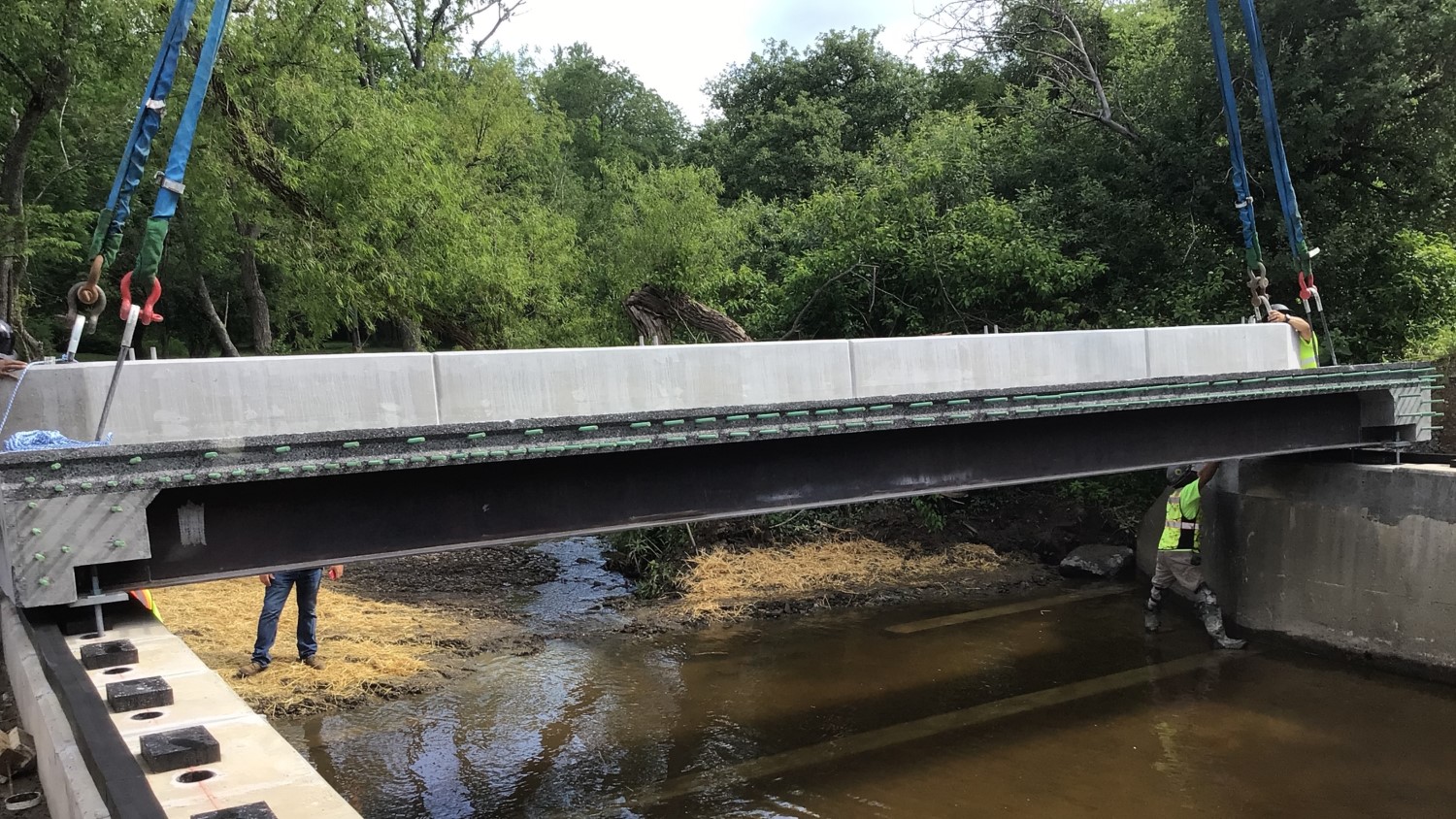
The Pennsylvania DOT implemented an innovative design to extend the service life for a new bridge currently being installed. The concept uses a Flex Beam bridge system combined with corrosion-resistant A709-50CR steel.
In addition to steel being the optimal choice for ease of inspection and repair, the American steel industry is also committed to manufacturing products and implementing processes that achieve environmental, social and economic sustainability. In fact, the American steel industry is the cleanest and most energy-efficient of the seven largest steel-producing countries in the world. Learn more about steel’s attributes, including its inherent durability and recyclability, which make it vital to modern society at the American Iron and Steel Institute.
Additional Sustainability Blog Posts
- What is a Sustainable Bridge? (read now)
- Extending the Life of a Steel Bridge: 100 Years and Beyond (read now)
- Overview of Green Bridge Rating Systems (read now)
- The Rehabilitation and Repair of Steel Bridges (read now)
- The American Steel Industry: Meeting the Global Demand for a Sustainable Infrastructure and Educated Workforce (read now)
Does steel provide a sustainable option for bridges?
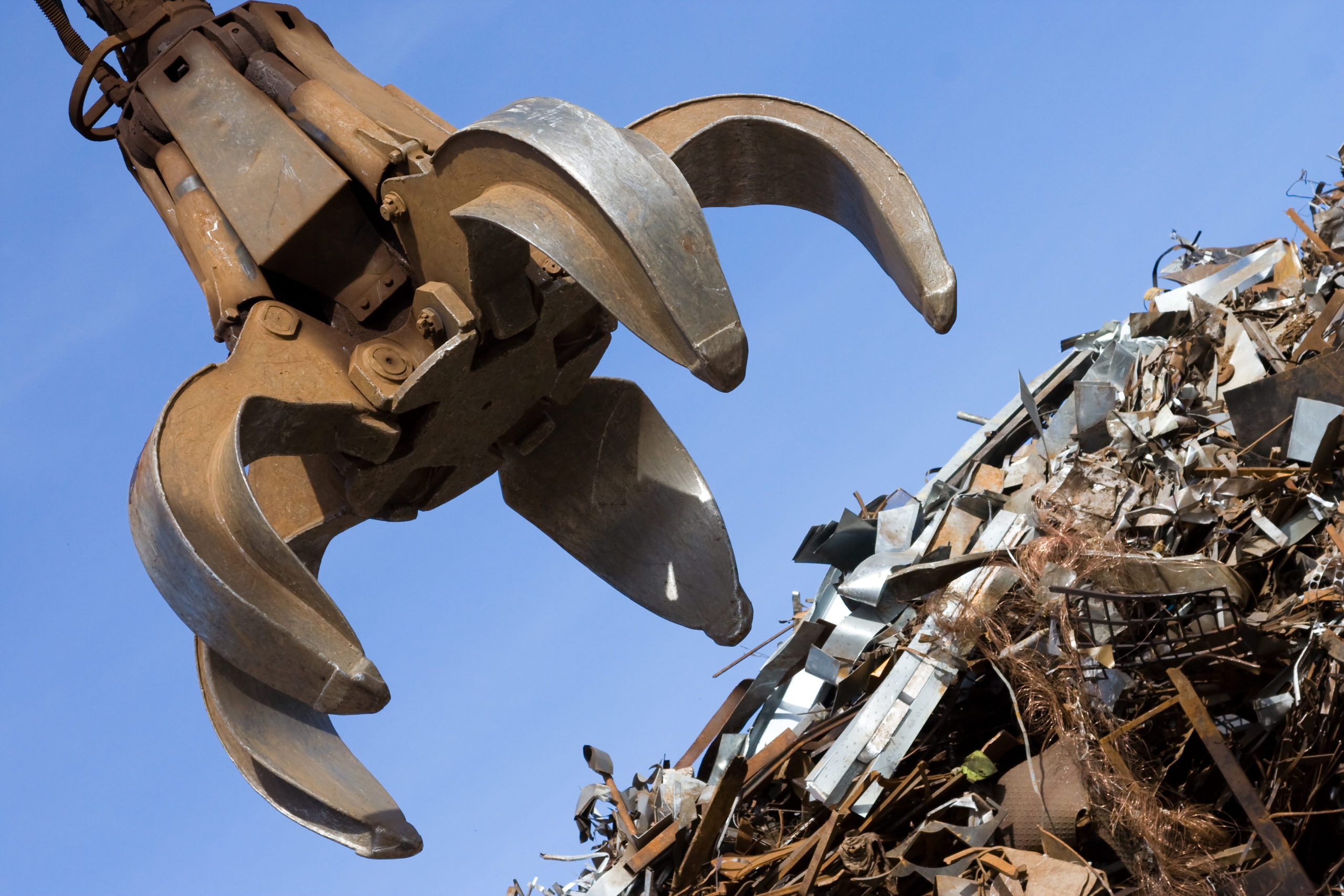
Steel is the most recycled material on the planet. Some of the sustainable advantages of steel include:
- Steel from a disassembled bridge can be used again for another project.
- Steel bridges can last 100 years or more, with minimal maintenance over their long service lives.
- The high strength of steel permits longer spans, which minimizes disruption to underlying habitats.
- Steel is highly resistant to extreme natural disasters such as earthquakes.
- The American steel industry has achieved a 31 percent reduction in energy intensity and a 36 percent reduction in greenhouse gas intensity since 1990.
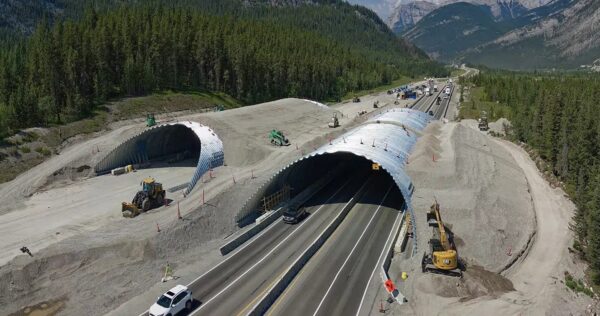 Buried Bridge
Corrugated Steel Animal Overpass Reduces Wildlife-Vehicle Collisions
The corrugated steel Stoney Nakoda Exshaw Wildlife Arch in Western Canada showcases the balance of engineering and environmental stewardship, setting a new standard for wildlife-friendly infrastructure.
 Sustainability
Steel Bridge Restores Fish Migration in Olympic National Forest
A new 70-foot steel bridge in the Olympic National Forest restores a vital fish passage, demonstrating steel’s durability and adaptability for environmentally sustainable infrastructure.
 Sustainability
Infrastructure Week 2024 Recording: Preservation of Steel Bridges
In this webinar recording, industry experts discuss the most effective methods to preserve steel bridges.