 Short Span Steel Bridges
Investing in a Resilient Infrastructure With Steel
Above photo: This structure is an innovative multi-cell bridge (Colusa County, CA – built in 2006) featuring A709-50CR – a corrosion resistant steel which can be maintenance-free for the life of the bridge – more than 100 years.
More than 220,000 U.S. bridges, representing 36 percent of the national bridge inventory, need major repair work or should be replaced, according to an American Road & Transportation Builders Association (ARTBA) analysis.
As townships, counties, and Departments of Transportation (DOTs) work to rebuild or replace these deficient structures, they are faced with a challenge to implement solutions that are both durable and sustainable – designing bridges that will last 100 years and beyond.
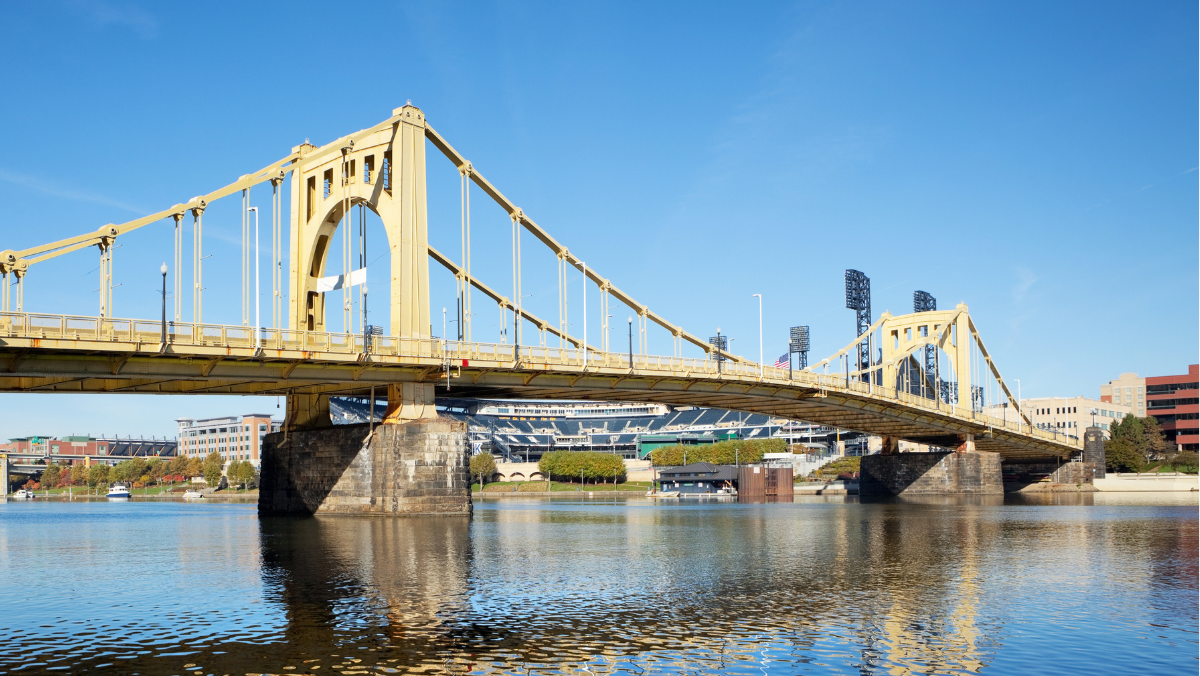
The Roberto Clemente Bridge was completed on September 29, 1928, and is still in service today.
Legislation Provides Investment for Resilient Infrastructure
Congress passed the Bipartisan Infrastructure Law (Infrastructure Investment and Jobs Act), a once-in-a-generation investment in our nation’s infrastructure and competitiveness.
According to the White House, the legislation is the largest investment in the resilience of physical and natural systems in American history. The legislation will make our communities safer and our infrastructure more resilient to the impacts of climate change and cyber-attacks, with an investment of over $50 billion to protect against droughts, heat, floods and wildfires, in addition to a major investment in weatherization.
The law, administered by FHWA, represents the single largest dedicated bridge investment since the construction of the interstate highway system – providing $26.5 billion to states, the District of Columbia and Puerto Rico over five years and $825 million for Tribal transportation facilities.
A Biden administration official said, “This money is needed to address the 43,000 bridges across our country that are in poor condition.” The official added that the program is expected to upgrade as many as 15,000 bridges nationwide.
Design for Service Life and Durability
The process to create a more resilient and sustainable bridge starts with the design. Compared with traditional approaches, which are based solely on strength considerations, there is an emerging approach to bridge design, rehabilitation and preservation that is based on service life considerations.
The Transportation Research Board’s second Strategic Highway Research Program (SHRP 2) Report, “S2-R19A-RW-2: Design Guide for Bridges for Service Life,” provides information and defines procedures to systematically design new and existing bridges for service life and durability.

The SHRP 2 Report provides defines procedures to design new and existing bridges for service life and durability.
According to the report, limited resources are driving the need for bridges to remain in service for longer timeframes, so the focus now is on designing bridges with longer service lives. This is a practical approach, since the cost of addressing service life issues at the design stage is significantly lower than taking maintenance and preservation actions after the bridge is in service.
Strategies to Improve Service Life
Steel bridge systems have the potential for achieving service lives well over 100 years, according to the SHRP2 report, “Bridges for Service Life Beyond 100 Years: Innovative Systems, Subsystems, and Components.”
In fact, there are thousands of 100-year-old steel bridges still in service across the nation. To illustrate this point, the National Steel Bridge Alliance (NSBA) created a visual timeline of American steel bridges built between 1838-1938 that are still in service.
This is readily accomplished when a steel bridge is designed, constructed and maintained properly.

The Augusta Street Bridge over the San Antonio River was built in 1890 and is still in service.
Design Recommendations
SHRP2 provides the following recommendations to extend the service life of a new steel bridge:
- Design with integral abutments to eliminate deck joints.
- Include steel systems that eliminate deck joints at piers. These systems include a concept for simple for dead load and continuous for live load.
- Utilize steel systems that provide for accelerated construction, including modular construction with predecked panels. These modular systems require special attention to both transverse and longitudinal connection details for achieving long-term durability.
- Consider using innovative modular orthotropic decks. These structures also require special attention to both transverse and longitudinal connection details.
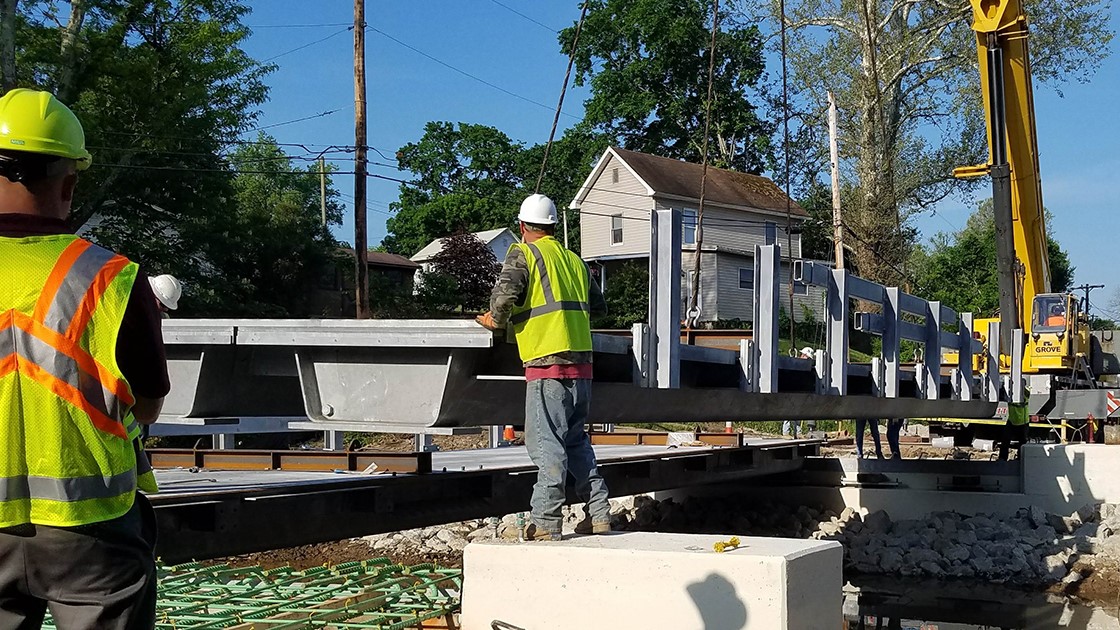
Press-brake tub girders can be shipped in prefabricated modules directly to the construction site, and installed in less than 30 minutes.
Corrosion Protection and Durability Resources
To achieve long-term bridge durability, a corrosion-resistance plan must be a design requirement for every new or rehabilitated steel structure. According to the NSBA, there are several proven ways to protect steel bridges from corrosion, and no single solution is best for all circumstances.
The first consideration is a bridge’s anticipated exposure to corrosive elements over its lifetime. In addition, careful consideration must be taken to evaluate initial and life-cycle costs, fabrication, productivity, and long-term performance and maintenance when choosing a corrosion protection approach for a given bridge. NSBA recommends the following resources:
- Volume 19 of the FHWA’s “Steel Bridge Design Handbook focuses on corrosion protection.
- AASHTO’s National Transportation Product Evaluation Program (NTPEP) offers a wealth of information about various structural steel coatings.
- The Association for Materials Protection and Performance issues and maintains many coating standards, including the SSPC “Good Painting Practice” and “Systems and Specifications” manuals. AMPP also provides training and certification for coating inspectors as well as coating contractors. These certifications help establish a quality threshold for the coatings industry.

Uncoated weathering steel is a widely used corrosion protection system today and performs well if detailed properly and used in the proper location and environment.
Fatigue and Fracture
Fatigue and fracture should not be issues for new steel bridges designed in accordance with the latest guidelines of the LRFD Specifications, according to SHRP2. Extensive research has been conducted in recent years to identify causes and solutions for fatigue- and fracture-related problems. When using proper details and fabrication methods, both load- and distortion-induced fatigue problems should not pose challenges to achieving desired service life.
The Future Starts Today, Not Tomorrow
Sustainability experts suggest that the best way to optimize bridge fabrication and construction is by extending the life span of a bridge. By implementing procedures to systematically design for service life and durability, new steel bridges can l achieve life spans of well over 100 years.
In addition to developing design procedures to extend the life of a bridge, the American steel industry is also committed to manufacturing products and implementing processes that achieve environmental, social and economic sustainability. In fact, the American steel industry is the cleanest and most energy-efficient of the seven largest steel-producing countries in the world.
The American steel industry is actively dedicated to meeting society’s needs and advancing environmental stewardship, achieving a 35 percent reduction in energy intensity and a 37 percent reduction in greenhouse gas intensity since 1990.
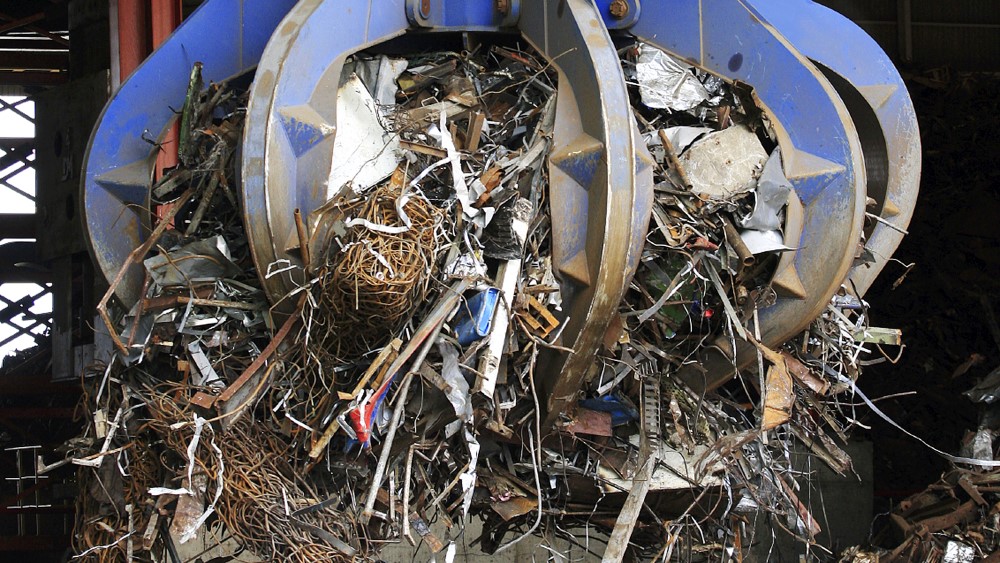
Steel is the most recycled material on the planet.
In addition, steel is the most recycled material on the planet and steel products are 100 percent recyclable at the end of their useful lives. Once produced, steel can be continually recycled into new steel products without any deterioration in product quality—a steel beam can become another steel beam, or a refrigerator, car door or roof panel. Learn more in the American Iron and Steel Institute fact sheet, “Sustainability of the American Steel Industry.”
To responsibly fix our nation’s 220,000 bridges with sustainable solutions, the future must start today – not tomorrow. While some material industries are still working on research to develop solutions to achieve a 100-year service life, the steel industry has already achieved this landmark – thousands of times. With new innovative materials, designs and protection systems available today, the U.S. steel industry is well positioned to build bridges that will last well into the next century – and possibly beyond.
Additional Sustainability Blog Posts:
- What is a Sustainable Bridge? (read now)
- Extending the Life of a Steel Bridge: 100 Years and Beyond (read now)
- Overview of Green Bridge Rating Systems (read now)
- The Rehabilitation and Repair of Steel Bridges (read now)
- The American Steel Industry: Meeting the Global Demand for a Sustainable Infrastructure and Educated Workforce (read now)
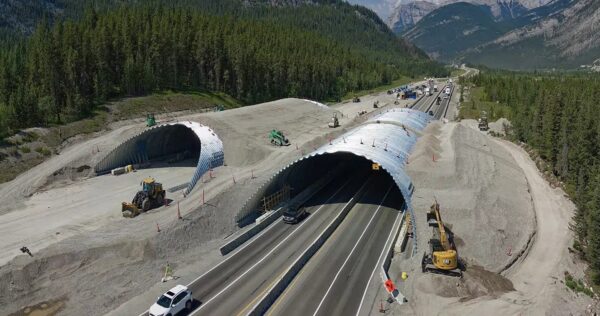 Buried Bridge
Corrugated Steel Animal Overpass Reduces Wildlife-Vehicle Collisions
The corrugated steel Stoney Nakoda Exshaw Wildlife Arch in Western Canada showcases the balance of engineering and environmental stewardship, setting a new standard for wildlife-friendly infrastructure.
 Sustainability
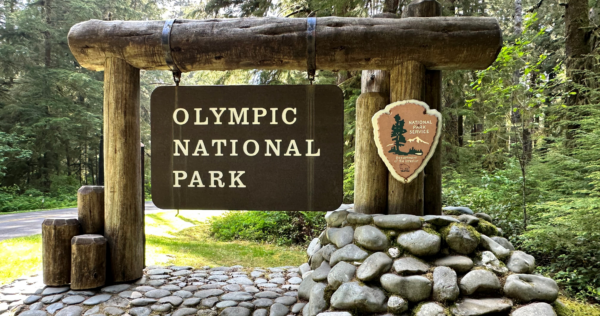
Steel Bridge Restores Fish Migration in Olympic National Forest
A new 70-foot steel bridge in the Olympic National Forest restores a vital fish passage, demonstrating steel’s durability and adaptability for environmentally sustainable infrastructure.
 Sustainability
Infrastructure Week 2024 Recording: Preservation of Steel Bridges
In this webinar recording, industry experts discuss the most effective methods to preserve steel bridges.