 Short Span Steel Bridges
FHWA Seeks Bridge Grant Applications
The following excerpt provided by the U.S. Department of Transportation.
Reflecting President Biden’s commitment to rebuilding our nation’s infrastructure, the U.S. Department of Transportation’s Federal Highway Administration issued a Notice of Funding Opportunity (NOFO) for the competitive Bridge Investment Program established by the President’s Bipartisan Infrastructure Law, which includes the single largest dedicated investment in bridges since the construction of the Interstate highway system.
The notice of funding is for up to $9.6 billion in fiscal year 2023 through FY 2026 Bridge Project grants and $80 million in FY 2023 through FY 2026 Bridge Planning Project grants. This competitive grant program comes on top of more than $27 billion in formula bridge funding the U.S. Department of Transportation announced in 2022.
“With [this] funding … communities can plan and implement bridge projects that will improve safety and mobility for people in rural regions, urban areas, and places in between,” noted FHWA Administrator Shailen Bhatt in a statement. “The Bridge Investment Program has already funded nearly 40 bridge projects nationwide and this funding will help communities continue to plan and advance important bridge projects in the years ahead.”
The agency added that its Bridge Investment Program NOFO is soliciting applications for the following categories of projects:
- “Planning” grants for planning, feasibility analyses, and revenue forecasting associated with the development of a project; and,
- “Bridge Project” grants for bridge replacement, rehabilitation, preservation, and protection projects with total eligible costs of $100 million or less.
FHWA will be providing education opportunities and plans to conduct outreach regarding the Bridge Investment Program “Planning” and “Bridge Project” grants via webinars, with technical assistance also available to recipients who receive grants from that program.
This ends the excerpt provided by the U.S. Department of Transportation – the Notice of Funding Opportunity is available on FHWA’s Bridge Investment Program web page.
Steel Bridges Ease Repair and Inspection, Provide Long Service Life
Steel bridge systems have the potential to achieve service lives well over 100 years. In fact, there are thousands of 100-year-old steel bridges still in service across the nation. Two of the main reasons steel lasts so long is its ease of inspection and repair, enabling steel bridges to have much longer and sustainable service lives than other materials.
Inspection of a Steel vs. Concrete Bridge
According to the publication “Steel Bridge Construction: Myths & Realities”, the American Concrete Institute recognizes that concrete structures are subject to deterioration. It recommends sealing of the concrete surface to reduce permeability, considered to be the single most important factor affecting the rates of deterioration from reinforcing bar corrosion, carbonation, alkali-silica reaction or freeze-thaw cycle, all of which may occur simultaneously.
When this type of internal deterioration occurs, it may be very serious. The solution typically is an expensive repair or bridge replacement. Such hidden defects in a concrete bridge are often extraordinarily difficult to detect and can lead to a catastrophic collapse.
Structural steel, on the other hand, is visible and any signs of corrosion are clearly apparent at an early stage of deterioration. It is easier to inspect and determine the structural state of a steel bridge where all the components are visible. If during a routine inspection deterioration is present, steel bridges can be efficiently repaired and remain in service, and not require complete replacement, according to the National Steel Bridge Alliance.
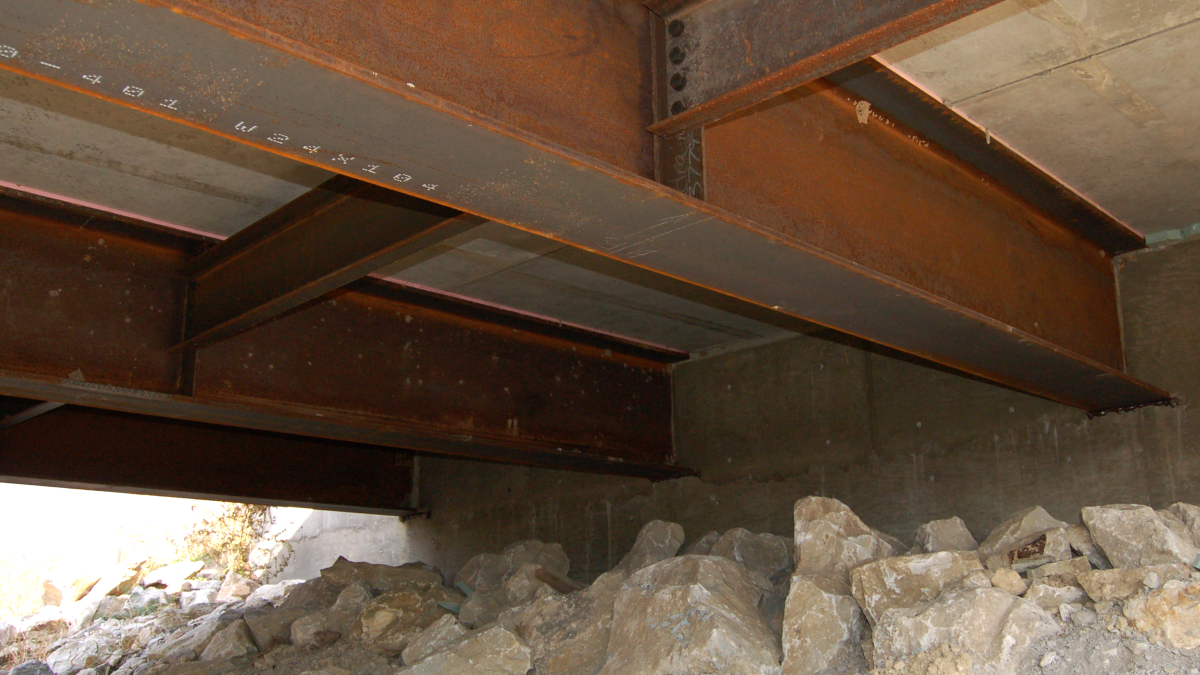
It is easier to inspect and determine the structural state of a steel bridge where all the components are visible.
Repair of Steel Bridges with Minimal Traffic Disruption
Alberta Transportation’s “Repair of Bridge Structural Steel Elements Manual” indicates that structural steel bridge elements may be damaged by overload, high and/or wide load impacts, vehicle collision, fire or structural vandalism. If damage to a bridge is left unrepaired, the condition of the components may further deteriorate, resulting in a reduction of the bridge’s structural capacity which could then compromise the safety of the motoring public.
While repair of damaged structural steel bridge elements may be unique and specific to the particular bridge element, standard techniques and procedures are provided for heat straightening, partial member replacement and repair of other defects, says the manual. These techniques and procedures are carried out with minimal use of costly temporary shoring and supports and little disruption to the traveling public.
- Heat Straightening: For almost half a century, heat-straightening techniques have been applied to bends and distortions in order to restore the original shape of steel elements. The ability to repair damaged structural steel members in place, often without the need for temporary shoring, has generated interest in heat straightening from the engineering profession, says the Federal Highway Administration (FHWA). For additional information, download the “Guide for Heat-Straightening of Damaged Steel Bridge Members, FHWA Report No. FHWA-IF-08-999”.
- Bridge Strengthening: Due to increased traffic loads or general deterioration, cost-effective and durable strengthening systems have been developed to repair and strengthen steel bridges. The design life of a steel bridge can be extended by strengthening the structure, while meeting the challenge of keeping the bridge in service, with minimal traffic disruption. The FHWA developed two design examples which involve the addition of steel- strengthening material to extend the design life of an existing bridge:
Further Extending the Life of a Steel Bridge
The long-term durability and cost-effectiveness of steel bridges will be further enhanced by the use of high-performance steels with corrosion-resistant capabilities. New steel grades and innovative designs are constantly being developed to further extend the life of a steel bridge:
- Steel press-brake tub girders were introduced several years ago to simplify and speed the construction of a short span bridge.
- Galvanized steel bridges can protect against corrosion for up to 100 years.
- Weathering steel can extend the life of a steel bridge up to 120 years.
- ASTM A709 Grade 50CR is highly corrosion-resistant steel which performs extremely well in corrosive environments and can significantly extend the service lives of steel bridges.
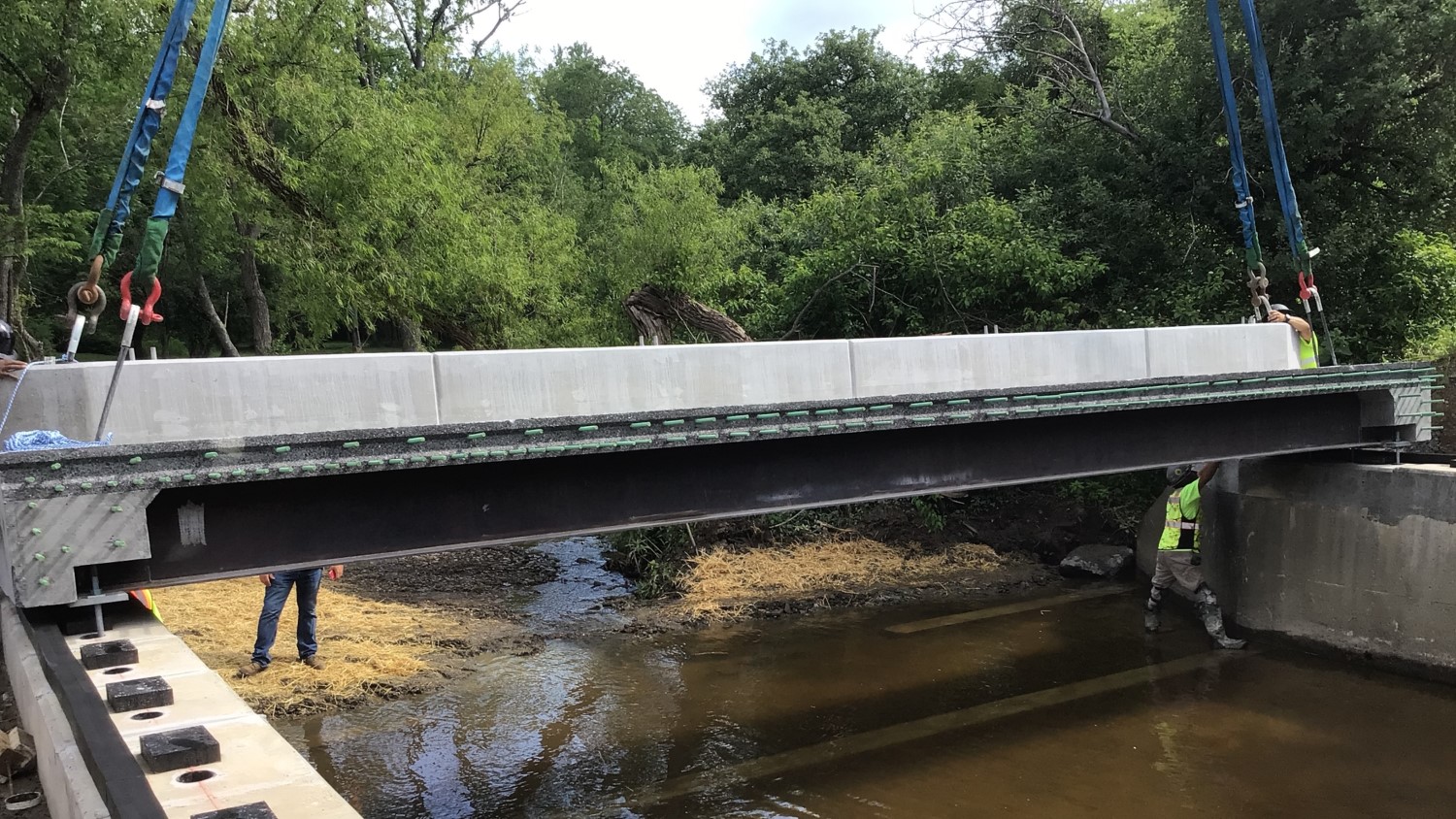
The Pennsylvania DOT implemented an innovative design to extend the service life for a new bridge currently being installed. The concept uses a Flex Beam bridge system combined with corrosion-resistant A709-50CR steel.
In addition to steel being the optimal choice for ease of inspection and repair, the American steel industry is also committed to manufacturing products and implementing processes that achieve environmental, social and economic sustainability. In fact, the American steel industry is the cleanest and most energy-efficient of the seven largest steel-producing countries in the world. Learn more about steel’s attributes, including its inherent durability and recyclability, which make it vital to modern society at the American Iron and Steel Institute.
How Can the SSSBA Help?
The Short Span Steel Bridge Alliance (SSSBA) provides vital connections with industry stakeholders throughout the national infrastructure network. The SSSBA has developed technical and design innovations for bridges under 140 feet that save significant time and costs for county and state bridge officials.
The SSSBA offers complimentary customized educational guest speakers/webinars and workshops (on-site or virtual) specifically for county engineers, state Departments of Transportation (DOTs) and design firms. The workshops are taught by industry experts with decades of experience in the cost-effective design and construction of short span bridges.
Past workshop presentation topics include:
- Practical and Cost-Effective Steel Bridge Design
- Free Design Tools (eSPAN140 and SIMON)
- Pre-engineered Bridge Solutions
- Coating Solutions (galvanized, painted, and weathering steel)
- Innovative/Accelerated Bridge Construction Options
- Case Studies (from local counties)
- Buried Soil Steel Bridge Structure Alternatives
- Life-Cycle Analysis
For more information, please visit this link. To customize a workshop for your organization, please contact:
- Dustin Young (Director of the SSSBA) at dyoung@steel.org or 412-580-1492.
Does steel provide a sustainable option for bridges?
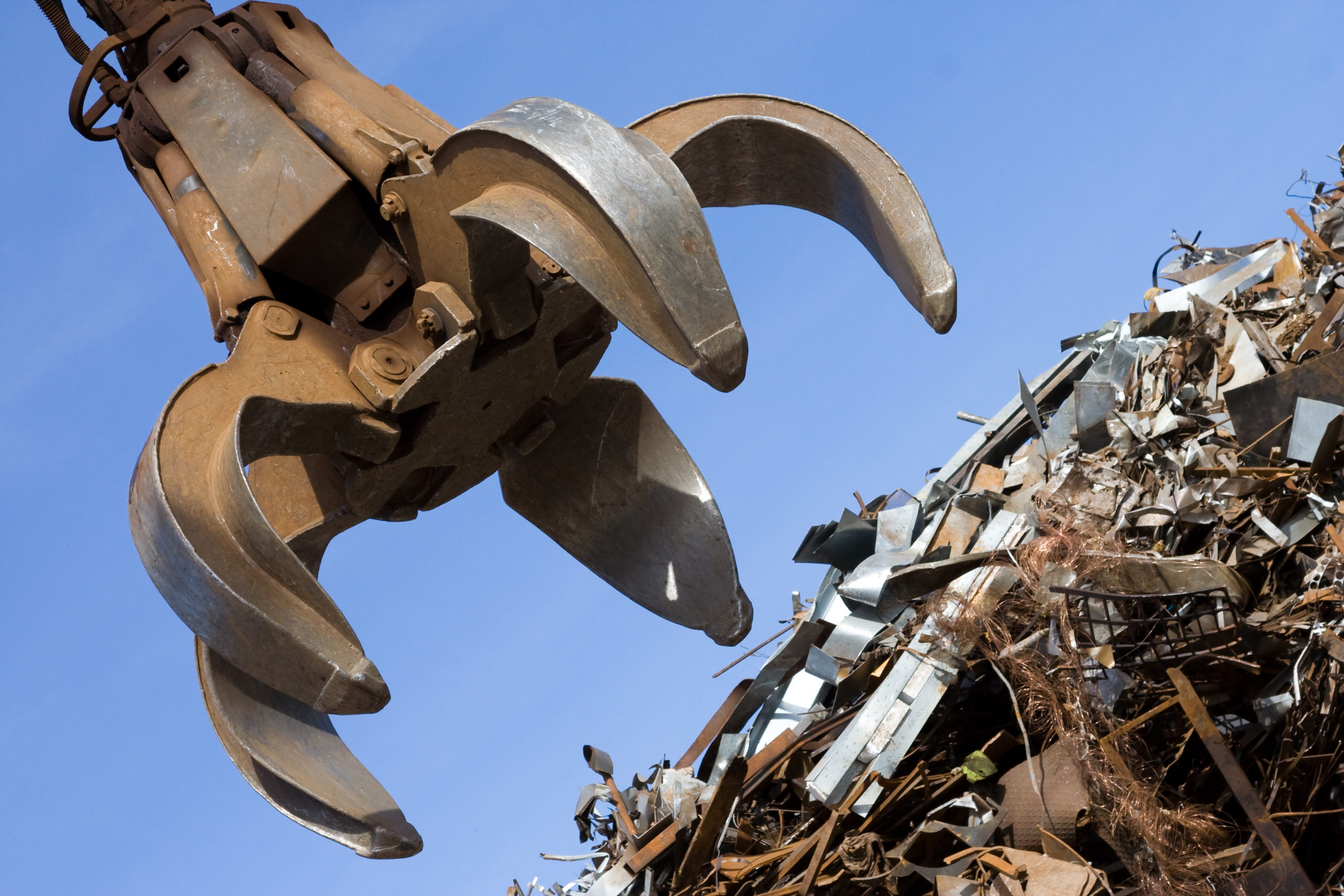
Steel is the most recycled material on the planet. Some of the sustainable advantages of steel include:
- Steel from a disassembled bridge can be used again for another project.
- Steel bridges can last 100 years or more, with minimal maintenance over their long service lives.
- The high strength of steel permits longer spans, which minimizes disruption to underlying habitats.
- Steel is highly resistant to extreme natural disasters such as earthquakes.
- The American steel industry has achieved a 31 percent reduction in energy intensity and a 36 percent reduction in greenhouse gas intensity since 1990.
 News
News
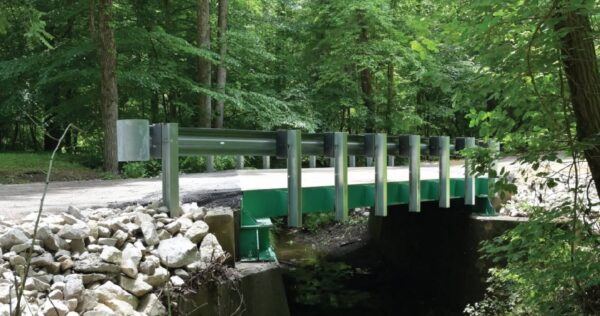
WV DOT Completes Fast-Track Bridge Project with Steel
WV DOT completed a fast-track bridge project using salvaged steel beams from a nearby overpass to restore a 20-foot bridge in West Virginia.
 Buried Bridge
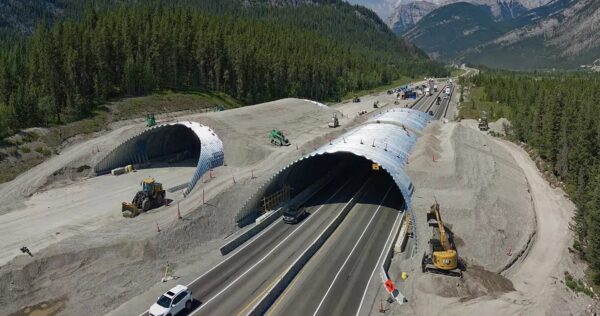
Corrugated Steel Animal Overpass Reduces Wildlife-Vehicle Collisions
The corrugated steel Stoney Nakoda Exshaw Wildlife Arch in Western Canada showcases the balance of engineering and environmental stewardship, setting a new standard for wildlife-friendly infrastructure.
 Sustainability
Steel Bridge Restores Fish Migration in Olympic National Forest
A new 70-foot steel bridge in the Olympic National Forest restores a vital fish passage, demonstrating steel’s durability and adaptability for environmentally sustainable infrastructure.